Iranian Cluster Bombs Strike Central Israel Without Injuries
Iran Launches Ballistic Missile Attacks on Israel
Iran launched several ballistic missile salvos at Israel on Friday, with some of the missiles carrying cluster munition warheads. These attacks caused damage to multiple sites across the country. The Israel Defense Forces (IDF) reported that between 4,000 and 5,000 Iranian troops have been killed in strikes since the conflict began.
Sirens rang out across Israel seven times on Friday, prompting millions to seek shelter. Emergency services reported damage at various locations in the central part of the country. Fortunately, there were no injuries reported, and the IDF is currently investigating the circumstances surrounding the missile impacts.
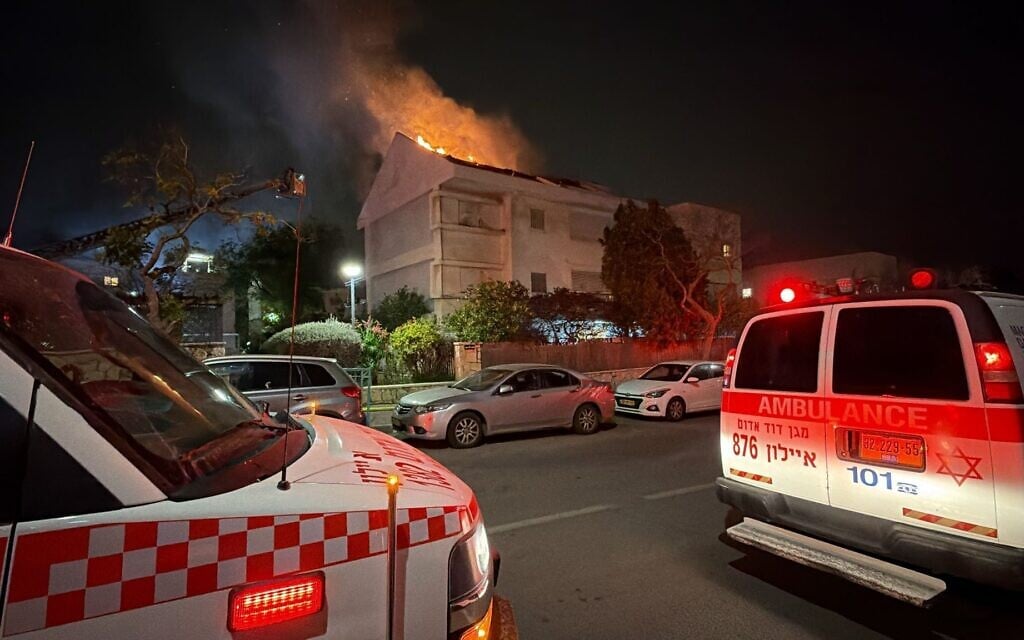
One of the impacts, likely caused by a cluster bomb sub-munition or other fragments, led to a fire on the roof of a building in Shoham. According to Kan public broadcaster, dozens of residents had to leave their homes due to the damage. CCTV footage appeared to show an impact at an empty school in Rishon Lezion, while several cars were also damaged in the town.
Witness Tomer Nativ described the experience: “I finished running and saw the missile fall. It was a great miracle that my wife and three children were in the reinforced room.” He added, “It was scary, everything caught fire on the street.”
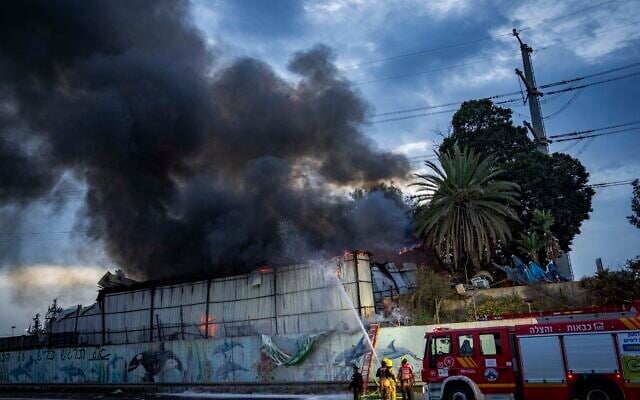
A cluster munition hit a highway in central Israel, creating a crater, while an impact in Holon sparked a fire in a building. Another missile struck an open area in central Israel, but no sirens were sounded as it did not pose a threat to populated areas.
Cluster bomb warheads spread dozens of submunitions over a radius of about 10 kilometers (6 miles), each containing several kilograms of explosives. While the interception of such missiles has been effective, military officials noted that it remains a challenging task. Israel’s air defenses are not completely impenetrable.
The use of cluster munitions is banned under the 2008 Convention on Cluster Munitions, which has over 100 signatories, including much of Europe, Africa, the UK, Australia, and Canada. However, Israel, Iran, and the United States are not signatories to the convention.
Despite the decline in the number of missiles fired by Iran, the IDF stated that attacks will continue as long as the war is active, and the rate of missile fire could even increase. On the first day of the war, Iran launched around 90 missiles at Israel, followed by about 60 the next day. The rate then decreased to approximately 20 missiles per day for a week before further dropping to just a few per day in recent days.
The IDF attributed this downward trend to successful strikes targeting Iran’s ballistic missile launchers and the squads of Iranian soldiers preparing to conduct missile attacks.
Meanwhile, the Home Front Command is considering easing restrictions in certain parts of the country that are less threatened by Iran’s ballistic missiles or Hezbollah’s rocket attacks from northern Israel. This could potentially allow schools to reopen in some areas. However, any decision would be subject to change and is expected to be announced on Saturday night when the current restrictions expire.
The Education Ministry has indicated that schools will only open 24 hours after any potential update, meaning distance learning will continue nationwide on Sunday at least. Education Minister Yoav Kisch has already stated that schools in the Tel Aviv area and northern Israel will not open in the near future.
Israeli Air Force Targets Iranian Troops and Infrastructure
The Israeli Air Force continued its strikes against Iran on Friday, with the IDF assessing that between 4,000 and 5,000 Iranian troops and commanders have been killed since the start of the war. Among those killed were many members of Iran’s internal security forces and the Basij paramilitary force, which have been key targets of Israeli operations.
The IDF said it is preparing for several more weeks of operations in Iran, as there are still many regime targets to hit. Since the war began nearly two weeks ago, the IAF has dropped over 10,000 bombs in Iran.
In total, over 7,600 separate strikes were conducted in Iran, including 2,000 against “headquarters and assets of the Iranian terror regime” and 4,700 against Iran’s missile program. The IAF has carried out 4,700 sorties and over 380 waves of strikes in Iran, according to the military.
The IDF also examined the results of an overnight airstrike targeting senior Iranian intelligence officials. In a video statement, IDF Spokesman Brig. Gen. Effie Defrin said, “Last night, we struck a facility of the intelligence directorate of Khatam al-Anbiya, the emergency command.” He added that this body is responsible for compiling information collected by intelligence agencies in Iran to present it to the regime’s security leadership.
Defrin said the IDF hit the target “while several senior officials from the directorate were present.”
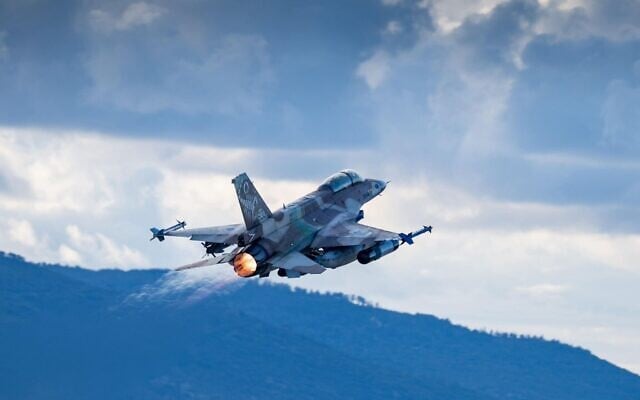
The military also reported hitting over 150 targets in western and central Iran on Friday, including ballistic missile storage sites. These targets included “many sites used to store dozens of ballistic missiles,” along with missile launchers, drone storage sites, air defenses, and weapon production facilities.
The IDF carried out two waves of airstrikes overnight and into the morning in Tehran, involving 90 fighter jets dropping 200 bombs on “numerous” Iranian regime security headquarters. The targets included a regional headquarters of the Islamic Revolutionary Guard Corps, a central headquarters of the Basij paramilitary force, and several headquarters of Iran’s internal security forces.
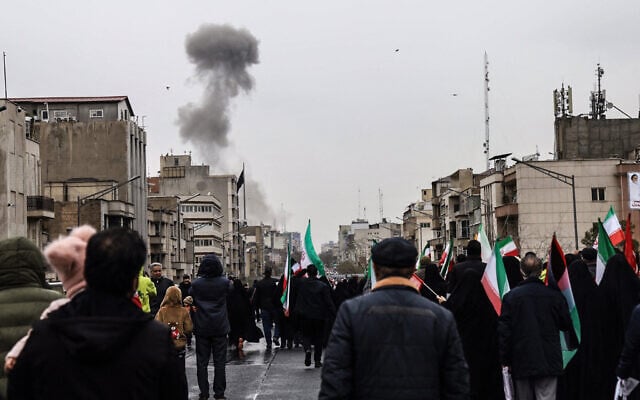
The Israeli Air Force also targeted air defenses and other infrastructure at an Iranian air defense base in the capital, as well as a site where “research and development of ballistic missiles was conducted,” the IDF added.
Earlier on Friday, the military said it killed more members of Iran’s Basij paramilitary force who were manning checkpoints in Tehran. Overnight, the Israeli Air Force struck a number of checkpoints set up by the Basij in the capital, killing several members of the paramilitary force.
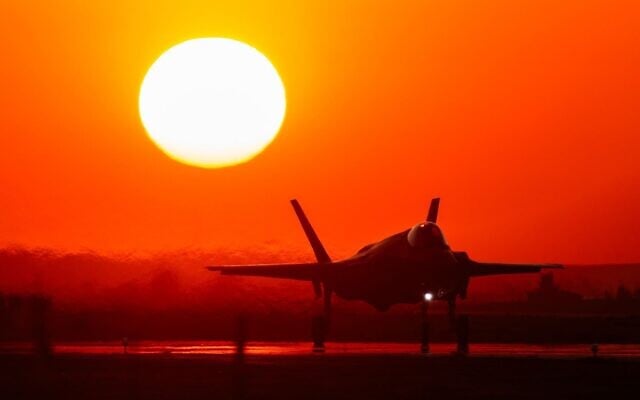
A US official and an Israeli official told The Times of Israel last week that their countries’ ongoing airstrikes throughout Iran are targeting members of the regime’s forces involved in the crackdown on anti-government protesters earlier this year. The goal is to make it easier for demonstrators to return to the streets once the bombing subsides.