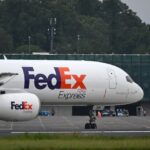

FedEx Unaffected by Iran War Fuel Concerns, Forecasts Strong 2026 Profit
FedEx Navigates Geopolitical Challenges and Strong Financial Performance
FedEx, a global leader in overnight package delivery, has managed to avoid disruptions in its jet fuel supply despite the ongoing conflict in Iran. This is according to John Dietrich, the company’s Chief Financial Officer, who spoke with Jendela Magazine on Thursday. The situation highlights how geopolitical tensions can impact even the most well-established logistics companies.
The company recently raised its full-year profit forecast after reporting strong third-quarter results that exceeded Wall Street expectations. This success was largely driven by a surge in deliveries during the critical holiday season. However, the situation in the Gulf has caused crude oil prices to rise above $100 per barrel, leading to concerns about potential shortages of jet fuel. These issues have created uncertainty in the aviation market, as missile and drone threats disrupt airline traffic in key Middle Eastern hubs.
Despite these challenges, FedEx maintains an outlook that assumes no further geopolitical disruptions. However, the fallout from the U.S.-Israeli conflict with Iran has already led to higher air freight rates and forced carriers to reroute flights, which could affect performance in the fourth quarter.
Fuel Surcharge Strategy and Market Position
FedEx, like other transportation providers, uses fuel surcharges to pass on volatile fuel costs to customers. If these costs become too high, it could lead to reduced shipping activity. Dietrich addressed these concerns directly, stating that the company has a strong presence and relationships that ensure no shortages.
Based in Memphis, FedEx recently overtook UPS in market value for the first time. Its shares rose 9% in after-hours trading, bringing the company’s valuation to approximately $82.23 billion as of Wednesday’s close.
FedEx now expects adjusted profit for its fiscal year ending May 31 to be between $19.30 and $20.10 per share. Analysts, on average, expect a full-year profit of $18.69 per share, according to data compiled by LSEG. This represents an increase from the company’s December forecast of $17.80 to $19.00 per share.
International Exposure and Operational Improvements
Approximately 8% of FedEx’s international export volume flows through hubs in the region, according to Stifel analysts. This exposure highlights the company’s vulnerability to ongoing disruptions in the area.
In the third quarter, FedEx’s Express unit saw improved operating results, driven by stronger U.S. and international package pricing, higher domestic volumes, and ongoing cost-cutting measures. Evercore ISI analyst Jonathan Chappell noted that the results were lifted by much higher yields, with stronger U.S. ground volume also contributing to the top line.
“The cost savings from the network reorganization also continue to help expand margins, and all 3 added up to a very surprising beat,” he said.
However, gains were partially offset by higher wages and incentive pay, rising transportation costs, the impact of global trade policy changes, and the grounding of MD-11 aircraft.
Addressing Past Incidents and Future Plans
Adjusted earnings for the crucial winter holiday quarter rose to $5.25 per share, surpassing analysts’ estimates of $4.14 per share. This was achieved despite absorbing millions in unexpected costs related to truck and plane replacements for its MD-11 fleet, which was grounded after a deadly UPS crash in November 2025.
At the time of the incident, FedEx had 28 Boeing MD-11 cargo jets in operation. The Federal Aviation Administration grounded the planes following the crash that resulted in the loss of 15 lives, including three pilots. The company is working with regulators to return its MD-11 fleet to service by the end of May.
FedEx also updated its full-year revenue forecast, now expecting growth between 6.0% and 6.5% year-over-year, compared to its previous projection of 5% to 6%.
Restructuring and Strategic Moves
FedEx is undergoing a multi-year restructuring that includes slashing billions of dollars in costs, combining its Ground and Express delivery options, automating operations, and spinning off its Freight trucking business on June 1.
For the quarter ended February 28, FedEx reported revenue of $24 billion, exceeding analysts’ estimates of $23.43 billion. This marks another step in the company’s efforts to adapt and thrive in a rapidly changing global market.