South Korea and U.S. Conduct Joint River Drills Amid North Korea’s Missile Tests
Joint South Korea-US River-Crossing Drills Highlight Military Cooperation
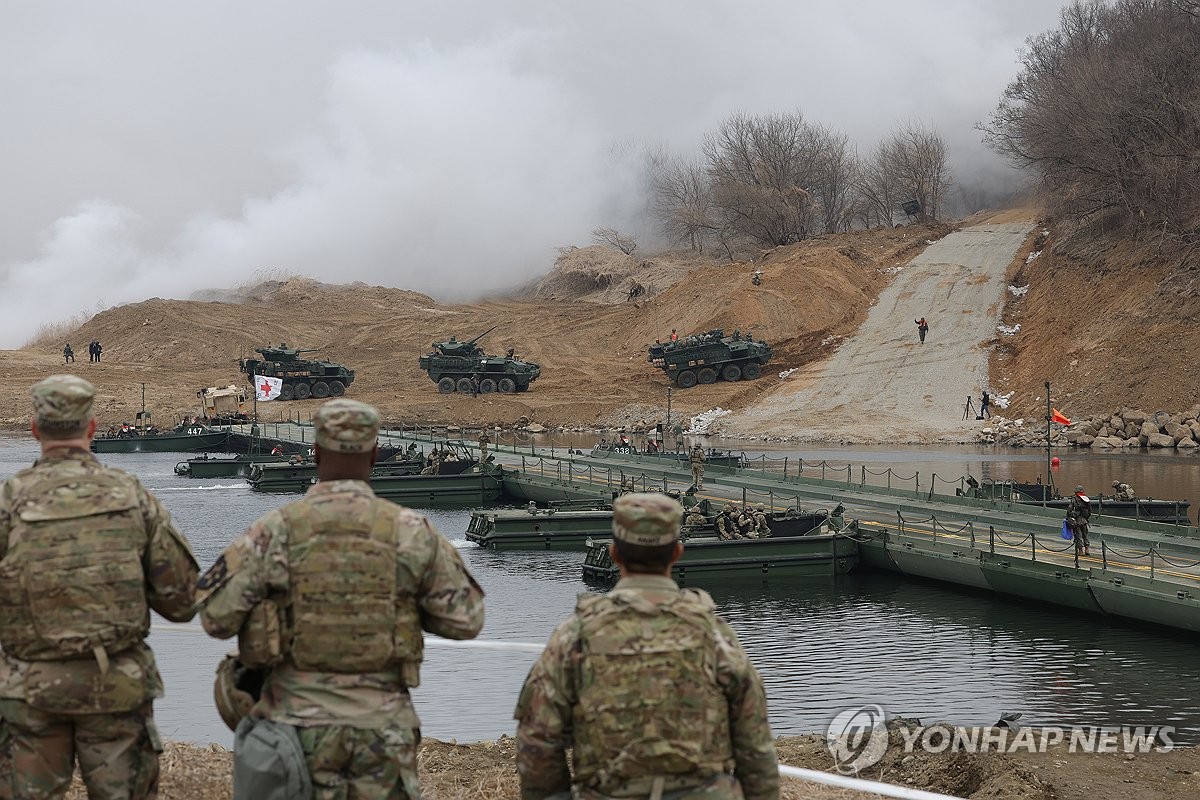
South Korea and the United States conducted joint river-crossing drills in the border county of Yeoncheon on Saturday as part of their annual springtime exercise, Freedom Shield (FS). These exercises aim to enhance the interoperability between the two allied militaries and strengthen their combined defense posture. The drills took place along the Imjin River, approximately 50 kilometers north of Seoul, involving around 200 pieces of equipment, including Korean-made KM3 amphibious bridging vehicles and ribbon bridge systems.
The training coincided with North Korea launching approximately 10 ballistic missiles toward the East Sea earlier in the day. This missile launch appeared to be a show of strength against the ongoing South Korea-US military exercises. The drills are part of the on-field training events of the FS exercise, which began on March 8 and will run for 11 days, covering border cities and counties such as Pocheon, Paju, and Yeoncheon.
This year’s drills featured the first-time integration of the Korean-made KM3 amphibious bridge and ferry system with the U.S.-developed Improved Ribbon Bridge (IRB) for a wet-gap crossing. The KM3, designed to act as a floating bridge or ferry, allows for the rapid movement of heavy combat vehicles and trucks across streams and rivers. It was deployed to the South Korean Army in 2024, marking a significant advancement in their river-crossing capabilities.
Simulated Attack Scenario and Bridge Construction
The drills began under a simulated attack scenario, where U.S. forces executed an assault river crossing and occupied territory on the other side of the river. Following this, the allies worked together to construct a bridge across the Imjin River. CH-47 Chinook transport aircraft dropped off sectional pontoon bridges, which were then assembled by bridge erection boats stationed nearby.
A total of 25 pontoon pieces were used to create an 180-meter-long bridge, enabling troops and equipment to cross over and push forward in a simulated war scenario. According to a representative from the 2nd Infantry Division, this demonstration showcased the effectiveness of combined operations and the ability to quickly establish a crossing point under challenging conditions.
Leadership and Strategic Importance
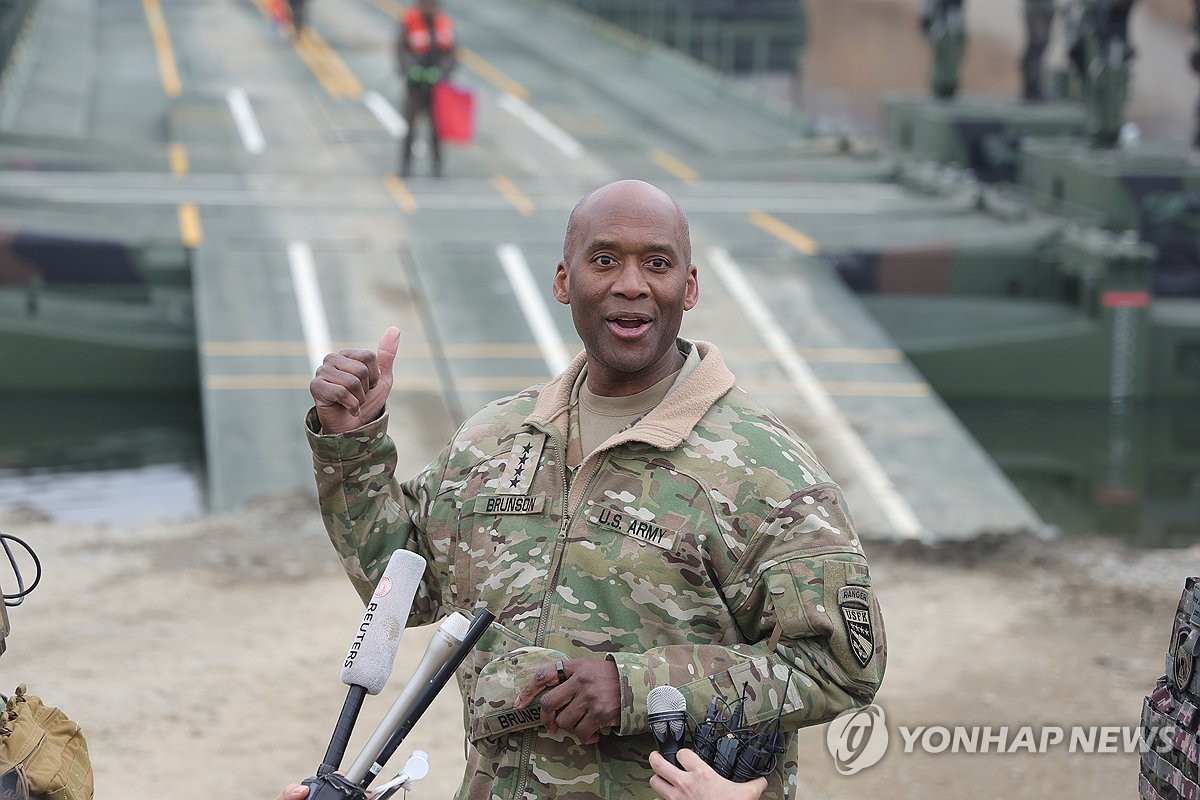
Saturday’s drills were attended by high-ranking officials from both countries, including U.S. Forces Korea (USFK) Commander Gen. Xavier Brunson and Army Gen. Kim Sung-min, deputy commander of the South Korea-U.S. Combined Forces Command. Brunson emphasized the importance of these combined training exercises, stating that they are what make the alliance unique.
“It’s the asymmetric advantage that we enjoy across the Indo-Pacific. The fact that we can train and build readiness across our formations and the fact that we can do this together,” Brunson said. “The example that you see out there; It is the envy of the world that we get to do this here right now,” he added.
Brunson also expressed gratitude to South Korean Defense Minister Ahn Gyu-back and Joint Chiefs of Staff Chairman Gen. Jin Yong-sung for facilitating the successful execution of the drills. He highlighted the continued efforts by both nations to enhance the interoperability of their river-crossing equipment since September of last year.