Hegseth Claims More Iran Strikes, But Data Disagrees
The Contradiction Between US Military Rhetoric and Operational Reality
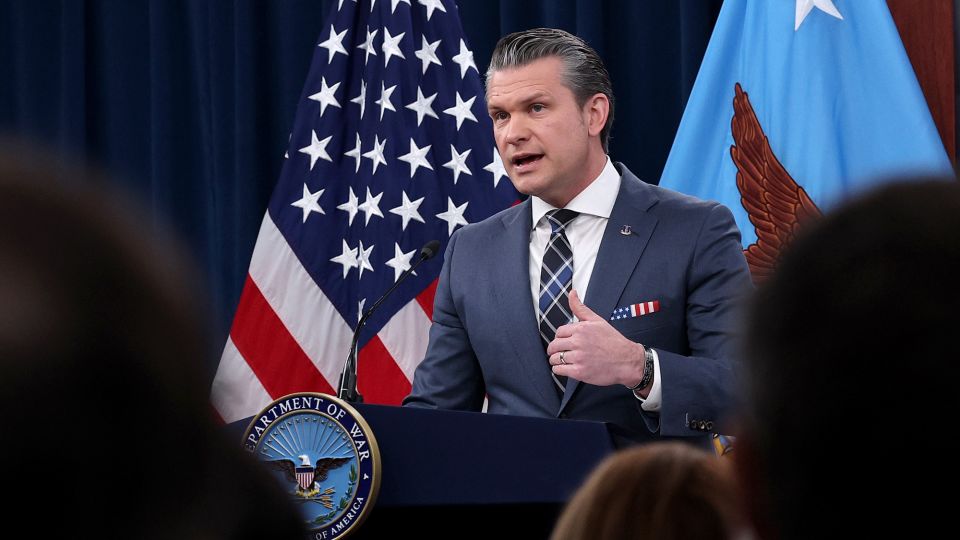
While Defense Secretary Pete Hegseth has repeatedly emphasized that the number and intensity of U.S. strikes against Iran are on the rise, data from the U.S. military suggests a more fluctuating pattern over the past three weeks. Despite Hegseth’s frequent assertions that the United States is “accelerating, not decelerating” its operations, the actual pace of strikes has seen periods of increase and decrease.
Hegseth has consistently claimed that each new day will bring a greater number of attacks. For example, during his second briefing on March 4, he stated that “more and larger waves” of strikes were coming. On March 10, he said that “today will be yet again our most intense day of strikes inside Iran.” And on Thursday, he proclaimed, “today will be the largest strike package yet, just like yesterday was.”
However, public data from U.S. Central Command does not support this claim of a steady daily increase in strikes. This discrepancy may be due to several factors, including the need to adjust flight frequencies as aircraft and ships undergo maintenance or because the military initially focused on a set list of targets and is now identifying and confirming new ones.
The U.S. military has not provided daily strike data, instead releasing updates every few days. According to these reports, the average number of strikes per day has fluctuated over time. For instance, the peak was recorded on the first day of the operation when more than 1,000 targets were hit. Subsequent data showed an average of around 333 strikes per day between March 9 and March 12. However, on March 10, Hegseth claimed it would be the most intense day of strikes, despite the lower numbers.
Fluctuations in Strike Intensity
There have been instances where the number of strikes increased significantly. For example, on March 2, approximately 250 targets were struck, which rose to 450 on March 3. Between March 6 and March 9, the average number of targets hit per day increased to 666, compared to an average of 433 between March 3 and March 6.
Despite these fluctuations, the overall trend shows that the number of strikes has not consistently risen. Mark Cancian, a retired Marine Corps colonel and senior adviser at the Center for Strategic and International Studies, explained that such variations are expected. He noted that the military may be transitioning into a sustained air campaign, requiring maintenance for aircraft and ships. Additionally, the initial target list may have been exhausted, prompting the need to identify new targets as intelligence improves.
Challenges in Maintaining Control Over Iranian Skies
Hegseth has also claimed that the U.S. and Israel have achieved “complete control of Iranian skies.” However, recent events have raised questions about this assertion. A U.S. F-35 fighter jet made an emergency landing after being believed to have been struck by Iran during a combat mission. This incident contradicts Hegseth’s earlier claims of overwhelming dominance over Iranian airspace.
Moreover, the U.S. has struggled to secure safe passage for commercial ships in the Strait of Hormuz, which has effectively been closed due to threats from Iran. Tehran has continued retaliating against neighboring nations and U.S. forces throughout the region, indicating that the situation remains volatile.
The Broader Implications of the Discrepancy
The gap between official rhetoric and operational reality highlights a broader issue in how the war is being communicated. While officials like Hegseth assert that the U.S. is “winning decisively,” the evidence suggests a more complex and evolving situation. Iran’s military capabilities have indeed been significantly degraded, with key leaders such as Supreme Leader Ali Khamenei and Ali Larijani reportedly killed by Israeli forces.
However, the ongoing challenges in the region underscore the complexity of the conflict. The U.S. military continues to adapt its strategies, adjusting the frequency of operations and expanding its target lists as new intelligence becomes available. This dynamic environment means that the pace of strikes is likely to remain unpredictable, reflecting the shifting nature of the conflict itself.