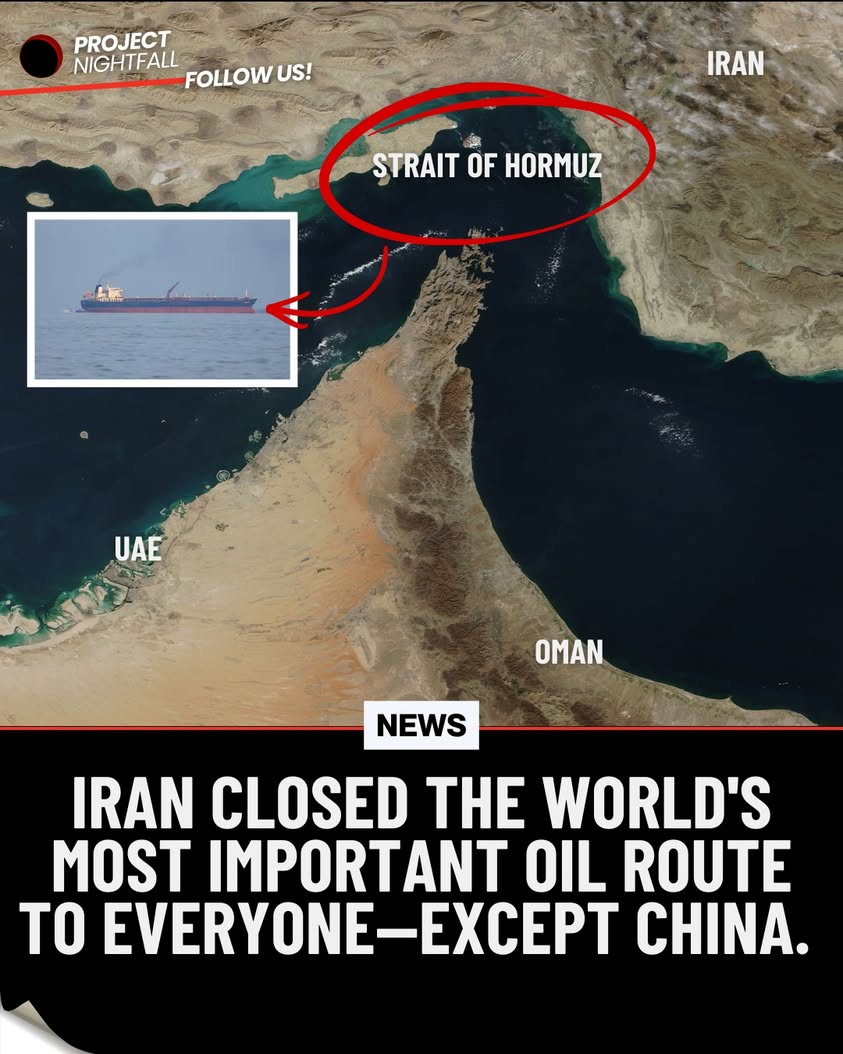
Hormuz Closed, China Open: Secret Oil Empire Revealed!
The Strait of Hormuz: A Global Crisis in the Shadows
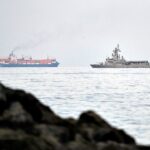
The world watched in stunned silence as Iran declared the Strait of Hormuz closed. A vital route for global trade, now sealed off. Panic rippled through markets, with a global energy crisis seemingly emerging overnight.
But what if we told you it wasn’t closed to everyone? What if, amidst the chaos and global paralysis, a clandestine operation kept a vital artery flowing?
Because while the world held its breath, 11.7 million barrels of oil, a staggering amount, quietly moved through that very strait. To one country. China.
Since the conflict erupted on February 28, a relentless stream of crude has been delivered. Data from Kpler and TankerTrackers, the eyes of the global shipping world, reveals this astonishing truth.
That’s approximately 1.5 million barrels every single day. Right in line with Iran’s normal export levels, as if no crisis, no closure, had ever occurred. How is this possible?
The answer lies in the shadows. A phantom fleet, sailing under a cloak of secrecy. Aging vessels, long sanctioned, now operating entirely outside the conventional tracking systems.
These are not your typical commercial tankers. Many are Chinese vessels, employing a bizarre, almost defiant tactic: short-wave radio broadcasts. Their message, echoing across the waves: “We are a Chinese ship. We are friendly.”
Others simply vanish. They turn off their transmitters, going completely dark, hoping to evade the gaze of both US and even Iranian forces. A dangerous game of hide-and-seek on the high seas.
And make no mistake, the risk is terrifyingly real. This isn’t a theoretical exercise. At least two tankers within this very shadow fleet have been mistakenly struck by Iranian forces since the conflict began. The stakes are life and death.
Yet, the oil keeps moving. Because China isn’t just a casual buyer; it’s Iran’s biggest customer, snatching up over 80 percent of its crude exports.
Most of this lifeline oil is routed through independent refineries in China. These facilities operate outside the reach of the US financial system, a deliberate maneuver to bypass crippling sanctions.
For Iran, this trade is a desperate lifeline, a torrent of revenue keeping its economy from collapse. For China, it’s a source of deeply discounted crude, fueling its massive energy needs at an unbeatable price.
A Selective Closure
Now, contrast this with the rest of the world. Commercial shipping titans like Maersk have stranded vessels, left adrift in the Gulf, refusing to budge without a ceasefire.
Gulf producers, giants like Saudi Arabia and Kuwait, are cutting production. Why? Because they simply cannot ship their oil out. Their vessels sit idle, their output curtailed.
Qatar’s vital LNG production, a crucial global energy source, has ground to an agonizing halt. The strait is effectively closed, choked off to everyone else.
Except for Iran’s biggest customer. This isn’t a universal closure. It’s a selective, strategic blockade.
Ayatollah Mojtaba Khamenei, the new Iranian supreme leader, declared just Thursday that the strait will remain closed “definitely” while the war rages on.
But the undeniable flow of oil to China exposes the truth. The closure is not absolute. It is a carefully orchestrated policy.
Global Consequences
For the rest of the world, the consequences are brutal. Oil prices have surged above $100 a barrel. The IEA was forced to authorize the largest emergency reserve release in history, a desperate measure to stem the bleeding.
Yet, in Tehran, the essential revenue continues to flow. And in China, the discounted crude keeps arriving, a strategic advantage secured in a world spiraling into energy chaos.
This hidden operation highlights the complex interplay of power, economics, and geopolitics. While the world scrambles to manage the fallout, a select few continue to move forward, navigating the shadows of international conflict.
As tensions continue to rise, the implications of this covert trade remain unclear. But one thing is certain: the Strait of Hormuz is not just a choke point for global trade—it’s a battlefield where the rules of engagement are constantly being rewritten.