Richard Williams: Why I, a Former SAS Officer, Stand Against Evil and Iran
The Brutal Reality of Iran’s Role in the Iraq Conflict
After being beaten and thrown to the floor, the six Royal Military Policemen were executed by shooting, one at a time, in cold blood. There was no mercy—just maximum distress as each survivor watched their comrades die until it was their turn. This was the fate of the six soldiers in Majar Al-Kabir, southern Iraq, on June 24, 2003.
They had been sent to this sun-baked town to maintain order after the fall of Saddam Hussein and to help train local police recruits. However, their killers were not Iraqi insurgents but members of Iran’s Islamic Revolutionary Guard Corps (IRGC), operating covertly in the country. These Special Forces assassins aimed to destroy Western efforts to stabilize Iraq and ensure failure.
This violent incident shattered the naive belief that the British Army could exert military influence in the Middle East by patrolling in berets and soft-skinned vehicles while drinking tea with local sheiks. It was a brutal and costly wake-up call. Between March 2003 and April 2009, Britain lost 136 service personnel in Iraq, with the majority killed by the IRGC and their proxies.
The coffins carried through patriotic ceremonies at Royal Wootton Bassett were placed there at the direction of Tehran. The regime’s orders, often intercepted by our intelligence beforehand, were simple and warlike: keep killing them using improvised explosive devices (IEDs), mortars, mines, and shootings until they left Iraq and the Iraqis were handed over to the Iranians.
The IRGC executed their mission ruthlessly and clinically, achieving their bloody aim. Our final exit from Iraq was marked by a grubby, undignified, and humiliating deal that left the country in ruins and handed power to one of Iran’s political allies.
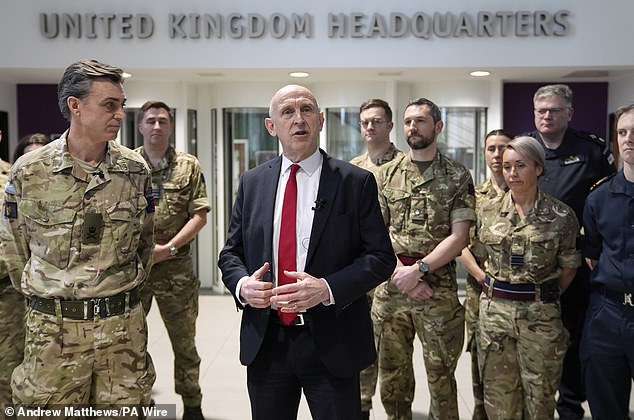
As a former commanding officer of the 22 SAS Regiment in Iraq and Afghanistan, I witnessed the brutally effective and sinister IRGC firsthand. This experience gave me an understanding of the utter evil of the Iranian regime as it spread terror and carnage on a scale never seen in the UK.
We must take this evil seriously, which is why I believe today’s war on Iran is a just war. Since the Revolution in 1979, we have allowed the regime to fester and grow due to the cowardice and indecision of our political leaders.
Iraq was not the end of the mullahs’ campaign against us. The same IRGC had deep and long-standing relationships with the Taliban in southern Afghanistan. They were well-placed to equip the Taliban with IEDs and weapons needed to create hell for us as we moved our forces from Iraq to Helmand.
Expecting to recover our reputation as counter-insurgency experts and hoping for no shots fired (as then-Defence Secretary John Reid optimistically declared), this too ended in disaster. Despite herculean efforts and courage, the British lost another 457 in this second Iranian-supported killing zone before finally returning home.
For the Americans, the failure of the British to hold ground in southern Iraq against Iranian pressure had even more deadly consequences. As our forces fell back to the temporary safety of Basra palace, they left open an unpatrolled province that became the main supply route into Baghdad and central Iraq for the Iranians’ deadly off-route mines or explosively formed penetrators. These devices detonate next to a vehicle rather than underneath them, and had killed more than 600 US soldiers by 2011.
The numbers maimed in body and mind by these weapons add up to many multiples of those killed, such was their dreadful efficiency.
And as with all strategic campaigns run by espionage agents, the Iranian campaign against Britain didn’t end when the troops left.
Skilled in subversion and determined to further weaken any long-term Western threat to their position, they became masters at feeding the poorly-conceived and badly-run Iraq Historic Allegations Team, as well as a hungry British media and London-based bandwagon lawyers, with convincing witnesses to alleged breaches of ‘human rights’ by our brave forces in Iraq.
Those lawyers included the disgraceful Phil Shiner, who was given a two-year suspended sentence after pleading guilty to three counts of legal aid fraud and was struck off for pursuing false torture and murder claims against British troops.
In this way, the Revolutionary Guard-sponsored ‘lawfare’ became a deliberate act of state subversion. Hard to execute in the US but easy in a Britain whose Army is being held accountable to human rights legislation that effectively outlaws most forms of combat.

The IRGC worked out that they don’t have to kill us on the battlefield to keep us away; they just need to turn our own laws against us. Nothing kills martial spirit more than an ever-present threat of legal action. Again, I say all this not as an ill-considered attempt to stir a cry for vengeance, nor as armchair wisdom, but to point out just how lethal the Iranian regime has been.
While our leaders debate international law, pontificate about the contractual definition of alliances or huff and puff about President Trump and his unique and challenging style, the truth is Iran had to be confronted sooner rather than later.
This is an utterly ruthless enemy that seeks now to develop nuclear weapons for the express purpose of destroying other nations; a regime that routinely stops by bloody massacre any dissent from within its own population; and a theocracy that sees our naive tolerance as an opportunity for state-sponsored subversion.
If you don’t believe me, just ask any of those Iranians who fled their country and have suffered the soul-twisting, bloody loss of so many friends and family.
As I watch the events unfold in the Middle East and the reaction to the predictable weaponisation of the oil price, and listen to the red-faced, wet-palmed performances in Westminster, I recall the raised voice of the then-UK Defence Secretary Des Browne in 2007, when he insisted to me as Commanding Officer 22 SAS that, in spite of all the intelligence and evidence to the contrary, “Iran is not Britain’s enemy in southern Iraq.”
He was wrong about that then, just as those are today who still maintain that the IRGC is not a terrorist organisation. Or who insist that negotiating with Iran will deliver anything other than further death and more humiliation. Or indeed that failing to support the US does anything other than strengthen Tehran’s hand.
Sometimes, the pearl-clutching international ‘conflict resolution’ experts are wrong. And the only way to salve any dignity as a nation or as an individual is to face the evil and fight.
Richard Williams
is a former SAS commanding officer.