U.S. Troops Train with South Korean Forces at Fort Irwin
Joint Training Between U.S. and South Korean Forces in the Mojave Desert
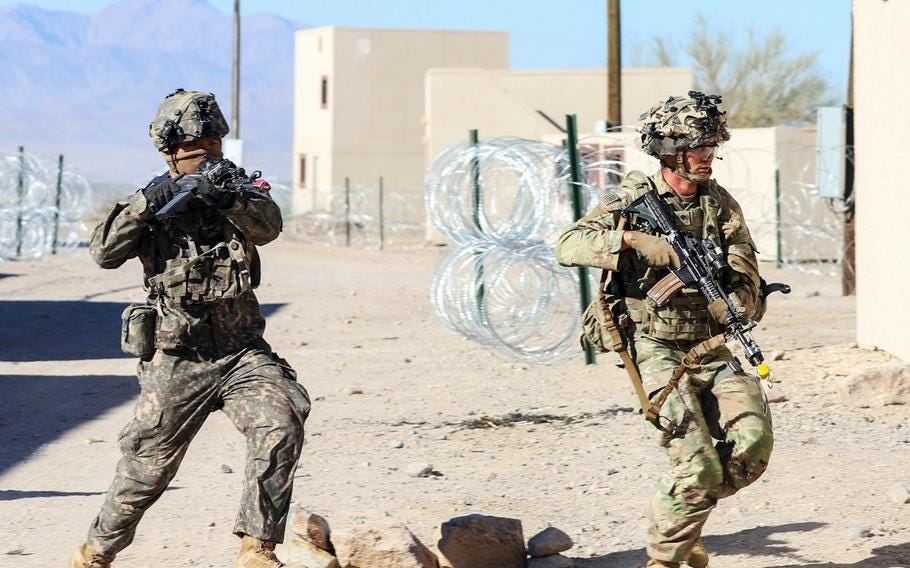
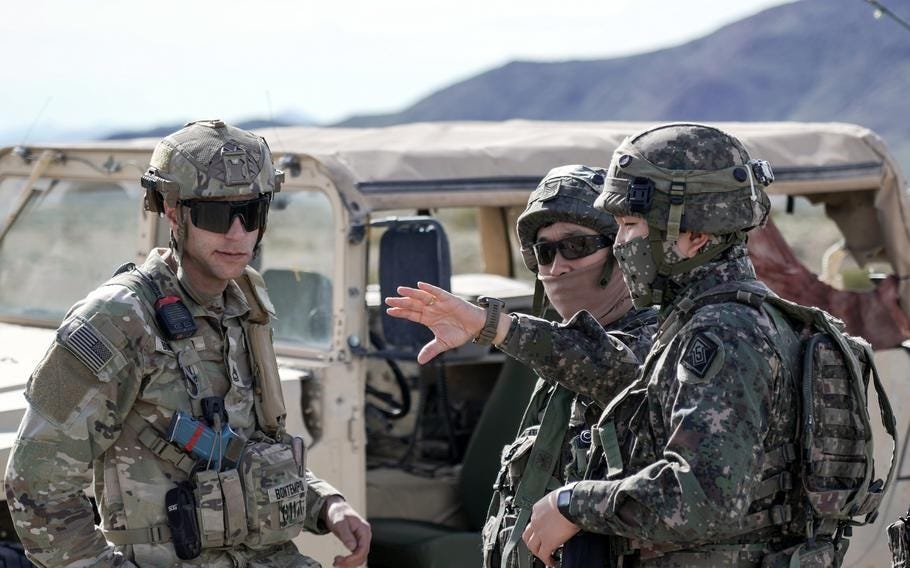
U.S. Army soldiers have completed 12 days of intensive training in the Mojave Desert, working side by side with 120 South Korean soldiers. This joint exercise aimed to enhance coordination between the two nations’ military forces, as reported by officials.
The training took place at the National Training Center at Fort Irwin from March 3 to March 15. It involved soldiers from South Korea’s 5th Armored Brigade and the U.S. Army’s 3rd Cavalry Regiment, both stationed at Fort Irwin. The collaboration was highlighted by Stars and Stripes, a military news outlet.
Ideal Conditions for Military Training
The unique environment of the High Desert, characterized by highly variable weather and challenging terrain, offers an ideal setting for troops to train under different conditions. Officials emphasized that this location allows for realistic simulations that prepare soldiers for real-world scenarios.
During the exercise, participants engaged in simulated battlefield scenarios that included intense heat and heavy dust during the day, followed by continued training at night when temperatures dropped significantly. This setup tested the endurance and adaptability of the soldiers involved.
Focus on Tactical Capabilities
South Korean Lt. Col. Jung Young-min stated that the primary goal of the training was to “significantly improve firing and tactical maneuver capabilities.” This objective was reflected in the various drills conducted throughout the exercise.
Key Components of the Training
The training featured several critical components designed to strengthen the operational effectiveness of both militaries:
- Armored warfare drills: Soldiers practiced maneuvers involving armored vehicles, simulating real combat situations.
- Opposing force role: The U.S. Army’s 11th Cavalry Regiment acted as the opposing force, providing a realistic challenge for the South Korean troops.
- Battlefield information sharing: Emphasis was placed on improving communication and coordination between units.
- Response speed: The training focused on enhancing the ability to respond quickly to evolving threats.
- Counter-drone techniques: With the increasing use of drones in modern warfare, this aspect of the training was crucial.
- Integrated fire support: Units worked together to coordinate fire support, ensuring effective and timely assistance during operations.
Longstanding Military Collaboration
This type of joint training has been a regular occurrence since 2014, according to the South Korean Ministry of Defense. Annual exercises have helped solidify the relationship between the U.S. and South Korean military forces, fostering mutual understanding and cooperation.
Fort Irwin Commander Brig. Gen. Brandon Anderson praised the South Korean military for their adaptability and teamwork during the training. He emphasized the strength of the U.S.-South Korea alliance and noted that the training had deepened the tactical understanding between service members from both countries.
Conclusion
The joint training in the Mojave Desert underscores the importance of international military cooperation. By working together in challenging environments, U.S. and South Korean forces are better prepared to face global security challenges. This ongoing partnership not only strengthens the alliance but also enhances the readiness and effectiveness of both militaries.