Putin’s fury: Ukraine’s drones shatter kill record for Russian troops in 36 hours
The Evolving Role of Drones in the Ukraine Conflict
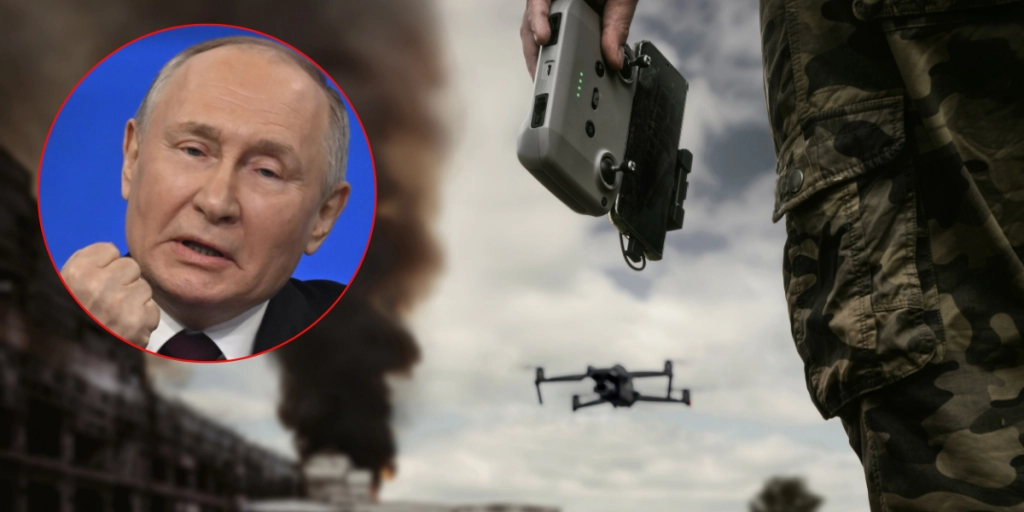
Over the past four years, drones have become a critical component of military operations on both sides of the conflict in Ukraine. Their use has expanded from simple reconnaissance tools to powerful weapons capable of inflicting significant damage. Russia has deployed drone swarms to target Ukrainian infrastructure and civilians, while Ukraine has leveraged its drone capabilities to strike deep into Russian territory, disrupting military production and energy infrastructure.
Beyond their strategic impact, drones have also transformed battlefield tactics. Both nations rely on them for surveillance, but Ukraine has taken this a step further by using drones to evacuate wounded soldiers and eliminate enemy forces. This approach has proven highly effective, leading to notable successes on the front lines.
A Significant Battlefield Toll
Ukraine’s Unmanned Systems Forces (USF) claim to have inflicted major losses on Russian troops across a 100-kilometer stretch in Donetsk and Zaporizhzhia oblasts. The commander of the USF, Robert “Magyar” Brovdi, shared this information on Facebook, stating that the force had packed over 900 Russian soldiers into body bags within a day and a half along a 100-kilometer section of the front near Rodynske–Huliaipole.
The press service of the USF confirmed that the figure includes both killed and wounded personnel. This report highlights the increasing effectiveness of Ukraine’s drone operations in targeting enemy forces.
Weather and Tactical Adjustments
Brovdi attributed the recent surge in casualties to changing weather conditions between 17 and 18 March, which affected key areas such as Dobropillia, Pokrovsk, and Huliaipole. He noted that Russian forces resumed offensive operations under poor visibility conditions, which they had anticipated as part of their preparations for a spring and summer campaign.
Despite these conditions, the assumption that reduced visibility would limit Ukrainian drone effectiveness did not hold true. The USF continued to operate effectively, demonstrating their adaptability to changing circumstances.
Frontline Resistance and Strategic Success
Brovdi praised the efforts of the USF’s drone operators and neighboring brigades, calling the 900 casualties in a day and a half a “new record.” He emphasized that Ukrainian ground forces held their positions along the 100-kilometer section, preventing any breakthroughs during the reported period.
“The enemy did not push through a single section,” he said. “But the occupiers’ total losses are much higher,” he added, warning that intense fighting is likely before the end of March.
Long-Term Impact of Drone Operations
The USF has been instrumental in causing significant damage to Russian forces since its establishment in June 2025. Earlier in March 2026, the military branch reported that it had caused nearly 70,000 Russian casualties, according to TVP World. Of these, 39,000 are estimated to be fatalities.
In addition to targeting enemy personnel, the USF continues to strike Russian military assets in both Russian territory and occupied regions of Ukraine. These operations have resulted in substantial financial losses for the Kremlin, costing millions, if not billions, of dollars in lost equipment.
Conclusion
The role of drones in the Ukraine conflict has evolved dramatically, with both sides leveraging their capabilities to gain tactical advantages. Ukraine’s use of drones for reconnaissance, evacuation, and targeted strikes has proven particularly effective, leading to significant enemy casualties. As the conflict continues, the strategic importance of drone technology is likely to grow, shaping the future of warfare in the region.