Iran’s Attacks Could Shift Gulf States From De-escalation to Supporting Regime Defeat
Rising Tensions in the Gulf
As Iran continues its attacks on the Gulf countries, particularly the United Arab Emirates (UAE), there is a noticeable shift in the narrative about what should happen next. Countries that were previously cautious about the outbreak of war and favored de-escalation may now be considering a longer-term campaign to ensure Iran can’t threaten the region again. This change in perspective is significant, as it reflects growing concerns over the security and stability of the Gulf.
Defenders of a de-escalation strategy are still wary of further conflict, including attacks on Iranian energy infrastructure. However, foreign states are becoming more open to a prolonged campaign to neutralize the threat posed by Iran. This double-edged sword of discussion is complex for a region that values regional stability over conflict.
Economic Impacts and Regional Stability
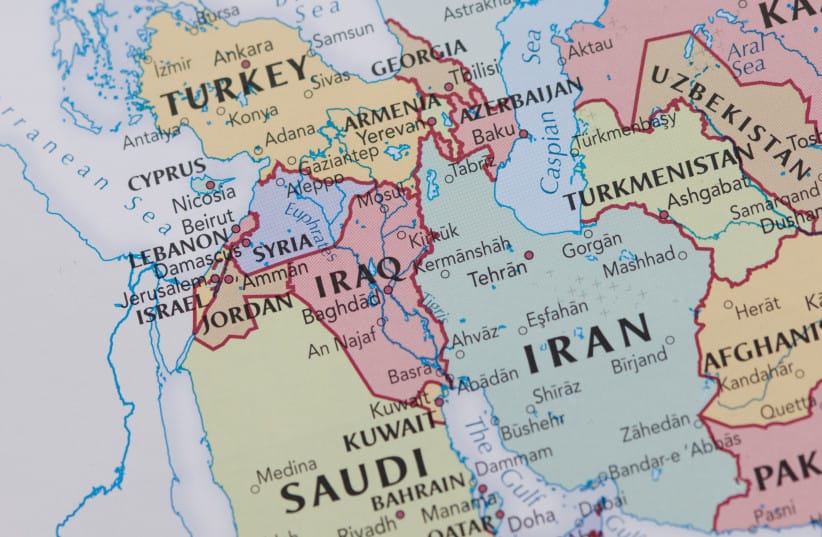
The Gulf countries do not benefit from conflict. With large expat populations and significant numbers of foreign workers, they thrive on trade, open airports, and the ability of oil tankers to transit through the Strait of Hormuz. However, Iran has shown itself to be an unreliable steward of these critical waterways. It has effectively closed the Strait to traffic, causing disruptions in energy markets. In addition, Iran has launched thousands of drones and missiles at countries such as the UAE, Bahrain, Kuwait, Qatar, Oman, and Saudi Arabia.
Iran’s attacks have not been uniform across all countries. The UAE has been the primary target, with different sites in various locations being attacked, including US forces and energy facilities. This pattern of aggression highlights the need for a coordinated response from the Gulf states.
Historical Aggression and Regional Dynamics
Iran has a history of aggressive actions in the region. It has supported militias in Iraq and the Houthis in Yemen, both of which pose a threat to the security of Gulf countries. Additionally, Iran has attacked oil tankers in the past, notably in 2019 when it targeted Saudi Arabia using drones and cruise missiles, striking the Abqaiq energy facility. These actions have made the Gulf countries wary of Iran’s intentions.
Historically, the Gulf countries have avoided direct confrontation with Iran. However, Saudi Arabia led an intervention in Yemen in 2015 alongside the UAE. Later, Riyadh also led the UAE, Bahrain, and Egypt in cutting ties with Qatar from 2017 to 2019. Currently, the Gulf states are more unified than ever, with the Iranian attacks likely strengthening their resolve.
Qatar, Oman, and Kuwait have attempted to maintain amicable relations with Iran, while Saudi Arabia was vocal in its opposition to Iran from around 2012 to 2022. A China and Iraq-backed deal helped Iran and Saudi Arabia appear to mend some differences. Iran also reached out to Egypt after expressing anger over the Abraham Accords, which Bahrain and the UAE joined in 2020. As such, it appears clear that Iran’s disproportionate targeting of the UAE is partly due to the UAE’s ties to Israel.
Shifting Perceptions and Regional Unity
Iran’s aggressive actions have exposed the regime as unreliable and unpragmatic as a “partner” in the Gulf. Tehran has often portrayed itself as a pragmatic regime and one that adheres to international law. While this facade may seem absurd given the regime’s many crimes, it allowed many countries to “go along to get along” with Iran. Now, that facade is shattered.
How can countries trust Iran again after what it has done? It didn’t just lob a few symbolic missiles at US bases in the UAE, Qatar, and Kuwait. It has carried out thousands of attacks. Senior Gulf officials have stated that they would not accept an outcome where Iran controls passage through the Strait of Hormuz, a global choke point governed by international maritime law.
Hasan T. Alhasan, a Senior Fellow for Middle East Policy at IISS, noted that the Gulf states have a vital economic interest in resuming maritime transit through the Strait of Hormuz and possess considerable military capacity to help do so. He also commented on a headline suggesting that the UAE could join an international effort led by the US to secure the Strait of Hormuz.
Expert Opinions and Future Outlook
Yaroslav Trofimov, Chief Foreign-Affairs Correspondent at The Wall Street Journal, noted that the UAE and other Gulf states want the Iranian regime neutered before the war ends, so that they can never be battered with missiles and drones again. Ghanem Nuseibeh, a London-based consultant and analyst, wrote on X that the optimal time for the Iran war to stop with least damage has passed. If it stops now, the regime will likely regroup for another round. If it doesn’t stop, then it will be many months of attrition, which will be costly and unaffordable to the region. Unless a miracle happens, he cannot see a near-term positive outcome.