UN Rights Office Warns Some Israeli Strikes in Lebanon Could Be War Crimes
Israeli Airstrikes in Lebanon Raise Concerns Under International Law
By Olivia Le Poidevin
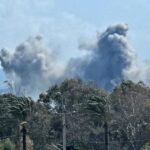
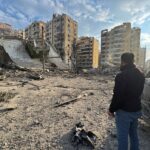
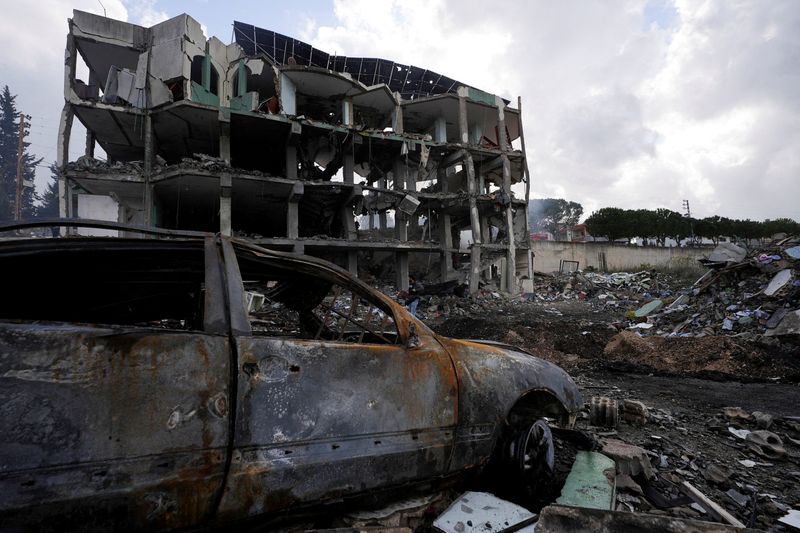
GENEVA, March 17 – Israeli airstrikes targeting residential buildings, displaced people, and healthcare workers in Lebanon have raised significant concerns under international law. The United Nations human rights office has warned that these attacks may constitute war crimes.
The Israeli military has been conducting airstrikes in Lebanon since the Iran-backed Shi’ite Muslim group Hezbollah launched rockets at Israel from Lebanese territory. This escalation occurred during the broader U.S.-Israeli conflict against Iran.
According to Lebanese authorities, the Israeli strikes have resulted in the deaths of at least 886 people and have forced over 1 million individuals to flee their homes. The U.N. human rights office spokesperson, Thameen Al-Kheetan, highlighted the devastating impact of these attacks, stating:
“Israeli airstrikes have destroyed entire residential buildings in dense urban environments with multiple members of the same family, including women and children, often killed together.”
The Israeli military did not immediately respond to comments made by Al-Kheetan. However, the U.N. human rights office has called for an investigation into deadly strikes on displaced people sheltering in tents along Beirut’s seafront and on a healthcare center in the town of Bint Jbeil.
“International law is very clear that deliberately attacking civilians or civilian objects amounts to a war crime,” Al-Kheetan emphasized.
Israel’s military claims it is targeting Hezbollah infrastructure and describes its ground operation in Lebanon as a defensive measure to protect northern Israel from Hezbollah attacks. Meanwhile, Hezbollah asserts that its attacks are aimed at avenging the killing of Iran’s supreme leader during the ongoing conflict.
Displacement in Lebanon Is Rising Rapidly
Approximately one-fifth of the population in Lebanon has been registered as displaced following large-scale Israeli evacuation orders across southern Lebanon and the southern suburbs of Beirut.
Thameen Al-Kheetan noted that Israel’s extension of these orders to include the region between the Litani and Zaharani rivers may constitute forced displacement, which is prohibited under international humanitarian law.
Imran Riza, the U.N.’s humanitarian coordinator in Lebanon, stated that civilians are bearing the brunt of the conflict.
“Displacement is increasing incredibly quickly. Right now, hundreds of thousands of people have left their homes, many leaving with very little, just the clothes they were wearing,” Riza said.
Aid deliveries have been hampered by global donor cuts to funding and supply chain disruptions. An air bridge used by Gulf countries to deliver humanitarian aid during the 2023-2024 war is currently not operational due to airspace restrictions during the current conflict.
Riza reported that only three aid flights have reached Lebanon in the past week. This lack of support has exacerbated the crisis for those affected by the ongoing violence.