Iran’s Internet Blackout Mutes Voices, Diaspora Creators Step In
Iranian American Ariana Afshar has been attempting to provide commentary on the initial weeks of the war in the Middle East, drawing from the perspectives of individuals within Iran. However, she faces a significant challenge: an internet blackout imposed by the Iranian government has severely restricted communication within the country. This makes it extremely difficult to gather reliable insights into the experiences and opinions of people living in Iran, where Afshar spent part of her youth and still has family.
The lack of access has led to an increase in influence among Iranian American social media creators, who are now offering concise explanations of Iran’s complex history and the diverse sentiments of its citizens through widely shared videos. According to Babak Rahimi, an Iranian professor at the University of California, San Diego, these creators play a role that goes beyond just information—it’s more about the spread of emotions.
Their content is tailored to meet the rising demand for information in the U.S., where searches like “why are we at war with Iran” saw a 3,000% increase in the first week of March, according to Google Search Trends. Some creators and analysts argue that the disproportionate influence of voices outside of Iran has deepened divisions within the diaspora, which includes around 750,000 people in the United States, as per Pew Research Center data.
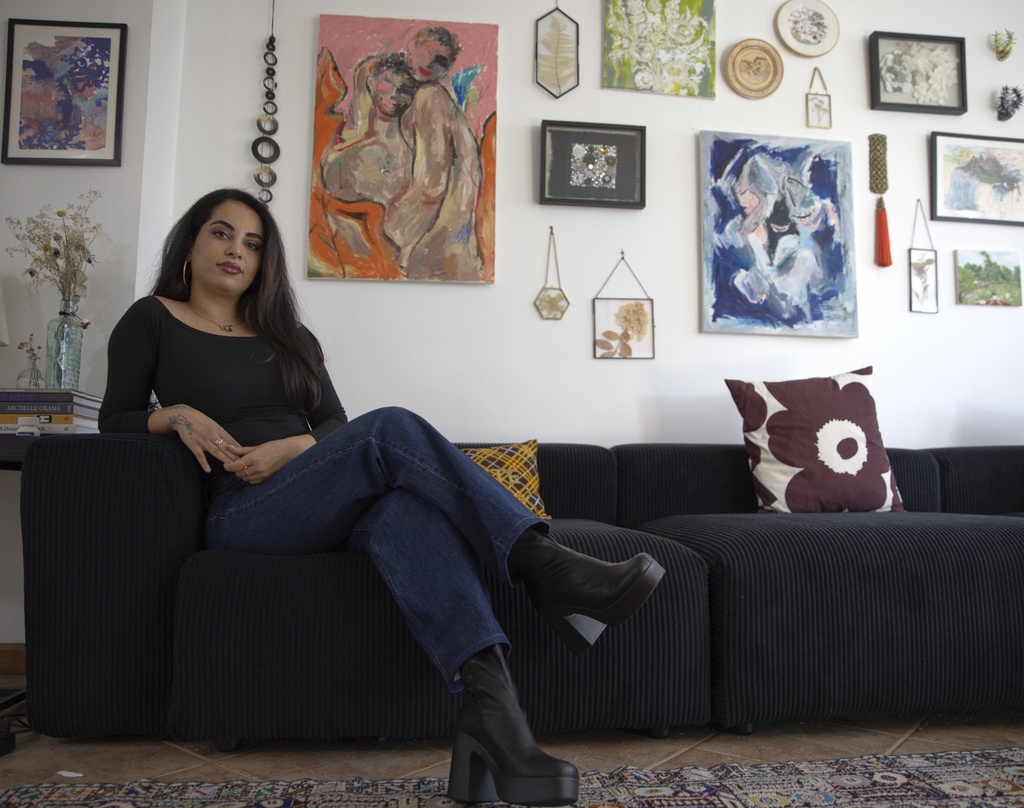
Afshar, who has approximately 350,000 followers on Instagram and TikTok, acknowledges the challenges of speaking on behalf of Iranians. She often critiques pro-war viewpoints based on her personal experiences growing up in both countries. When she is able to connect with relatives, they are frequently too fearful to express their true feelings about the war and the government.
Content creators cannot fully access the opinions of people inside Iran, Afshar notes. Some creators support the war, arguing that the fear of conflict is overshadowed by the government’s violent suppression of dissent, including the killing of thousands during a January crackdown. Others highlight the destruction of infrastructure and increasing casualties, such as over 165 deaths from a strike on an elementary school, as warnings of further violence, citing past U.S. conflicts in Iraq and Afghanistan as precedents.
Communication barriers have limited the flow of information
In many conflicts, citizens can supplement official reports with firsthand accounts shared on social media. However, digital blackouts and the fear of government retaliation have significantly hindered this process in Iran. While news outlets like the Associated Press have journalists reporting from within Iran, limited communications make it challenging to disseminate their findings. AP uses satellite imagery, phone interviews, eyewitness testimony, and verified user-generated content to report on events in the country.
Despite this, misinformation thrives on social media and platforms like Telegram, where millions follow groups sharing unverified content. Some of this disinformation is produced by the Iranian government, including fake accounts meant to sway American opinion against the war, according to Houman Hemmati, who supports the war and left Iran after the 1979 revolution. False information favoring the U.S. has also spread, including videos claiming Iran was responsible for the school bombing. A preliminary U.S. military investigation found outdated intelligence likely led to the strike, according to a U.S. official.
When Iranians manage to share information, it quickly gains attention, highlighting the demand for firsthand accounts. Hemmati, a 49-year-old from Southern California, said, “All it takes is for just a little bit to leak out, and those images and stories go viral.”
Iranians turn to U.S. relatives for news
A 35-year-old Iranian woman living in New York, who requested anonymity due to fears of retaliation against her relatives in Iran, described how her family’s WhatsApp chat illustrates the impact of the blackout. In brief moments of connection, the chat serves as a source of news for her relatives, who struggle to obtain information.
Her cousin in Tehran sent messages on the day of the bombing: “Where did they hit?” one read. “Everything I watch is just smoke and explosions.” The family chat has also become a space for debates about the future of their homeland, with relatives sharing news clips and social media videos presenting various views on U.S. involvement. However, she noted a stark difference between her family members in the U.S., who discuss the war in abstract political terms, and those in Iran, who live the consequences daily.
Diaspora creators engage in the debate
There has long been a “narrative war” among members of the diaspora, said 26-year-old social media creator Ciara Moezidis, who was born in the U.S. and has extended family in Iran. Her Instagram following increased by 2,000 since January, when she began posting in support of Iranian protesters and against the war.
“It’s been incredibly exhausting to navigate this while seeing bombs drop across Iran and not being able to reach our families,” said Moezidis. Others, like Zoya Biglary, an Iranian American content creator with over 600,000 Instagram followers, hope that Iranians will eventually see the global support for their struggle.
“Maybe they’re looking for proof that someone on the outside kind of sees their humanity,” Biglary said.