Israel Claims Top Leader of Iran’s Basij Militia Killed
Escalating Conflict in the Middle East
The situation in the Middle East has become increasingly volatile, with multiple countries caught in the crossfire of escalating tensions. Israel has reported the killing of a high-ranking Iranian military official, while Gulf Arab nations face renewed missile and drone attacks from Iran. This has led to heightened security measures and significant disruptions in regional stability.
Israel’s Strikes Target Iranian Leadership
Israel claimed responsibility for the death of Gholamreza Soleimani, the head of the Iranian Revolutionary Guards’ Basij force. The Basij is known for its role in suppressing internal protests within Iran. According to the Israeli military, Soleimani was killed in a strike on Monday. However, Iran has not officially confirmed his death. The Basij forces are described as part of the “armed apparatus of the Iranian terror regime,” and they have been involved in violent crackdowns on demonstrations in recent months.
Soleimani, who has been sanctioned by the U.S. and the European Union, has been linked to years of suppressing dissent through the Basij. His death could significantly impact the command and control of the Basij, which plays a crucial role in maintaining the Iranian regime’s grip on power.
Iran’s Attacks on Gulf Nations
Iran has continued its aggressive actions against Gulf Arab nations, targeting oil facilities and shipping traffic. A drone strike hit an oil facility in Fujairah, UAE, causing damage but no injuries. The UAE also experienced a tragic incident where a man was killed by debris from an intercepted missile over Abu Dhabi. This marks the eighth fatality in the UAE since the conflict began.
Iran’s attacks on the Strait of Hormuz, a critical route for global oil shipments, have raised concerns about a potential energy crisis. The strait is responsible for transporting about a fifth of the world’s oil. With several vessels targeted since the war began, the situation remains precarious. The U.S. has called for international cooperation to keep the strait open, but many countries are hesitant to get involved due to the lack of a clear exit plan.
Regional Responses and Security Measures
Gulf nations have taken various steps to counter the threats posed by Iran. The UAE briefly closed its airspace in response to incoming missile and drone threats. Similarly, Saudi Arabia and Qatar reported intercepting drones and missiles, highlighting the ongoing efforts to protect their territories. In Iraq, the U.S. Embassy in Baghdad was hit by shrapnel from intercepted drones, underscoring the risks faced by foreign embassies in the region.
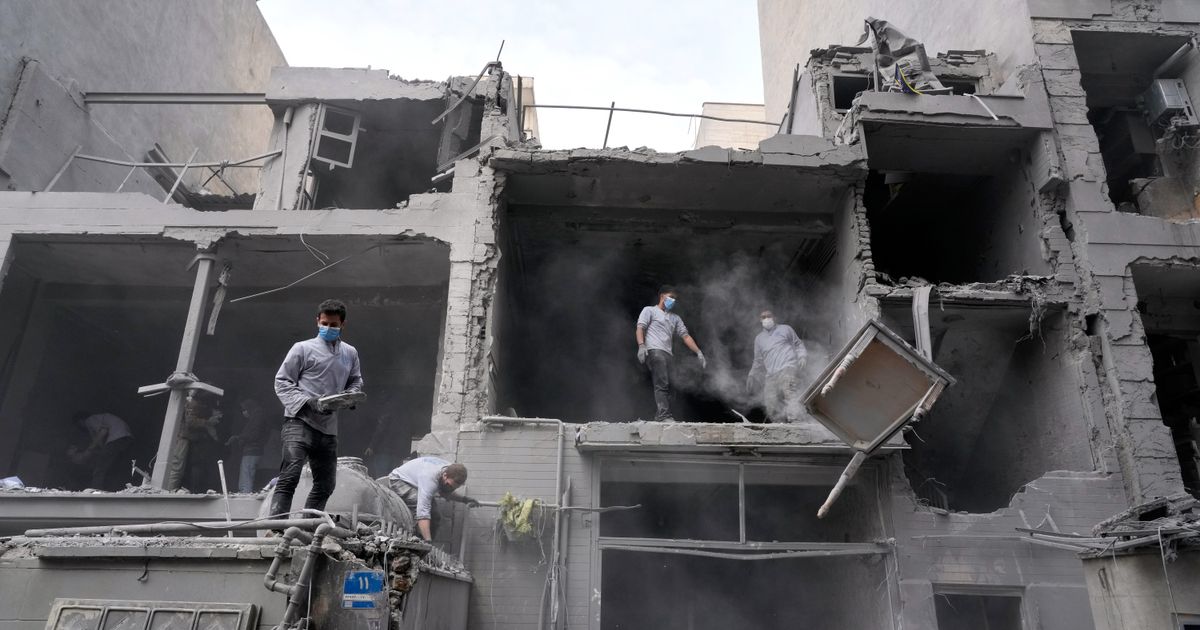
Israel has intensified its strikes on both Iran and Lebanon, targeting Hezbollah militants. The Israeli military reported launching new attacks across Tehran and the Lebanese capital. While there is no immediate confirmation from Iran, the Lebanese army reported that two soldiers were seriously wounded in an airstrike on the village of Kfar Sir.
Impact on Global Markets and Energy Prices
The closure of the Strait of Hormuz has had far-reaching implications for the global economy. Energy prices have surged, with Brent crude exceeding $100 per barrel. This increase has raised concerns about food shortages in developing countries and has complicated efforts by central banks to manage inflation. Despite Iran’s claim that the strait remains open, it is effectively closed to U.S., Israeli, and allied ships.
A tanker anchored off the eastern coast of the UAE was hit by a projectile, sustaining minor damage. This incident highlights the dangers of navigating the region, even for non-belligerent vessels. Iraq has reportedly engaged in discussions with Iran regarding the passage of its ships through the strait.
Ongoing Conflicts and Human Toll
The conflict has resulted in significant loss of life and displacement. Over 1,300 people have been killed in Iran since the start of the conflict, according to the Iranian Red Crescent. In Lebanon, more than 1 million people have been displaced, representing roughly 20% of the population. The Lebanese government reports at least 850 deaths, with fears of a large-scale Israeli invasion.
Israeli military officials have emphasized their determination to continue operations until all objectives are achieved. The Northern Command is being reinforced with additional troops, signaling a prolonged commitment to the conflict.
As the situation continues to evolve, the international community remains on edge, watching closely for any signs of de-escalation or further escalation in this complex and dangerous conflict.