
U.S. Destroys Iran’s Entire Air Force in 24 Hours
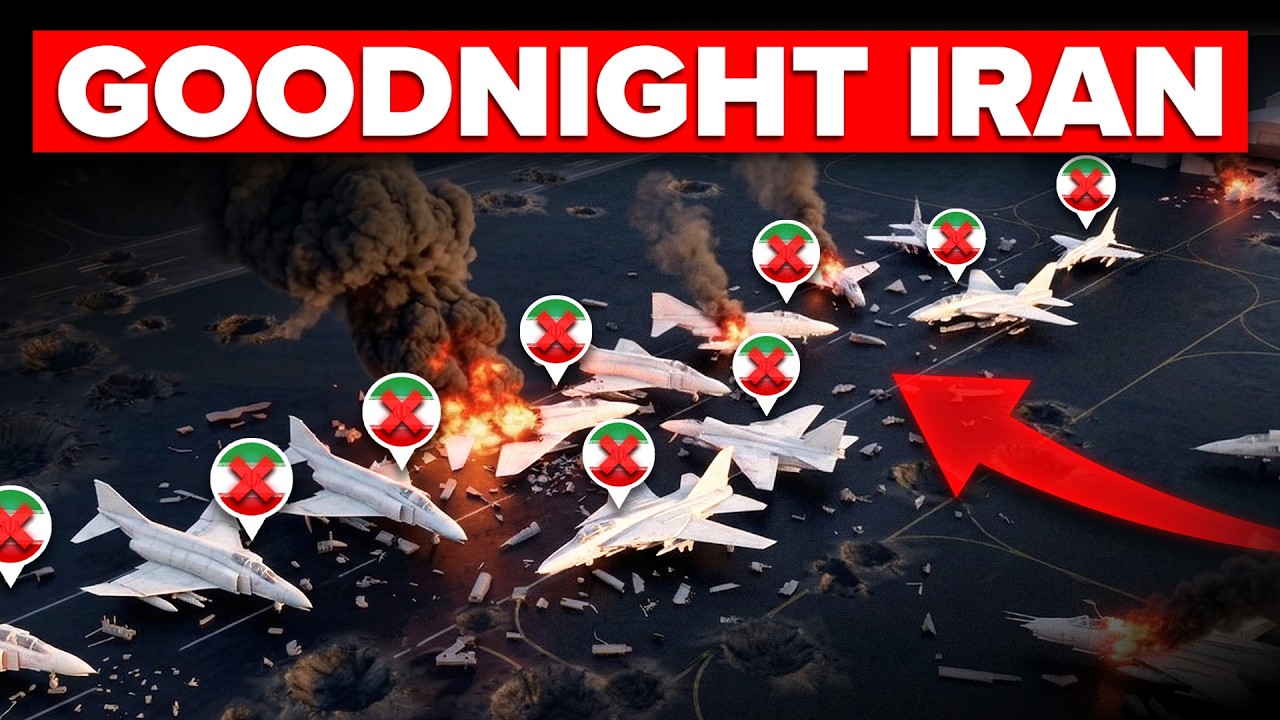
Iran spent 47 years building its air force. It didn’t build a very good force, but it built something that it thought would at least allow it to maintain small pockets of air superiority over its own territory. But that didn’t happen. In just 24 hours, the U.S. wiped out Iran’s entire air force. It is gone. Evaporated. A shock and awe campaign has made even the prospect of an Iranian pilot taking to the sky suicidal, and there isn’t a thing that Iran can do about any of it.
The footage reveals everything. Shared by Max Afterburner, a video released by U.S. Central Command shows just one of the multitude of strikes that the U.S. conducted against Iran’s aging fleet of aircraft. Sitting sullen and alone on an airfield, the Iranian jet is destroyed in a heartbeat, and this has been happening over and over across Iran. Every airbase that the U.S. strikes results in Iranian airframes going up in flames, and it has gotten to the point where Iran basically has no options in the skies.
It can’t send aircraft to fight against America’s overwhelming force. The few that it had that might be able to put up a fight are gone, and what it has left are the dregs of an air force that is decades behind the curve. We’ll explain why in just a few minutes. But before we do, Afterburner explains what is happening to Iran’s air force right now.
“They’ve completely dismantled Iran’s air force, hitting bases like Tabriz,” Afterburner explains. “Looks like destroying even more F-4 Phantoms, Su-22 attack aircraft, ground attack aircraft, mainly, are being vaporized. F-14 Tomcats, F-5 Tigers, and drone sites before anything can turn a wheel. Literally nothing is getting airborne at this point.”
AeroTime adds that Israel’s air force has confirmed that it destroyed an Iranian F-4, along with an F-5, at the Tabriz base as each of the aircraft prepared for take-off. So, even the Iranian pilots who were willing to attempt the suicide mission of taking on the U.S. and Israel didn’t get very far.
Both the U.S. and Israel have also been targeting the support facilities that enable airframes to take off. Satellite images reveal destroyed storage bunkers at the Konarak base and a shattered radar system at Zahedan.
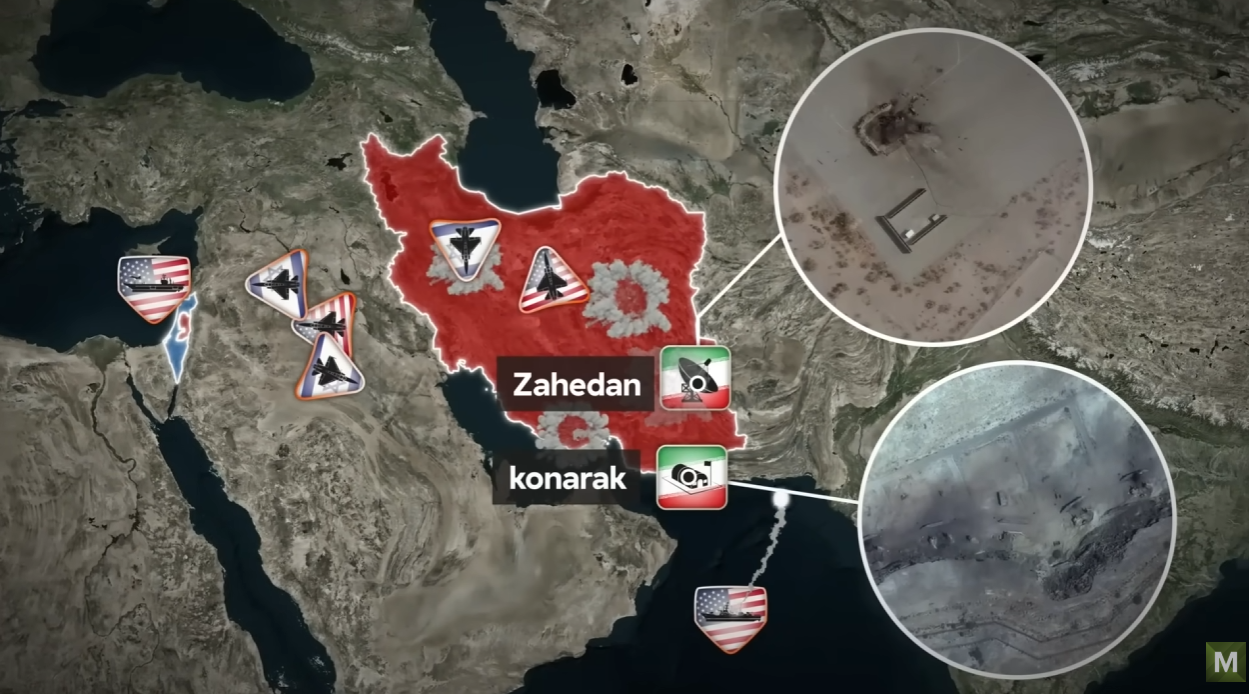
These weren’t random strikes. The U.S. and Israel coordinated to cripple Iranian airpower before it ever had a chance to make itself known. You’ll have already noticed that the aircraft that the U.S. is taking out would be considered old by any modern military’s standards. But these airframes are the best that Iran has, and they’re being systematically destroyed by an American and Israeli bombing campaign that has already achieved the most important goal for the joint Operation Epic Fury and Operation Roaring Lion: Achieving complete air superiority.
That’s according to the Chairman of the Joint Chiefs of Staff, General Dan Caine, who has confirmed that the U.S. followed Israel’s lead when it came to striking Iran just a few days ago, and that the scale of these strikes has devastated Iran’s air force. The U.S. strikes have “resulted in the establishment of local air superiority. This air superiority will not only enhance the protection of our forces, but also allow them to continue the work over Iran,” Caine declares.
For that to have happened, the U.S. not only had to have ruined Iran’s airframes but also destroyed the country’s air defenses. That’s a little hint. The U.S. has already done both. We’ll be getting to Iran’s air defense situation a little later.
On the aircraft front, the U.S. bombardment of Iran’s airbases has been so effective that not a single one of Iran’s pilots has taken off. Iran hasn’t attempted any manned sorties during the four-day war so far, and, frankly, any pilot who does try to take to the skies now would be engaging in a suicide mission, given both the age of their aircraft and the sheer level of air superiority that the U.S. has attained.
“Iranian fight pilots also know that it’s suicidal to go up against an F-15 Strike Eagle, F-16, F-18, or F-35,” Afterburner explains. America’s bombing campaign has been so successful over a 24-hour period that what was once a fleet of about 400 Iranian aircraft has been whittled down to about 200. In other words, what little aerial threat that Iran could have posed in the sky has been halved before a single one of its airframes could get off the ground.
And it seems likely that the U.S. has focused most of its fire on the aircraft that could have presented something resembling a threat, which leaves Iran with an air force that is little more than a collection of poorly maintained airframes that were built decades ago.
This is what aerial domination looks like. And the U.S. planned it all well in advance. That’s according to Business Insider, which reveals that the U.S. and Israel did far more than fling missiles and bombs at Iran from its fighter jets during the opening hours of the war. Both were much smarter than that. They knew that, for as little threat as Iran’s fighter jets posed, flying in without being prepared would still make their superior aircraft vulnerable.
The outlet reports on more comments made by Caine, who said that the U.S. campaign against Iran, which began on February 28, was kicked off with the “layering non-kinetic effects, disrupting, and degrading, and blinding Iran’s ability to see, communicate, and respond.” What this translates into is that the U.S. and Israel launched cyber attacks and even space commands that crippled Iran’s air force hours before the first U.S. fighter jets took off in the direction of Tehran.
Caine says that the initial non-kinetic U.S. approach targeted everything from Iran’s command and control facilities, through to its ballistic missile sites and intelligence infrastructure in an operation that was “designed to daze and confuse them.” It worked. Before Iran even knew what was happening, up to half of its airframes were destroyed, and the air defenses that were supposed to protect them, along with other key military nodes, had completely failed to take down even a single American or Israeli jet.
U.S. Secretary of State Marco Rubio argues that the U.S. “went proactively in a defensive way” with its initial round of strikes, and that Iran has to get ready because “the hardest hits are yet to come from the US military.” That’s the last thing that Iran’s regime wants to hear. As it sifts through the wreckage of its destroyed fighter jets and other aircraft, the prospect of more coming when Iran is basically defenseless in the skies is terrifying.
Iran will be wondering how all of this happened. How did its carefully laid plans for defeating the U.S. fall apart so quickly? There are two answers to that question, one covering Iran’s air defenses, and the other that dives into detail about the state of the air force that the country had built. We’ll come to the second answer a little later in the video.
But on the air defense front, there’s no way to sugarcoat things for Iran. Its entire air defense network has utterly failed to do anything about the combined U.S. and Israeli airstrikes, and that’s why dozens, perhaps even hundreds, of Iran’s airframes are just craters in the ground right now.
U.S. President Donald Trump has already declared that Iran’s air defenses are gone, along with its navy, air force, and most of its leadership structure. Trump also claims that Iran’s missile capability is being diminished, which presumably also accounts for missiles that would have been fired by the country’s air defense systems.
“We’ve had a very powerful impact. Virtually everything they had has been knocked out now. Their missile count is going down,” Trump said on March 3. Dan Caine has emphasized this point when discussing the U.S. and its air superiority, noting that Iran’s air defenses have been degraded to the point where American pilots can fly with near impunity over Iranian territory.
We’re starting to see this in the nature of the U.S. airframes that are flying into Iran right now. For instance, Asia Times reports that the U.S. has started sending B-1 Lancer bombers into Iran to conduct strikes, rather than the B-2 Spirit stealth bombers that America sent earlier in the conflict. “This indicates a high level of confidence that Iran’s long-range Surface-to-Air Missile (SAM) systems are no longer a primary threat to non-stealth aircraft in certain corridors,” the outlet reports, adding that the U.S. and Israel are now focused on destroying as many of Iran’s transporter erector launchers to take out even more of its air defense capabilities.
And naturally, weaker air defenses create more opportunities for American bombers and fighter jets to do their business, which will almost inevitably lead to the loss of yet more Iranian airframes beyond those that the U.S. destroyed in just 24 hours.
The question has to be asked. How did Iran’s air defenses fail so catastrophically in the first place?
Back to Iran’s failed air defenses, we’ve already covered how the U.S. launched a non-kinetic campaign as a precursor to its early strikes, which likely took many of Iran’s air defenses offline. However, Army Technology reveals that there are more reasons why those defenses utterly failed to do the one thing that they were designed to do.
The outlet reports on the aggressive electromagnetic spectrum operations that the U.S. and Israel deployed, which would have shut down Iranian air defense radars so they couldn’t see airframes and projectiles coming. However, this approach was combined with a more kinetic approach that saw the U.S. and Israel divide their responsibilities. Specifically, the U.S. took charge of strikes against Iran’s air defenses, control centers, and much of the country’s military and logistics infrastructure. Israel went after ballistic missile launchers and Iran’s leadership.
This was made a lot easier on the air defense front, because the Islamic Revolutionary Guard Corps, or IRGC, had retained about 100 air defense systems, but likely didn’t have many of the missiles needed to use those systems to their fullest.
Another of Iran’s air defense problems comes from the fact that it has deployed copycat systems throughout much of its network. Yes, Iran has some Russian and Chinese air defense systems. But most of what it has are reverse-engineered versions of those systems, Army Technology reports. For instance, Iran’s Bavar-373 is just a cheap knock-off of the S-300 systems that Ukraine has been destroying in massive quantities in its war with Russia. Iran’s Ya Zahr is just a reverse-engineered version of China’s HQ-7, and something similar can be said of Iran’s Zoubin system.
What we see here is that Iran tried to go up against two of the world’s strongest air forces with an air defense network filled with garbage copies of other countries’ tech. That went about as well as you would expect.
Right now, Afterburner says the U.S. has achieved air superiority in Iran due to these many air defense failures. Now, America’s goal has to switch to keeping that superiority, “because there are certain surface-to-air missile systems that are still alive and well,” Afterburner claims. “They’ll pop out from a hiding spot and then launch a missile.” So, the U.S. still has to take care in the skies. Iran’s air defenses are crippled, but they’re not quite dead. Still, they were useless enough to not be able to do a thing about America’s 24-hour shock-and-awe campaign unleashed against the Iranian air force. And neither could Iran’s airframes, which brings us back to the second reason why all of this happened to Iran.
The simple fact is that Iran’s air force was too weak to stack up to what the U.S. brought to the table from the start. This was Mike Tyson delivering a haymaker to an old man with no arms, and you’ll have seen that in the age of the airframes that we talked about right at the beginning of the video.
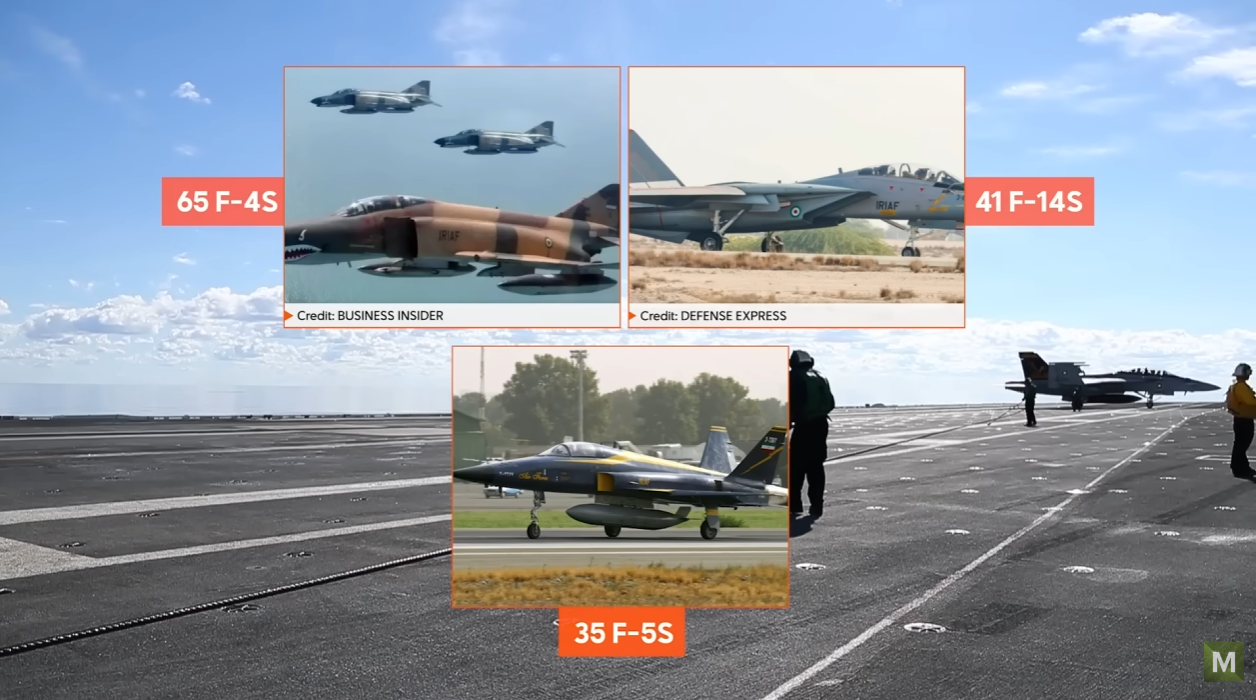
AeroTime goes into more detail, noting that Iran’s beleaguered air force had zero chance right from the start. The very best of its fighter jets include a fleet of 65 F-4s, 41 F-14s, 35 F-5s, and an assortment of Soviet-era Russian platforms, such as the Su-24 and MiG-29. Add a few tankers and special mission aircraft into the mix, and that’s all Iran had. The country also has no airborne early warning fleet, which, when combined with the utter failure of its air defenses, means that the Mike Tyson haymaker ended up being a sucker punch delivered right to the back of Iran’s head.
An ancient air force isn’t a good start when you’re going up against the U.S. But an old air force that isn’t even being maintained is an even bigger problem. “There are roughly 400 or so aging aircraft that have been crippled by sanctions, and they lack modern capabilities,” Afterburner says. At least, there were around 400 aircraft in Iran’s air force. There are a lot fewer now. But that about sums it up, because even if Iran’s pilots were foolish enough to try to take to the skies in their old fighter jets, they wouldn’t even be able to trust those airframes to fulfill the limited capabilities that they are supposed to have.
There were plenty of hints that this would be the case long before the U.S. unleashed its firestorm against Iran’s air force. Back in May 2022, Iran International reported that the volume of sanctions levied against Iran was behind a spate of air force accidents that had resulted in several deaths. A pair of Iran’s pilots had died at Iran’s Dezful Air Base in June 2021, both due to sudden glitches in their ejector seats that happened before they even got their aircraft off the ground.
Retired pilot Brigadier General Kioumars Heidarian, who trained in the U.S. and flew for the Iranian air force both before and after the 1979 revolution in the country, made it clear why this happened. “Accidents happen everywhere, and no one in the world has managed to decrease the number of accidents to zero, but if the equipment is complete, it is natural that the number of accidents will be fewer,” he said. In other words, ejector seats explode on their own when you don’t have the parts to maintain them.
By June 2025, The National Interest was calling Iran’s air force a “mess,” as it noted that Iran had gone to extreme lengths to keep a handful of its ancient aircraft airworthy, but even those weren’t ever going to be effective against a modern air force. Again, sanctions were to blame, as Iran has to deal with the one-two punch of having an old fleet and the complete inability to maintain the majority of the aircraft that were in that fleet.
So, the fight was always going to play out in America’s favor. The reason why Iran’s pilots aren’t flying is that they don’t have the equipment. They didn’t have it even before the bombs and missiles flew, and they’ll never have it again now that the few airframes that might have been viable for Iran have been destroyed. Even before the U.S. struck, The National Interest claimed that only 50 to 60% of Iran’s 400 airframes were even flyable, with the rest being set aside for the spare parts that sanctions prevent Iran from buying from elsewhere. This was an unfair fight from the start.
But that’s what happens when you have a fleet composed of predominantly old Western airframes and a regime that hates the West. Rod, meet Iran’s back, built by the very regime that is now crumbling. Talk about biting the hand that feeds.
With its air force practically gone, Iran only has a handful of aerial options left. And almost all of them are unmanned, which means that Iran has not only lost millions of dollars of airframes to the U.S. strikes, but it also has to deal with the sunk cost of training a bunch of pilots who aren’t ever going to fly.
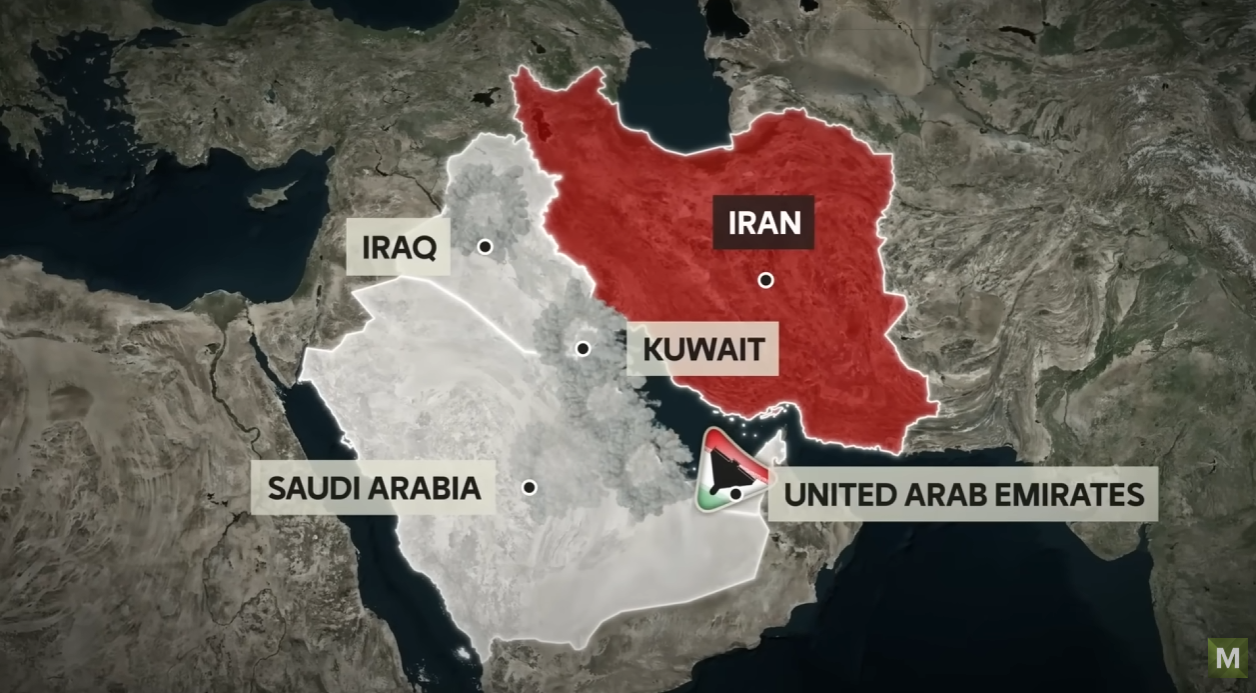
Still, Iran’s drones are doing more than its airframes ever did. Al Jazeera reports that hundreds of Iran’s drones have targeted bases and military nodes in several Gulf countries, including Saudi Arabia, Iraq, Kuwait, and the United Arab Emirates.
The Russian news agency TASS carries comments by a supposed unmanned aircraft expert named Dmitry Kuzyakin, who claims that “Economy, as always, is the main weapon of any war, and here it is on Iran’s side. Iran can wage war with drones literally indefinitely.” That feels like a stretch. Granted, the U.S. spends a lot more than the cost of building a drone on air defense missiles, like those used in its Patriot systems. But if we’re talking economy, combining existing sanctions with the U.S. and Israel wrecking the Iranian means of drone production with their expensive missiles suggests that Iran’s drone-reliant strategy may have a shorter shelf life than the Russian analyst suggests.
Oh, and it’s not like the U.S. doesn’t have drones of its own. If Iran’s regime somehow manages to survive the blitz that it’s absorbing right now, the U.S. can easily rush one-way and interceptor drones into manufacturing to engage in a tit-for-tat battle, if needed.
The reality that Iran has to face is that time is running out on its defense. All it has left are drones and depleting supplies of missiles, as its air force, along with every other facet of the asymmetrical strategy it intended to launch against the U.S., lies in ruins. Iran is still trying to maintain some sort of threat, of course. As fighter jets burned on the tarmac, Iran was vowing to strike European countries if they dared to join the war on America’s side. But the U.S., and likely Europe, know that these threats are starting to ring increasingly hollow. Iran is in no position to start throwing them around.
And, if Trump is to be believed, whatever off-ramps that the U.S. might have been offering a few days ago have been withdrawn. “They want to talk,” Trump claimed of Iran. “I said, ‘Too Late.’” But having said that, Trump is scheduled to speak with the remnants of Iran’s regime on March 8, reportedly at the request of the regime itself. A white flag will likely be present, but whether the U.S. chooses to accept Iran’s surrender, and whether Iran’s regime is collectively pig-headed enough to believe that it will still be able to bargain for anything, will only be seen during the weekend.
In the meantime, Iran will continue to make threats. But with what force? Certainly not an air force, that’s for sure. With half of its fleet gone and the rest unlikely to be flyable, Iran has surrendered its skies to the U.S. and Israel. And all it took was 24 hours.
Iran can’t even console itself with the thought that the U.S. unleashed the one missile that changed air combat forever against its jets. How could it? Iran’s fighters never got off the ground. Still, that missile is worth learning about. So, if you want to find out more about something that the U.S. could have unleashed on Iran, and may yet do, check out our video.