Map reveals 16 days of escalating attacks in US-Israel conflict with Iran
The Escalation of Conflict: A Global Impact
The ongoing conflict between the United States and Israel, alongside Iran, has escalated into a complex web of military engagements that have affected multiple countries. As the war enters its 17th day, the situation continues to evolve with attacks and retaliatory actions spreading across regions. This conflict has not only impacted Iran but also neighboring Gulf countries, leading to significant disruptions in global trade and security.
Where Have Attacks Occurred?
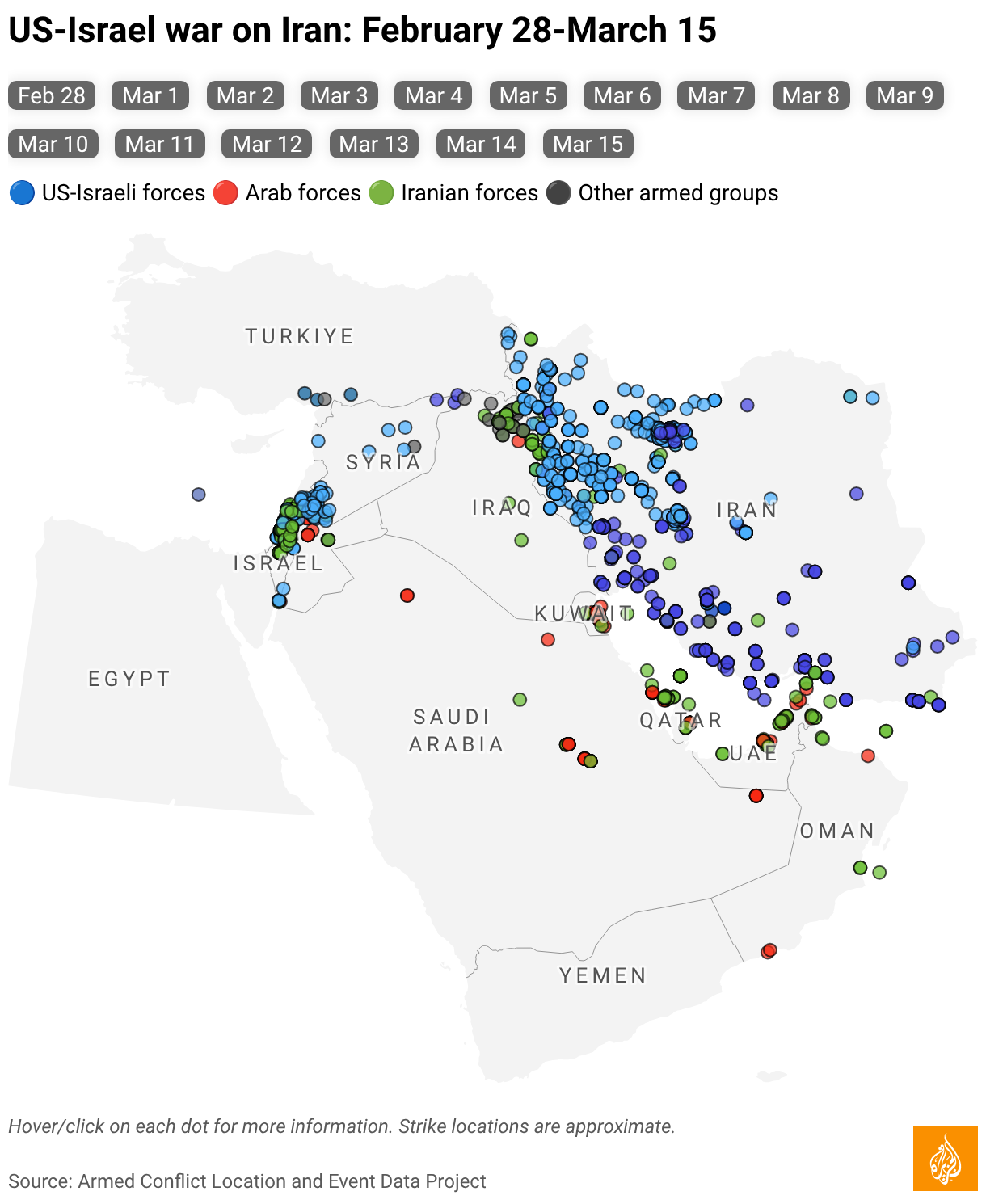
The Armed Conflict Location and Event Data (ACLED), an independent conflict monitor, has documented nearly 2,000 distinct events across at least 29 of Iran’s 31 provinces. Tehran has been the most heavily targeted area, experiencing the most intense bombardments. Each event may involve multiple attacks using various types of weaponry, including air and drone strikes, artillery, shelling, missile attacks, remote explosives/IEDs, and “disrupted weapons use,” which measures interceptions.
The map below highlights a day-by-day breakdown of the recorded events since February 28. Click on the tabs to view each day, or click on the circles to access more information about each incident.
What Has Been Targeted?
US and Israeli strikes have mainly targeted Iran’s missile infrastructure, nuclear and military sites. In addition, Israel and the US have targeted Iran’s energy facilities, including oil depots in Tehran, as well as military sites on Kharg Island, a vital port for Iran’s oil exports.
According to the World Health Organization (WHO), at least 18 hospitals and health facilities have been hit. Iran has also reported that several schools and residential areas have been severely damaged. The deadliest single incident occurred in the city of Minab in southeastern Iran, where a strike on an elementary girls’ school killed more than 170 people, most of them schoolgirls.
Iran’s retaliatory attacks have targeted several sites across Israel as well as oil refineries, US military bases, airports, and commercial shipping across the six Gulf states and beyond. Iran has declared all US financial institutions and other tech and multinational companies in the Middle East as justified targets.
Israel has also attacked southern Lebanon and the southern suburbs of the capital, Beirut. The Israeli army has issued forced evacuation notices, displacing nearly a million people from their homes. Meanwhile, Israel continues to bombard the Gaza Strip daily, closing all crossings into the Palestinian enclave, and has stopped the flow of aid, violating the ceasefire agreement from October 10.
What Weapons Are Being Used?
The US and Israel have utilised a massive array of advanced air and sea-launched weaponry against Iran. The US has primarily relied on long-range weapons to target central and southern Iran, while Israel has focused on northern Iran, largely employing its air force of US-made advanced jets.
According to the US military’s Central Command (CENTCOM), it has utilised more than 20 distinct weapons systems across air, sea, land, and missile defense forces.
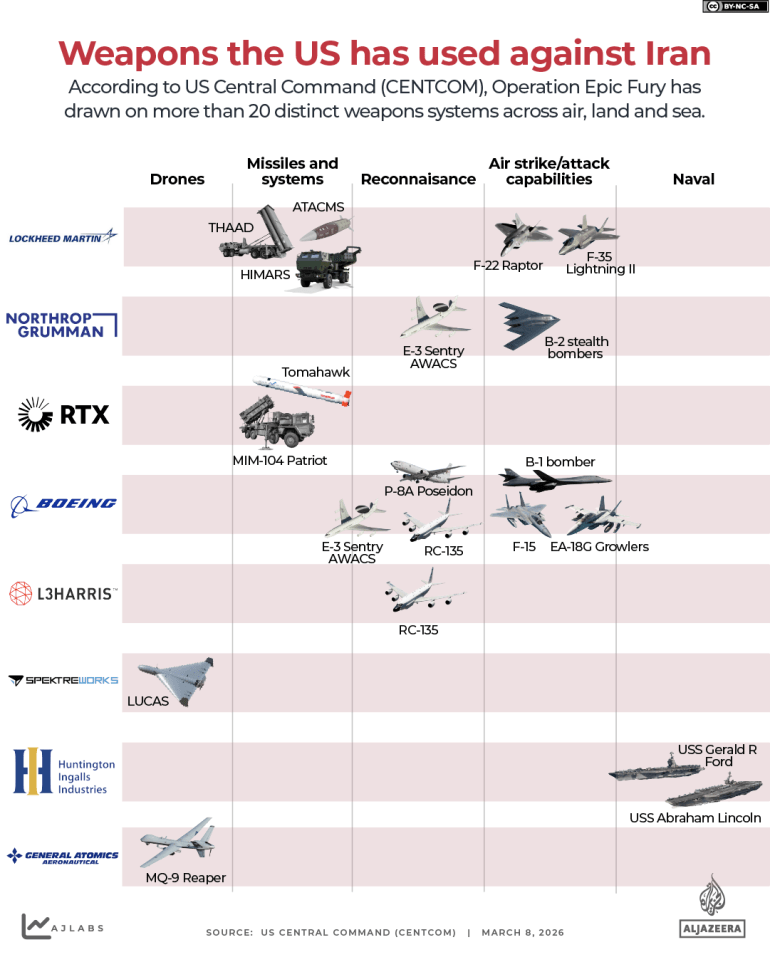
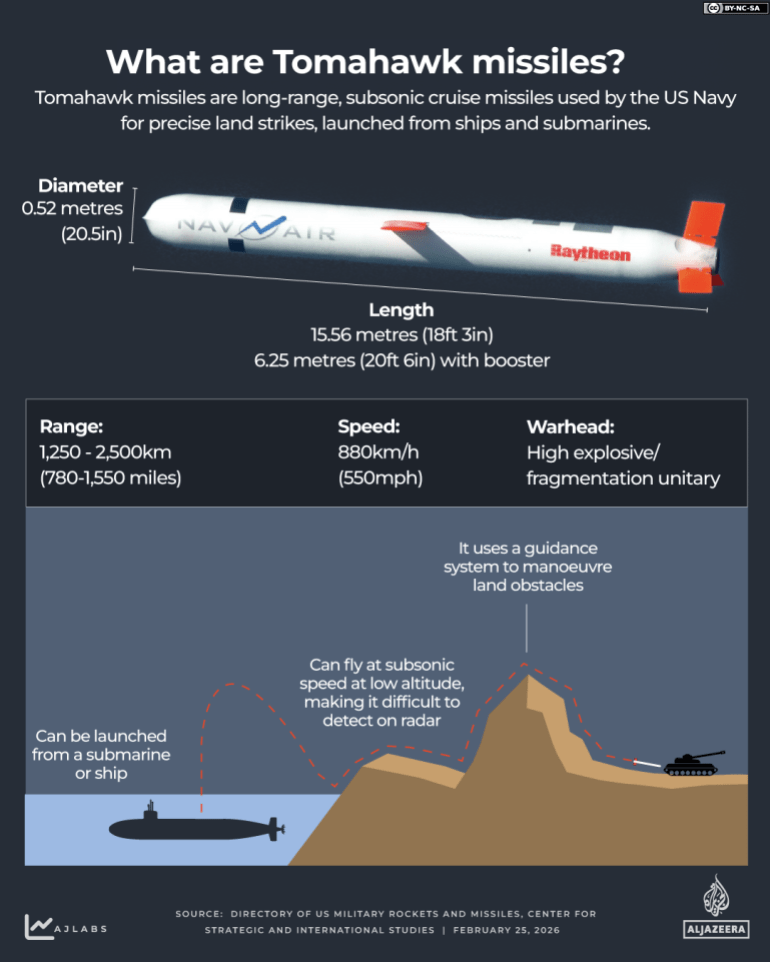
The US has employed Tomahawk cruise missiles from navy destroyers in the Arabian Sea for attacks. It has also deployed the Precision Strike Missile (PrSM) for the first time and the Low-Cost Uncrewed Combat Attack System (LUCAS), a drone modeled on Iran’s Shahed. Additionally, MQ-9 Reaper drones, as well as F/A-18 and F-35 aircraft, have been used.
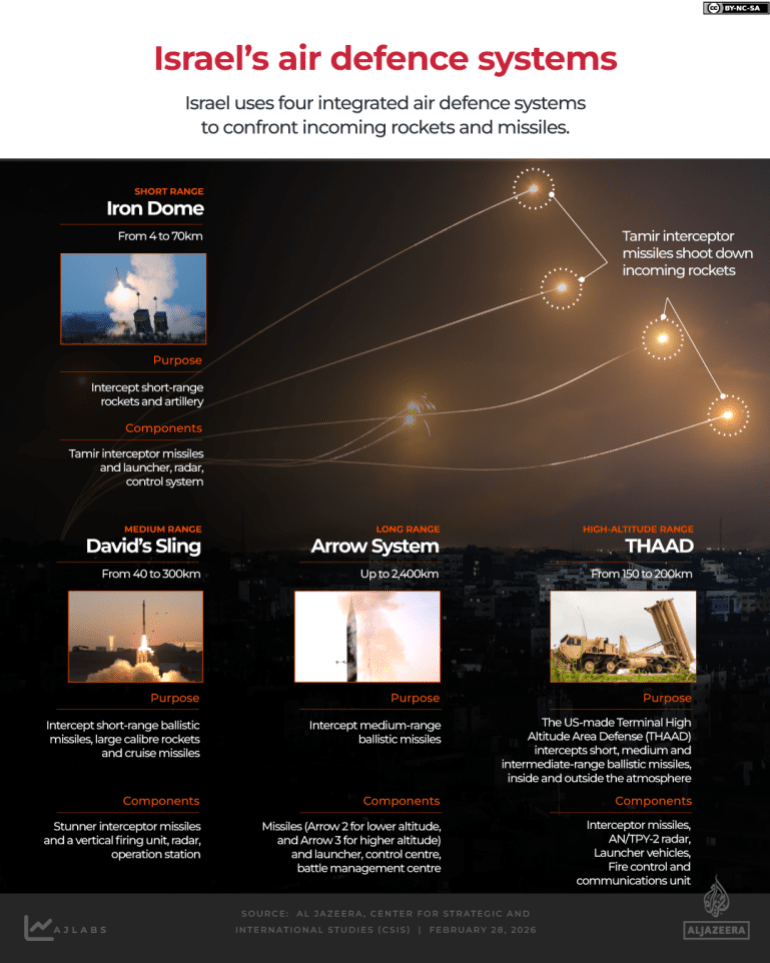
In terms of air defense, the US has deployed Patriot missile systems to intercept ballistic missiles at low altitude and the Terminal High Altitude Area Defense (THAAD) systems intercepting missiles at higher altitudes. Israeli forces have been intercepting missiles with the Iron Dome and the David’s Sling, designed to shoot down cruise missiles.
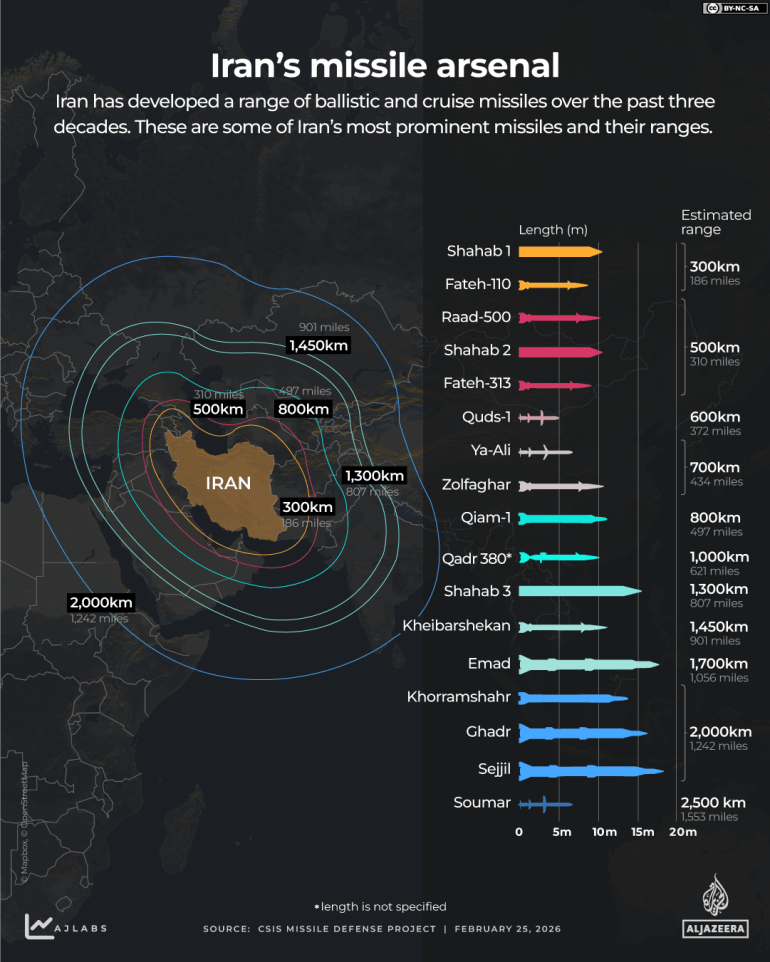
Iran, on the other hand, is using a trifecta of short- and medium-range ballistic missiles and one-way attack drones. Drones have delivered volume, with cheap, mass-produced Shahed drones making it difficult for radar to spot due to their ability to fly at low altitude. Iran’s missiles include the medium-range ballistic Shahab-3, which can travel more than 1,900km and has been deployed against Israel and used to attack energy infrastructure in the Gulf states.