
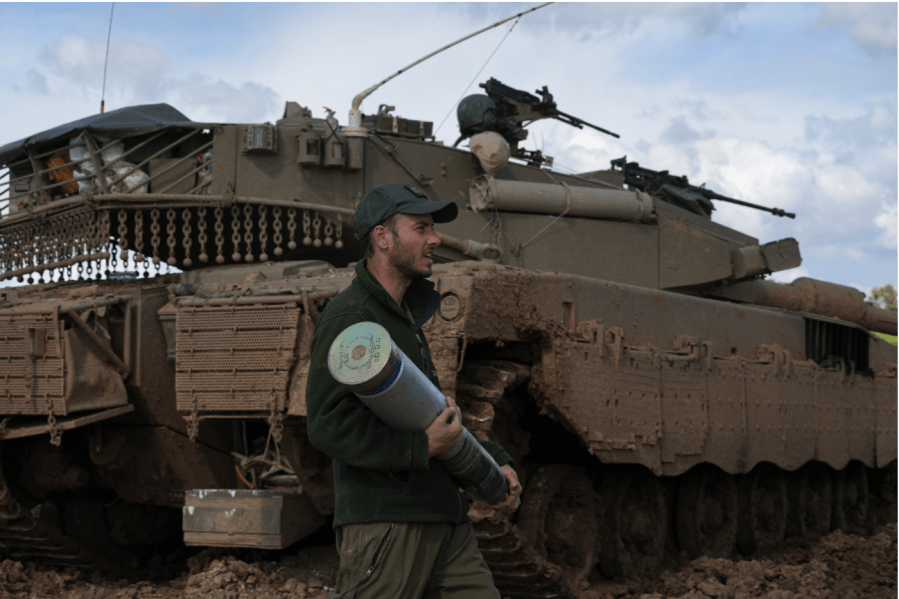
IDF Prepares for at Least 3 More Weeks of Iran Operation
Israel and U.S. Plan Extended Strikes on Iran
The Israeli Defense Forces (IDF) have announced plans to continue military strikes on Iran for at least three more weeks. According to Brig. Gen. Effie Defrin, an IDF spokesperson, the operation is set to last through the Jewish holiday of Passover, which is approximately three weeks from now. The IDF has also outlined deeper strategies that could extend beyond this timeframe.
“We have thousands of targets ahead,” Defrin stated during an interview with CNN. “We are ready, in coordination with our U.S. allies, with plans through at least the Jewish holiday of Passover, about three weeks from now. And we have deeper plans for even three weeks beyond that,” he added.
This announcement comes after the IDF carried out attacks on key Iranian facilities. On Saturday, the forces targeted the research center of the Iranian Space Agency and a factory responsible for producing aerial defense systems. These actions reflect a broader strategy of preemptive strikes aimed at disrupting Iran’s military capabilities.
Strong Words from Israeli Leadership
Israeli Prime Minister Benjamin Netanyahu emphasized the aggressive stance of his government. During remarks on Thursday, he stated, “We are not waiting. We are initiating, we are attacking, and we are doing so with force.” This rhetoric underscores the determination of Israeli leadership to maintain pressure on Iran.
Iran has responded with its own threats, vowing to retaliate against both the U.S. and Israel for the recent wave of strikes. Iranian Foreign Minister Abbas Araghchi dismissed any notion of a truce or negotiation, calling such ideas “delusional.” He asserted, “Our Powerful Armed Forces will keep firing until POTUS realizes that the illegal war he’s imposing on both Americans and Iranians is wrong and must never be repeated. Victims must also be compensated.”
U.S. Involvement and Strategic Goals
The U.S. has played a significant role in the ongoing conflict. Earlier this month, former President Donald Trump mentioned that the U.S. plans to continue strikes for “four to five weeks.” Although neither Israel nor the U.S. has deployed ground troops in Iran, Trump has not ruled out the possibility of such an action.
On Saturday, the president told reporters that Operation Epic Fury in Iran would continue “as long as it’s necessary.” This statement highlights the administration’s commitment to maintaining military pressure on Iran.
In addition to direct military operations, top U.S. officials are working to ensure the safety of the Strait of Hormuz. This critical waterway, controlled by Iran, is used by oil manufacturers to transport over a fifth of the world’s daily oil supply.
“Many Countries, especially those who are affected by Iran’s attempted closure of the Hormuz Strait, will be sending War Ships, in conjunction with the United States of America, to keep the Strait open and safe,” Trump wrote on Truth Social. He further claimed, “We have already destroyed 100% of Iran’s Military capability, but it’s easy for them to send a drone or two, drop a mine, or deliver a close range missile somewhere along, or in, this Waterway, no matter how badly defeated they are.”
Ongoing Conflict and Global Implications
The conflict between Iran, Israel, and the U.S. has far-reaching implications. While the immediate focus remains on military operations, the broader strategic goals include securing regional stability and protecting global trade routes. The involvement of multiple nations in these efforts highlights the complex nature of the situation.
As the conflict continues, the international community remains watchful. The actions taken by Israel and the U.S. are not only shaping the geopolitical landscape of the Middle East but also influencing global energy markets and diplomatic relations. The coming weeks will be crucial in determining the trajectory of this ongoing crisis.