Iraq Charges U.S. with Killing 7 Soldiers in Clinic Attack
Escalating Tensions Between Iraq and the United States
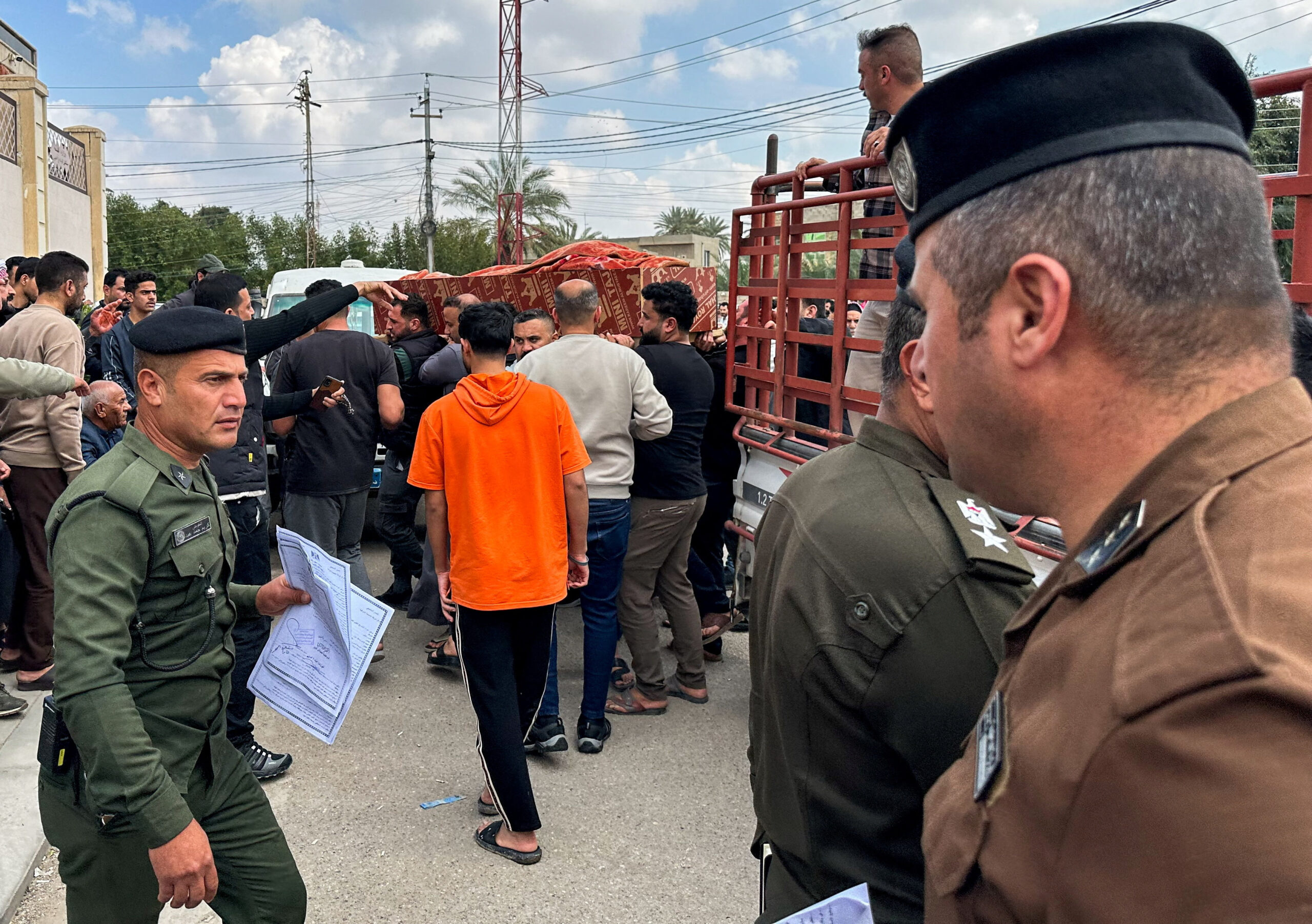
NAJAF, Iraq — A recent incident involving an airstrike on a military base in western Anbar province has sparked significant tension between Iraq and the United States. The Iraqi government accused the U.S. of targeting a clinic, resulting in the deaths of seven members of the Iraqi military and injuring 13 others. This event has the potential to further strain the already delicate relationship between the two nations, especially as the conflict in neighboring Iran continues to unfold.
Sabah al-Numan, a spokesperson for the commander of Iraq’s armed forces, described the airstrike as “heinous aggression.” He emphasized that Iraq reserves the right to respond by all available means, stating that the attack undermines the relationship between the peoples of Iraq and the United States.
The U.S. has denied targeting a medical clinic but has not provided specific details. Navy Capt. Tim Hawkins, a spokesman for Central Command, which oversees U.S. operations in the region, stated, “We’re aware of the reports. U.S. forces did not target a medical clinic in Iraq.”
This incident could complicate the dynamic between Washington and Baghdad. U.S. military forces operate from installations within Iraq, including a strategic air base located northwest of where the strikes occurred. Despite the Iraqi government’s long-standing public desire for U.S. forces to withdraw, it has relied on American troops in a shared fight against Islamic State militants in the region.
Investigating the Attack
The Iraqi government made its accusation as U.S. military officials continue to investigate a deadly strike last month on an elementary school in southern Iran. The Pentagon has not explicitly acknowledged U.S. forces were at fault in that attack, which left at least 175 dead, mostly children, according to Iranian officials. However, reports from The Washington Post and other outlets suggest evidence pointing to U.S. involvement.
In two videos of the aftermath of the attack shared on social media and verified by The Post, a crowd of heavily armed men can be seen climbing over crushed concrete alongside emergency workers and police. The area, labeled a medical clinic on Open Street Maps, is blanketed with debris. Smoke billows near what appears to be a water tower as men clad in dark blue with bright yellow helmets rush back and forth to the rubble.
The Post provided Central Command with the location of one of the verified videos showing damage. The command is further assessing what happened, according to Hawkins.
A separate video filmed less than a mile away and verified by The Post shows two planes flying over the general area of the strike. One is visible descending toward the strike site before flying north. The camera pans to the second plane, an A-10C Thunderbolt II, an aircraft used primarily by the U.S. Air Force that attacks ground targets and provides air support for ground forces. The Post found that at least nine of the aircraft were at Muwaffaq Salti Air Base in Jordan just before the war with Iran began.
Diplomatic Response
Iraq’s Foreign Ministry has been directed to summon the chargé d’affaires of the U.S. Embassy to “deliver a strongly worded official note of protest” and to file a complaint to the United Nations Security Council, Numan said.
The strike Wednesday morning hit the Habbaniyah Military Clinic, according to Iraq’s Ministry of Defense. Search-and-rescue teams were working at the scene, it said. “Targeting medical facilities is a heinous crime by all standards,” the ministry said.
A facility of the Popular Mobilization Forces — an umbrella organization for Shiite former paramilitaries, including some backed by Iran, that have been integrated into Iraq’s security forces — is situated near the army medical unit on the base, a senior Iraqi military official said Wednesday, speaking on the condition of anonymity to share sensitive information. During a visit by The Post to the base in 2018, PMF and regular Iraqi military buildings could be seen close together.
Regional Conflicts and Military Actions
Iran-aligned militant groups have carried out attacks on U.S. assets in Iraq in recent weeks in response to U.S.-Israeli attacks on Iran. The U.S. has responded with attacks targeting pro-Iran groups in Iraq. Tehran’s long-standing support for regional militias, including those in Iraq, has emerged as a central issue in a U.S. proposal to end the Iran war.
The attack Wednesday occurred “despite Iraq’s sustained political and practical efforts to keep the country away from the ongoing regional conflict,” the prime minister’s office said in a statement.
Gen. Dan Caine, chairman of the Joint Chiefs of Staff, told reporters last week that the A-10 was being used to destroy Iranian vessels in the Strait of Hormuz but stopped short of describing its use in Iraq, saying instead that attack helicopters were targeting “Iranian-aligned militia groups” in the country.
The A-10, popularly known as the Warthog, has been a fixture of U.S. conflicts for decades, and its aggressive, low-flying use to target enemies up close has earned the affection of American personnel. But its churning 30mm cannon, capable of piercing tanks, can also send rounds astray of intended targets. The aircraft caused the most friendly fire U.S. deaths and the most civilian fatalities in Afghanistan, USA Today reported in 2015.
Westfall reported from Tel Aviv. Horton and Kelly reported from Washington.