Inside Look: UK’s Role in the Eastern Mediterranean
The UK’s Military Response to the Iran War
The ongoing conflict in the Middle East has brought to light several long-standing issues within the United Kingdom’s military capabilities. However, despite these challenges, the armed forces have continued to deploy innovative systems and tactics, particularly in the area of counter-unmanned aerial systems (C-UAS). This article explores the various platforms, systems, and equipment that have been deployed to the Near and Middle East for intercepting Iranian strikes.
Government Response and Scrutiny
Since the US and Israeli campaign against the Islamic Republic began at the end of February, the UK government’s response to Iranian strikes has come under intense scrutiny. Some observers have suggested that the UK has fallen into irrelevance on the world stage. According to Matthew Savill, director of military sciences at the Royal United Services Institute in London, the Iran War has exposed the nation’s insubstantial capability, raising “hard truths” about military power and the reality of UK defense readiness.
However, Prime Minister Keir Starmer presented a different perspective during his address to the parliamentary Liaison Committee on 23 March. He highlighted the UK’s military build-up in the Eastern Mediterranean and Middle East, which included radar systems, C-UAS systems, F-35 fighter jets, ground-based air defense systems, autonomous minehunter systems, and 400 additional personnel. Starmer emphasized that this build-up is part of a defensive strategy, as reiterated by Defence Secretary John Healey.
Balancing Interests and Constraints
The UK government must carefully balance its interests in the region while avoiding being drawn into American adventurism. This delicate situation has led to the decision not to use Tomahawk Land Attack Missiles from Astute-class nuclear-powered attack submarines, an option that Savill considered but ultimately ruled out due to the Royal Navy’s insufficient force.
Support for Gulf Allies
Starmer also spoke about the UK’s support for Gulf air defense, stating that airspace battle management specialists have been embedded into military commands in the region. This ensures friendly aircraft can operate safely, threats are identified early, and coalition forces can work together without interference. With multiple nations flying in the same airspace and an increasing number of uncrewed air systems (UAS) and long-range weapons, the environment has become more complex than ever.
The UK is working with industry to distribute air defense missiles to Gulf partners following high-level meetings with Gulf leaders and British defense industry leaders. However, some defense industry experts have expressed concerns that this move might delay the UK’s long-term requirements for homeland air defense.
Fast Jets in the Region
In a parliamentary written statement, Minister Al Carns confirmed that three Royal Air Force (RAF) squadrons comprising combat aircraft are currently deployed to the region. These include:
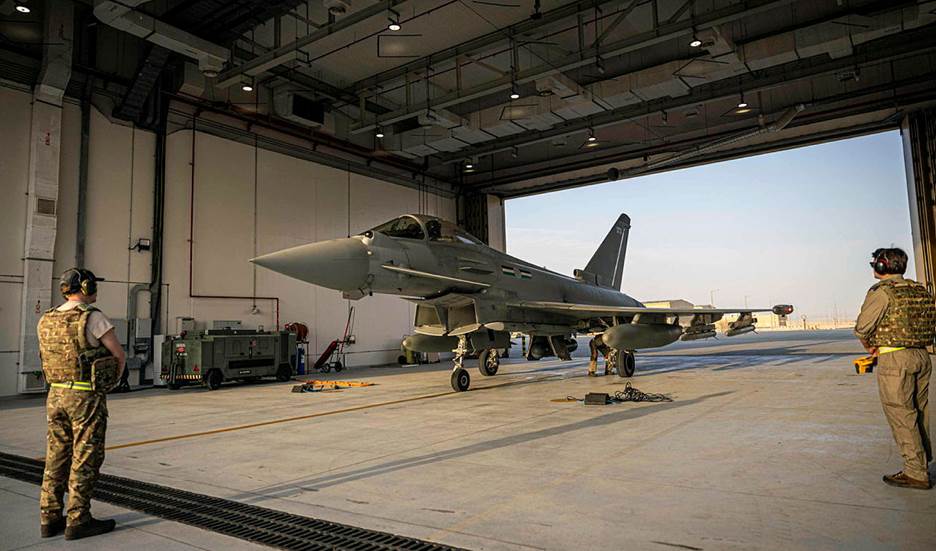
- 12 Squadron, a joint British-Qatari unit flying Eurofighter Typhoons, sent to Qatar at the end of January
- 2 Squadron, operating Typhoon, flying from RAF Akrotiri in Cyprus
- 617 Squadron, operating F-35B aircraft, also operating out of Akrotiri
These fast jets have intercepted drone threats across the Middle East region during their nighttime operations over Bahrain, Cyprus, Jordan, Qatar, and the UAE. According to an RAF update on 23 March, pilots have exceeded 700 flying hours in defense of UK people, assets, and allies.
C-UAS Solutions and Defensive Tactics
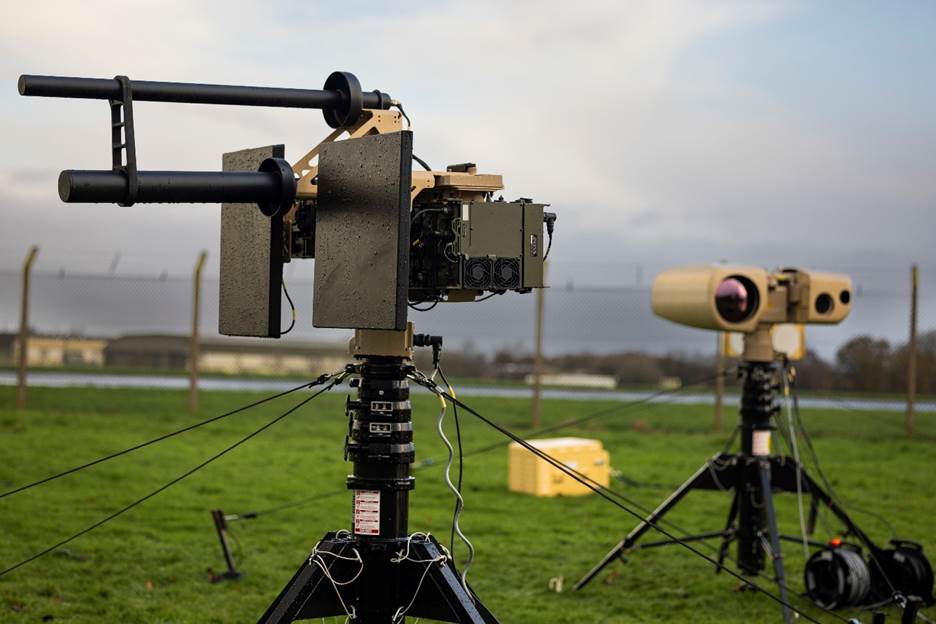
Specialist teams from No. 2 C-UAS Wing employ a combination of electronic and kinetic systems to detect, track, identify, and defeat hostile drones before they can endanger aircraft, infrastructure, or personnel. Recently, the RAF deployed additional C-UAS capabilities such as ORCUS and NINJA systems, which combine radar and radio frequency technology to provide a precise defensive intercept option at range.
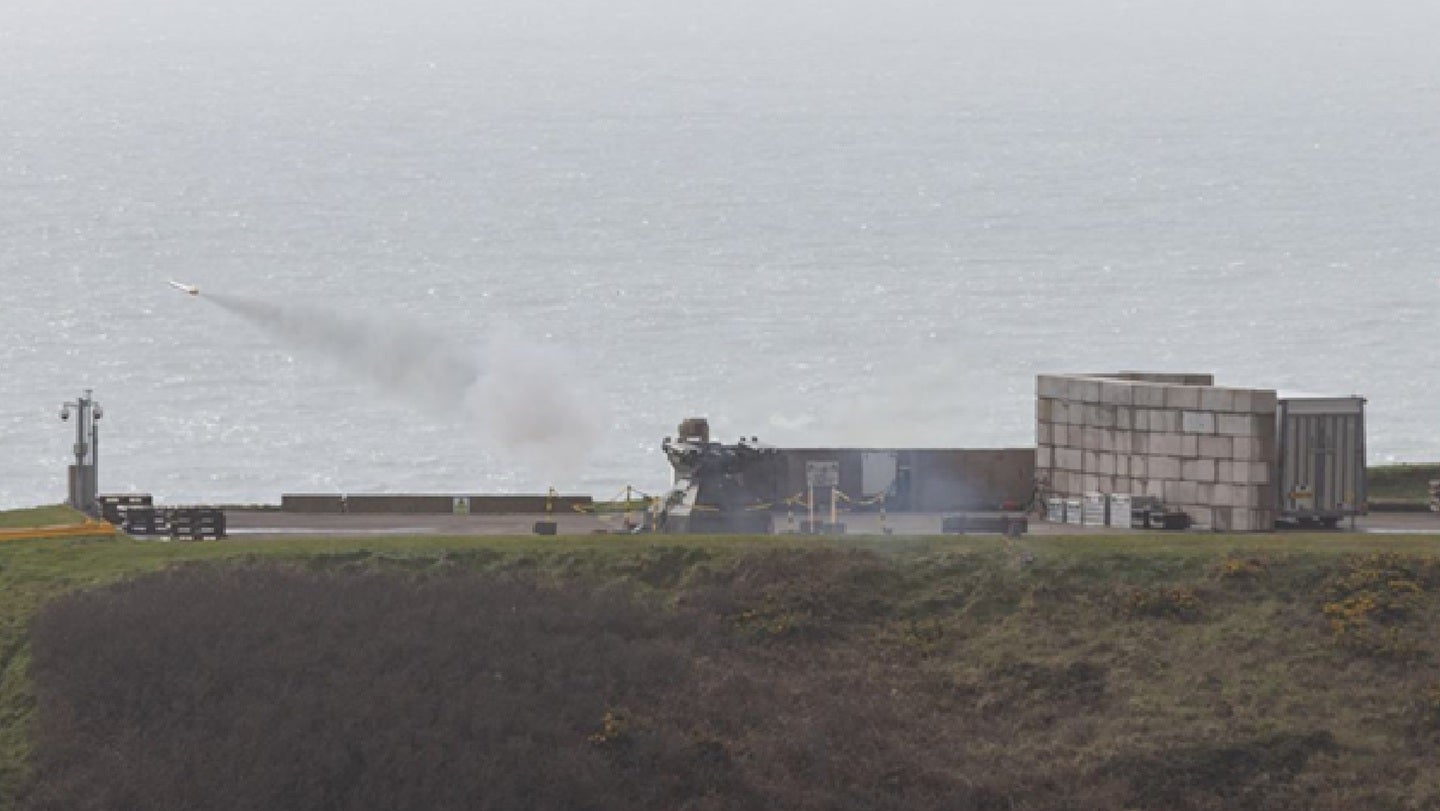
The RAF Regiment also deploys a previously unknown third layer known as Rapid Sentry, a ground-based air defense system procured under the previous Conservative Government. Each unit comprises Lightweight Multirole Missiles (LMM) and the Giraffe 1X radar. Two days ago, Healey told Parliament that Rapid Sentry, currently downing drones in Iraq, will soon be deployed to Bahrain, Kuwait, and Saudi Arabia.
Stormer Air Defense and HMS Dragon
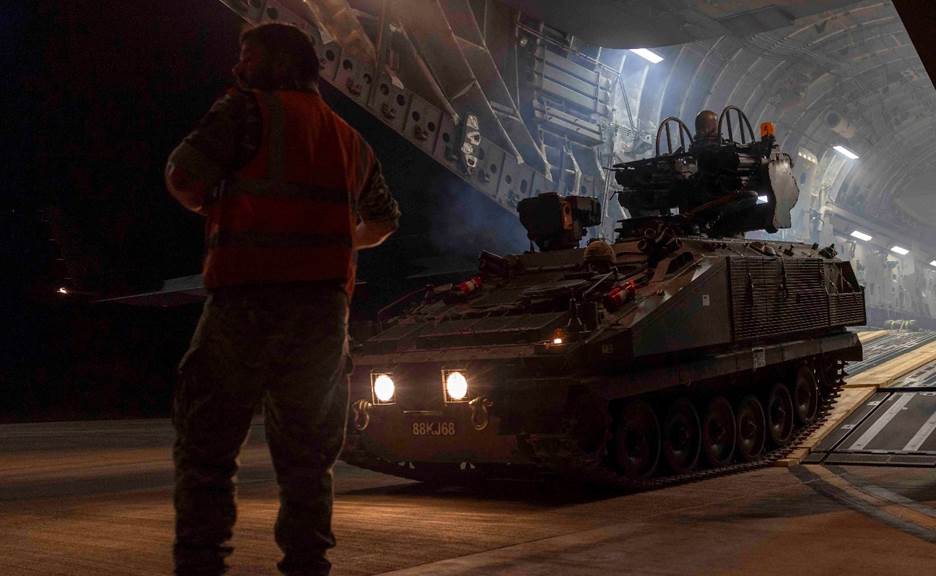
While there are unspecified ground-based air defenses already in Cyprus, possibly a Sky Sabre short to medium-range air defense system, the Ministry of Defence (MoD) revealed the arrival of legacy Stormer air defense systems. The Stormer armoured vehicles will fire Starstreak high-velocity missiles (HVMs) designed to counter threats from high-performance, low-flying aircraft and fast pop-up strikes from attack helicopters.
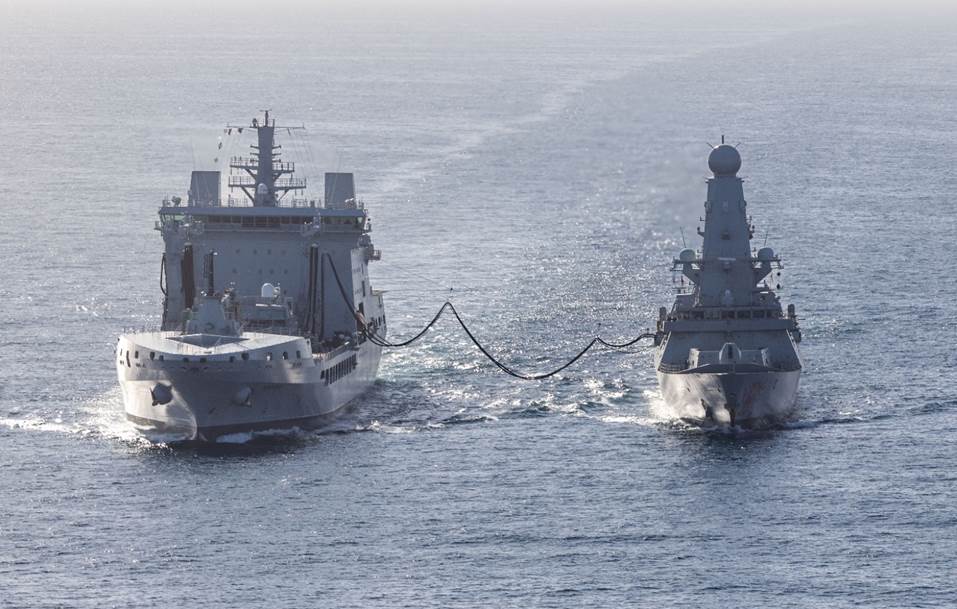
On 23 March, HMS Dragon, a Type 45 destroyer, finally arrived in the Eastern Mediterranean after the order for its deployment came more than 20 days earlier. In what should have taken the Royal Navy six weeks to load relevant capability—Aster 30 missiles and ammunition for its 4.5-inch naval gun, 30mm automated guns, and the 20mm Phalanx—Starmer claimed her readiness took as little as six 22-hour working days.