Ukraine Shatters Russia’s Frontline, Sealing Certain Victory
While everyone has been focusing on the U.S. obliterating Iran, Ukraine has been flying under the radar. Not that it has been quiet about it. As Iran burns, Ukraine has ripped open Russia’s belly with a series of mind-blowing strikes targeting the last things that are keeping Russia in the Ukraine war.
Russia’s air defenses are proving as useless for itself as they have in Iran, and Ukraine has proven it by taking out target after target. And we’ll start with the headline figure: 105,200 Russian targets. That’s how many targets the Commander-in-Chief of Ukraine’s Armed Forces, Oleksandr Syrskyi, says that Ukraine struck during the 28 days of February 2026. For context, that divides into roughly 3,750 targets per day, demonstrating how drone-heavy Ukraine’s defensive strategy has become.
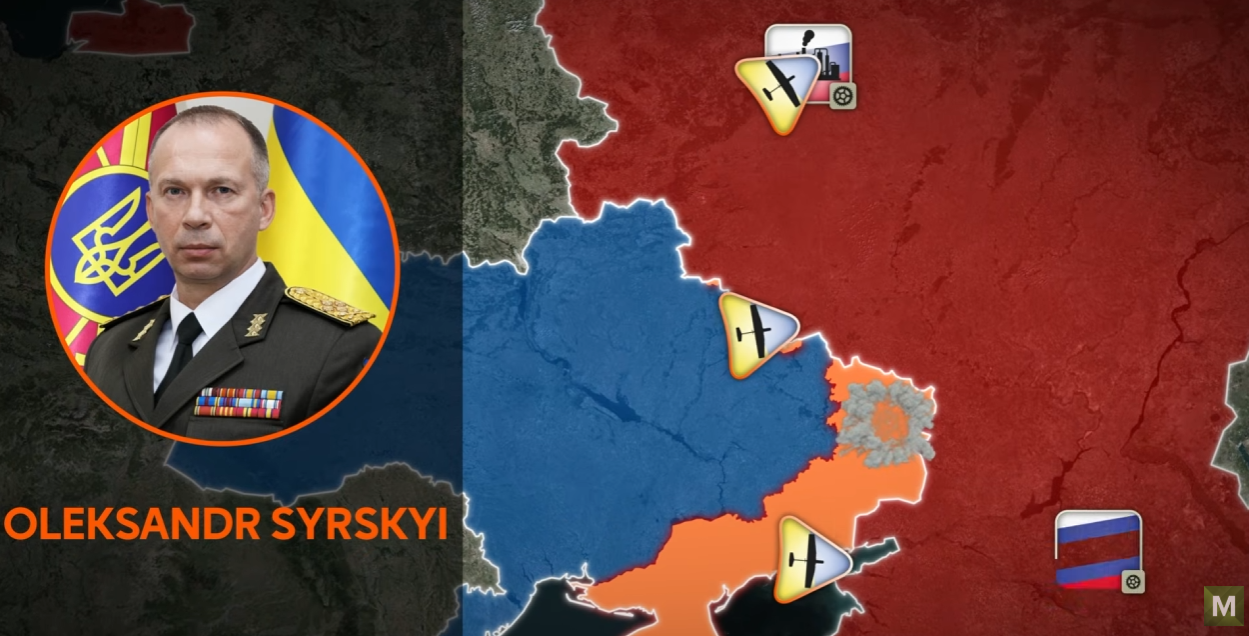
Ukraine hit pretty much everything that Russia has to offer during the month, and we’re going to be exploring strikes that have come in March to highlight how large Ukraine’s target list has become. However, there is a specific type of target Ukraine tackled in February that serves as the one thing that allows Putin’s forces to maintain their pressure on the ground.
Pilot positions. Russia’s drones play a huge supporting role for Putin’s ground forces. Long-range Shahed-type attack drones batter Ukraine’s cities and military infrastructure in the rear, sapping morale countrywide and depriving Ukrainian troops on the front of what they need to defend against Russia. And on the front itself, Russia is trying to use FPV and reconnaissance drones, albeit not as well as Ukraine, to conduct raids and create kill zones that Ukraine’s forces can’t venture into.
The beating heart of Russia’s drone operation is its pilots, and Ukraine figured out in February that it needed to do something. Stop targeting the arrows. Start hitting the archers.
As Syrskyi himself points out, it would be impossible for Ukraine to take out all of the FPV drones that Russia is deploying on the front. “The Ukrainian Defense Forces continue to hold the advantage in the use of multi-rotor FPV drones, although the Russians have already acquired the ability to produce over 19 thousand FPV drones per day,” Syrskyi said in a Telegram post where he announced the numbers. If true, this is a massive increase over the two million FPV drones that Russia was believed to be building in 2025, which amounted to almost 5,500 drones made per day.
Destroying all of those FPV drones might be impossible. But what Ukraine can do is target the drone operators. After all, even the best FPV drones still need somebody behind the remote controller to guide them. Taking out pilot positions takes hundreds, if not thousands, of FPV drones out of commission, and, if Ukraine gets it right, it’s not just positions that Russia loses. Pilots go down at the controls of their drones, meaning Russia has to scramble to find replacements.
Russia has been trying to amass as many pilots as possible. Syrskyi says that Russia is planning to increase the number of unmanned systems troops that it has in its army to 101,000 members by April 1. So, one of the things that Ukraine achieved in February was to show those pilots, who operate well behind the combat lines, that they’re not safe. Ukraine can hit them. And it can take their FPV drones out of the war without destroying the drones themselves.
We can say something similar on the long-range drone front. When we talk about Russia’s Shahed drones, it’s easy to assume that those drones are being fired into Ukraine from inside Russia. And many are. But one of the main advantages that occupying large portions of Ukraine grants to Russia is the ability to fire Shahed drones from much closer to the intended targets. A drone launched from occupied Crimea, Luhansk, or Donetsk has far less distance to travel than one launched from inside Russia. That means less time and distance in which things can go wrong, and that’s something that Ukraine needs to confront.
Taking out over 4,000 pilot positions in one month goes a long way toward doing that. On the long-range drone front, Russia was producing 30,000 Shahed-type attack drones per year by September 2025, per United24 Media. It also had plans to double that output in the future. In January, RBC-Ukraine reported on comments made by Syrskyi, who said that Russia also wants to get itself to the point where it can launch 1,000 attack drones at Ukraine per day. Russia isn’t quite at that point yet, and the war in Iran may have thrown a wrench in Putin’s plans, given that Iran likely still provides key components that enable Russia to build its own Shahed-type drones.
However, Russia is still unleashing Shahed-type drone swarms on a massive level. The same February that saw Ukraine take out 105,200 targets also saw Russia rattle off 5,059 long-range drones, which was a 13% increase over what it launched in January. Russia also broke its record for missile launches during the same month, though we’ll be coming back to that later in the video.
Stick with us, because Ukraine has also hit other targets, one of which is vital to Russia’s missile industry, that we’ll be covering later. But coming back to drones, it’s clear that Ukraine’s strategy in February was to yank out the beating heart of Russia’s entire drone operation. Screw the arrows, though Ukraine still took out plenty of those, as Syrskyi also revealed. Taking out pilot positions is far more important because arrows can’t fly without archers or their bows. And when you add over 100,000 other targets taken down, which would have included equipment, troop gatherings, command-and-control centers, and so much more, you get the consistent whittling down of a Russian force, with Ukraine focusing on drones to take out one of the biggest threats that Putin’s soldiers can present.
Then, we move on to March. With the heart of its drone operation in tatters, Ukraine hasn’t slowed down for a minute. The Kremlin might have hoped for some reprieve. Putin’s patsies on the ground are begging for Ukraine to stop taking out the cogs of the rattling war machine that the Kremlin is trying to keep running. But Ukraine hasn’t slowed down. Strike after strike tore Russia’s belly wide open during the first 12 days of March alone, and we have just a sample of those strikes to highlight just how well Ukraine conducts its campaign of systematic degradation.
Let’s start with air defenses. On March 12, The Kyiv Post reported on comments made by the head of the Unmanned Systems Forces, Robert Brovdi. He says that Ukraine has managed to destroy 19 elements of Russia’s air defense network between March 1 and March 12, with those strikes including the takedowns of an S-300 system and one of Russia’s Tor surface-to-air missile units.
The “SBS Birds,” as Brovdi calls them, have been successful in plenty of strikes so far in March, and Brovdi was more than happy to show some of them off in a March 12 Telegram post. In a nearly four-minute video, we see the same thing happen over and over again. A Ukrainian drone gets a target in its sights. It closes the distance. Then, the drone scores a direct hit. This is undeniable work by Ukraine. Most of these strikes are being recorded by the very weapon used to make them, and, in many cases, as we see in the video, Ukraine follows up by sending in more drones to film the flaming wreckage of the equipment that has been taken out.
As for the specific strikes we mentioned, the Tor system was taken out close to Berdyansk, which is one of the territories that Russia occupies in the Zaporizhzhia oblast. Dubbed the SA-15 Gauntlet by NATO, this Soviet-era air defense system deals with targets at short range and was designed to intercept helicopters, aircraft, and cruise missiles. Russia likes to act like the Tor is effective against Ukraine’s drones. The fact that those very same drones took it out is proof that the air defense system, which costs an estimated $25 to $27 million, isn’t quite as good at drone interception as Putin needs it to be.
The S-300 system that Ukraine destroyed was located in occupied Luhansk, near a settlement named Borovenky. Another Soviet-era system, the S-300 is often used by Russia to provide some sort of mobile air defense protection to its troop formations, as well as to important military facilities. It can tackle many of the same targets as the Tor, though it also adds the ability to take out some ballistic missile threats. But the S-300 is an air defense system that Ukraine has hit time and time again over the last four years, with the March 12 strike being the latest in a series designed to cripple Russia’s air defense network.
And as with the pilot positions that we mentioned earlier, there are reasons why Ukraine wants to take out Russia’s air defenses. But before we dive deeper into what those reasons are, this is a quick side note to remind you that you’re watching The Military Show. If you haven’t subscribed yet, now’s the perfect time to hit the button.
Now, Ukraine’s reasons for taking out Russia’s air defenses. According to Ukraine, 1,332 of these systems have been destroyed between the beginning of the war and March 14. As for why, it’s pretty simple. Ukraine needs to carve open as many safe aerial corridors as it can in its own territory to enable deep strikes in the occupied regions and Russia itself. That may not come as a surprise to you, based on how many times this very channel has reported on Ukraine’s deep strike strategy. But what may be surprising is that many of Ukraine’s attempts to hit Russia with long-range attacks fail. Euromaidan Press revealed that back in December, when it reported that Russia’s air defenses managed to take out 90% of Ukraine’s drones and missiles. That’s a strong interception rate, though it does mean that 10% of Ukraine’s long-range weapons hit their targets.
But Ukraine will look at this and see a lot of money and drones being wasted that could hit their targets if Russia’s air defense network were crippled. Hence, the strikes. What Ukraine wants to do in 2026 is create an environment in which even more of its long-range attacks are successful. That will hinder Russia’s forces on the front, as Ukraine’s strategic targets include things like the pilot positions we discussed earlier, along with Russian oil, storage depots, fuel, and so much more of what makes Putin’s army tick. Fewer of those key parts of a military machine add up to a much weaker Russian front.
There are also Russia’s ongoing air defense woes to consider. Sanctions have wreaked havoc on the Kremlin’s ability to build more air defenses, Euromaidan Press reports. A December article by The Kyiv Post agrees with this, as it points out that Russia’s inability to get its hands on some of the key components it needs to build its air defenses is the biggest vulnerability that Russia’s defense network has. No components mean no new air defense systems. Or, at least, air defenses being rebuilt at far too slow a rate to promptly replace the units that Ukraine is taking down.
Supply chain failures across the board have put Russia in the difficult position of having to choose between replacing the systems that Ukraine destroys by transporting air defenses located in Russia to the front or leaving the gaps that Ukraine creates so it can protect targets closer to home. Every air defense system that Russia builds that is reliant on foreign parts, whether they’re from sanctioned nations or not, faces massive delays in construction. In fact, The Kyiv Post claims, Russia is just one well-aimed strike or well-timed sanction away from no longer being able to build any more S-400 air defense systems, which would take a major piece of equipment out of the war. So, either way, Ukraine wins, no matter how Russia responds to these problems.
The safe aerial corridors that it needs are opened up, allowing it to conduct yet more strikes against Russia and its war machine. Speaking of more strikes, we have a few more to cover, including a Ukrainian attack against a Russian missile center that we hinted at earlier. Stick with us until the end of the video to find out about that.
In the meantime, there’s another type of target Ukraine hit in March that feeds into its overall strategy of weakening Russia on the front. A fuel train. The two days up to March 12 were pretty explosive for Russia beyond the loss of two more of its air defense systems. Even on the day that Ukraine took out the S-300, it also destroyed an ammunition warehouse in occupied Luhansk, taking out thousands of shells in the process, along with destroying a repair unit belonging to a Russian artillery brigade in Yakymivka, which is in Zaporizhzhia.
But as Russia was dealing with all of these strikes, yet more Ukrainian drones were rocketing toward the Luhansk region to destroy a fuel and lubricants train in the Dovzhansk sector.
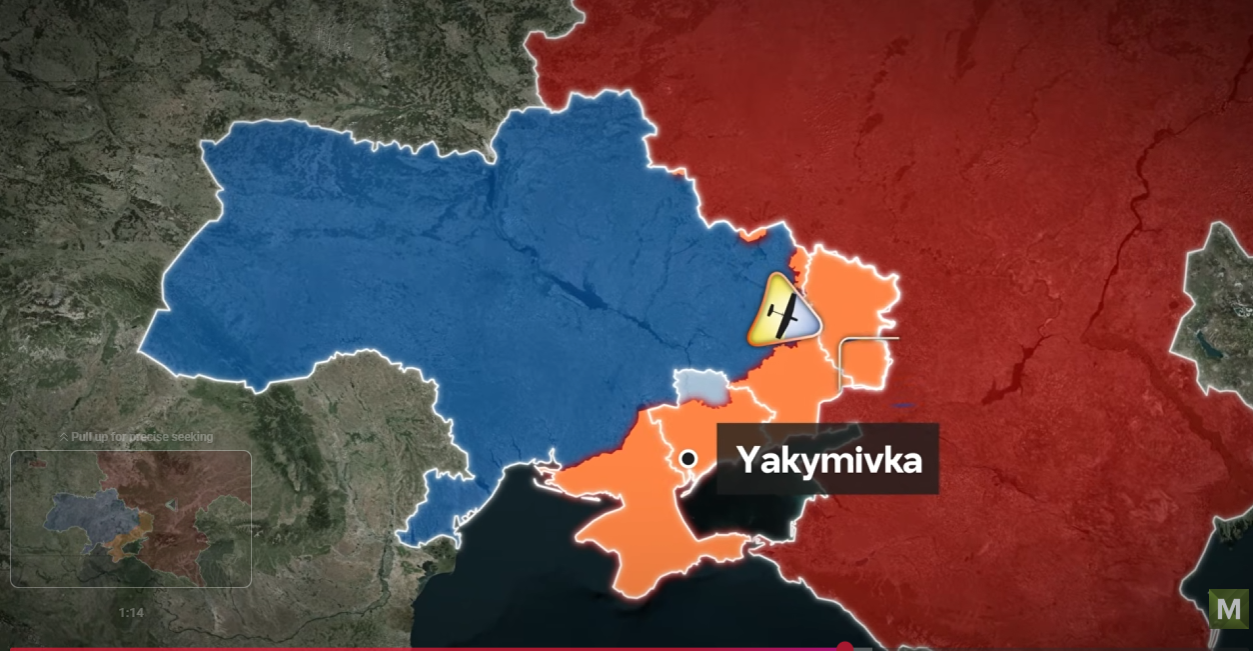
It almost goes without saying why this strike was so important. Taking fuel away from Russia’s forces means that they can’t power their tanks and armored vehicles. It also means that mobile artillery and air defenses suddenly become immobile, which can make them sitting ducks for other Ukrainian strikes. And with lubricants going up in flames with this train attack, Ukraine also takes out a key component used in the maintenance of Russia’s military equipment.
If it can’t stop that equipment from moving, it can at least force a second-hand degradation that makes the equipment far less effective and reliable than Putin’s troops need it to be in the field. Interestingly, we saw Ukraine take a page out of Russia’s book with the Luhansk fuel train strike. Both sides know very well the importance of logistics and, specifically, the key role that the railways play in keeping their armies rolling.
Somewhere in the region of 90% of Russian freight is moved by rail, and that applies as much to the military as it does to commercial freight. If Russia’s troops want to get their hands on fuel and lubricants, they need to come via the train. Ukraine has a similar reliance on rail, even if it is more technologically advanced than Russia in many other areas, and Putin has been piling on the pressure. Waging war, whether you attack or defend, requires fuel. You need to get munitions and equipment to your soldiers, and using roads is often not an option because of the expense and the fact that big trucks move slowly when carrying heavy cargo, which makes them targets.
Russia has been taking advantage of that since at least early March, DW reports Ukraine’s public railway company, Ukrzaliznytsia, as claiming in a March 12 report. Bridges and railyards are being hit, as are trains, and this is all being done to throw a wrench into the works of Ukraine’s ground-based logistics. On March 12, Ukraine fought fire with fire. Its drones took out a fuel and lubricants train in the occupied territories to show Putin that two can play at his logistics game. And somehow, it gets even worse for Russia.
With the heart of its drone operation ripped out and its belly torn asunder as Ukraine struck logistical and air defense nodes, Ukraine also took a massive bite out of Russia’s missile strategy. We mentioned this earlier, and Ukraine had a very specific reason for going after Russia’s missiles, in addition to one key target in mind.
Early in March, Russia launched yet another of its combined missile and drone strikes against Kharkiv. That alone isn’t especially big news, as Russia launching aerial attacks against Ukrainian cities has become a sadly common feature of the war that Putin wages. But what was notable about this particular attack is that Russia used a new type of missile. Named the Izdeliye 30, this missile has a 1,500-kilometer, or 932-mile, range, and it can deliver about 800 kilograms, or 1,763 pounds, of firepower. United24 Media reports that Russia has started launching these missiles from its Su-34 fighter jets from inside its own territory, which makes it a very dangerous weapon.
So, Ukraine did something about it. On March 10, Ukraine used its own missiles to attack the Kremniy El microelectronics plant, which is in the border region of Bryansk. Storm Shadow was the star of the show, as Ukraine rained seven of these U.K. missiles down on the plant’s main production facility.
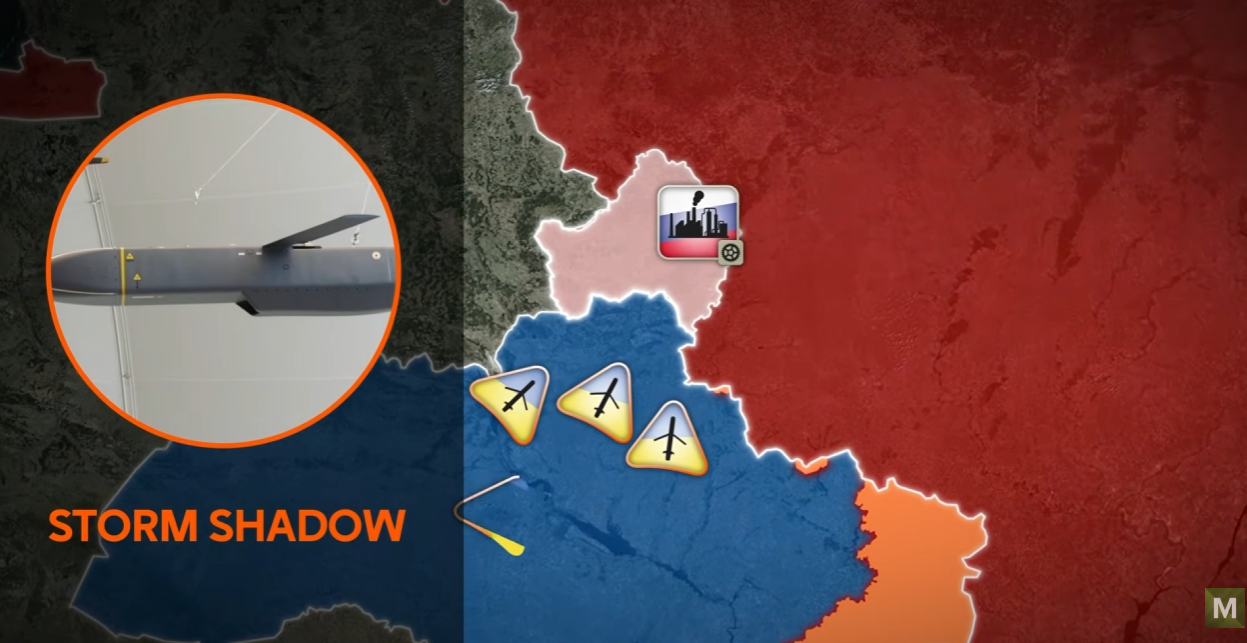
The extent of the damage seen in photos taken after the strike suggests that Kremniy El has been taken out. And with it goes Russia’s ability to build more Izdeliye 30 missiles, as the microelectronics used to build that missile are made at the plant that Ukraine destroyed. Again, it’s Ukraine fighting fire with fire, and it shows us how important it is that Western nations continue to allow Ukraine to strike targets in Russia with the missiles they provide.
What we’ve seen with this strike is that Ukraine attacked the missile brain of Russia’s strategy. Heart, belly, and brain are now gone, and that’s massive for Ukraine due to the scale of Russia’s military attacks. Colonel Yurii Ihnat, who is the Head of the Communications Department of the Ukrainian Air Force, made that scale very clear, at least on the ballistic missile front, on March 9. He said, “The enemy is using more ballistic missiles in 2025–2026. We had massive strikes, there were about a dozen and a half during the winter. And there we see that the use of missiles flying on ballistic trajectories has increased significantly.”
Indeed, Ukraine absorbed a record-breaking missile barrage from Russia in February. Russia sent 288 missiles into Ukraine’s territory, which averages out to a little more than 10 per day. Russia hasn’t sent that many missiles into Ukraine since 2023, United24 Media reports, and this seems to be a big sign that Russia is going to be relying more heavily on its big aerial hitters as we move deeper into 2026. At least, that was the plan. With the Kremniy El facility wiped off the map, at least one of Russia’s missiles, and its newest one at that, has to stop production.
When you add that to Russia losing over 105,000 targets in February, including more than 4,000 pilot positions, the destruction of key air defense systems, the loss of a fuel and lubricants train, and the other smaller strikes that we’ve covered in this video, you get a very successful month and a half for Ukraine.
“Keep your eyes on Iran,” Ukraine is telling the rest of the world. “We’ll just carry on tearing Russia’s war machine lifelines apart in the meantime.” And make no mistake about it, Ukraine’s strikes are going to go deeper and hit harder as 2026 continues. How do we know? Ukraine has rewritten the rules of airstrikes by building something so insane that it has never been seen before. Do you want to know what Ukraine has come up with? Check out our video, where we provide the details and insight you need to see that more pain is coming for Russia. And if you enjoyed this video, make sure you subscribe so you never miss the latest updates from The Military Show.