
New Troops Sent to War as Iran Warns of Tourism Threat
Escalation of Tensions in the Middle East
On one of the holiest days on the Islamic calendar, Iran launched attacks on Israel and energy sites in neighboring Gulf Arab states. The Iranian government insisted that it can still develop missiles and issued a new threat: to deny safety to its enemies in “parks, recreational areas and tourist destinations” worldwide. Meanwhile, Israel responded with airstrikes against Tehran as Iranians observed Nowruz, the Persian New Year.
The U.S. military is deploying three more warships and approximately 2,500 additional marines to the Middle East, where the conflict shows no signs of ending despite three weeks of U.S. and Israeli air strikes that have significantly weakened Iran’s military and leadership. The Pentagon has requested an additional $200 billion to fund the war, which would require congressional approval as the U.S. national debt reaches a record $39 trillion.
Hours later, President Donald Trump stated on social media that his administration was considering “winding down” military operations in the region. His post came after another spike in oil prices sent the U.S. stock market into a sharp decline.
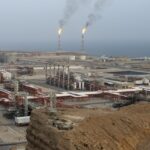
Prime Minister Benjamin Netanyahu announced that Israel will cease attacking the gas field that Iranians rely on for most of their electricity at Trump’s request. In response, Iran intensified its targeting of energy infrastructure in other Middle Eastern countries.
Human Toll and Displacement
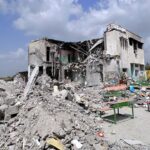
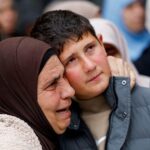
The death toll has risen to over 1,300 people in Iran, more than 1,000 in Lebanon, 15 in Israel, and 13 U.S. military members in the region. Millions of people in Lebanon and Iran have been displaced due to the ongoing conflict.
Economic Impacts and Energy Concerns
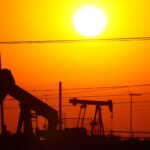
United Airlines is preparing for oil prices to reach $175 a barrel. CEO Scott Kirby informed employees that jet fuel prices, which have more than doubled in the last three weeks, could cost the airline $11 billion annually if they remain at current levels. The price of Brent crude has fluctuated from around $70 per barrel before the Iran war began to as high as $119.50 this week.
The Trump administration is lifting sanctions on Iranian oil stranded at sea under a one-month license. This move aims to reduce soaring oil prices. The pause applies to Iranian oil loaded on ships as of Friday and is set to end on April 19. Treasury Secretary Scott Bessent previously suggested the move as a way to prevent China from being the sole beneficiary of Iranian oil. The administration also eased sanctions on certain Russian oil shipments for 30 days to boost global oil supplies during the Iran war.
Political Developments and Military Strategy
Trump added a fifth objective to the Iran war: “Protecting, at the highest level, our Middle Eastern Allies” and listed America’s Gulf partners. Despite this, his administration has continued to send more troops and warships to the region and request another $200 billion from Congress to fund the war.
Pete Hegseth, the defense secretary, has faced renewed scrutiny for his Christian rhetoric during the Iran war. Since becoming defense secretary, he has often brought conservative evangelicalism into the Pentagon, arguing that the U.S. is a Christian nation and that troops should embrace God.
Impact on Nowruz Celebrations
Normally festive Nowruz celebrations are quiet in Tehran, according to a resident. In one upscale northern Tehran neighborhood, there are none of the usual decorations celebrating the Persian New Year. “In the city, people are mostly staying at home. You hardly see anyone out on the street. Basically, there is no mood (for new year) in the city at all,” said the woman, who spoke on condition of anonymity due to fears of reprisals.
European Air Defense Concerns
U.S. defense officials have reported that a significant number of Patriot air defense interceptor missiles have moved from Europe to the Middle East as Washington diverts resources toward its war in Iran. Two officials expressed concerns about gaps in Europe’s air defenses against Russia. A third official noted that there is still “plenty” of capacity in NATO to defend Europe.
Humanitarian Crisis
The Iran war is unleashing a “triple emergency,” according to the International Rescue Committee. President David Miliband warned that the war is creating a surge in humanitarian needs, pointing to over one million people displaced in Lebanon in weeks. The war has also disrupted food, fuel, and fertilizer markets, threatening more than 300 million people facing acute food insecurity.
Financial Market Volatility
High oil prices have knocked down stocks and erased Wall Street’s hopes for a cut to interest rates. The S&P 500 fell 1.5% to close its fourth straight losing week, its longest such streak in a year. The Dow Jones Industrial Average dropped 443 points, or 1%, and the Nasdaq composite tumbled 2%. Friday’s losses deepened after oil prices accelerated to settle at $112.19 per barrel of Brent crude.
Global Energy Dependence
The war in Iran is exposing the world’s reliance on fragile fossil fuel routes, lending urgency to calls for hastening the shift to renewable energy. Fighting has nearly halted oil exports through the Strait of Hormuz, the narrow waterway that carries about a fifth of the world’s oil and liquefied natural gas, or LNG. The disruption has jolted energy markets, pushing up prices and straining import-dependent economies.
International Reactions
The UK has denied Iran’s claim of aggression, stating that its defensive operations in the region were a response to Iranian aggression against Gulf partners. British Foreign Secretary Yvette Cooper warned Iran against targeting British bases, territory, or interests directly and made clear that the U.K. wants to see a swift resolution.
Ongoing Conflicts and Regional Instability
Israel continues to strike Iran’s feared Basij from commanders down to street level, but its grip remains strong. Iran’s attacks are still choking off oil supplies and denting the global economy, raising food and fuel prices far beyond the Middle East.