
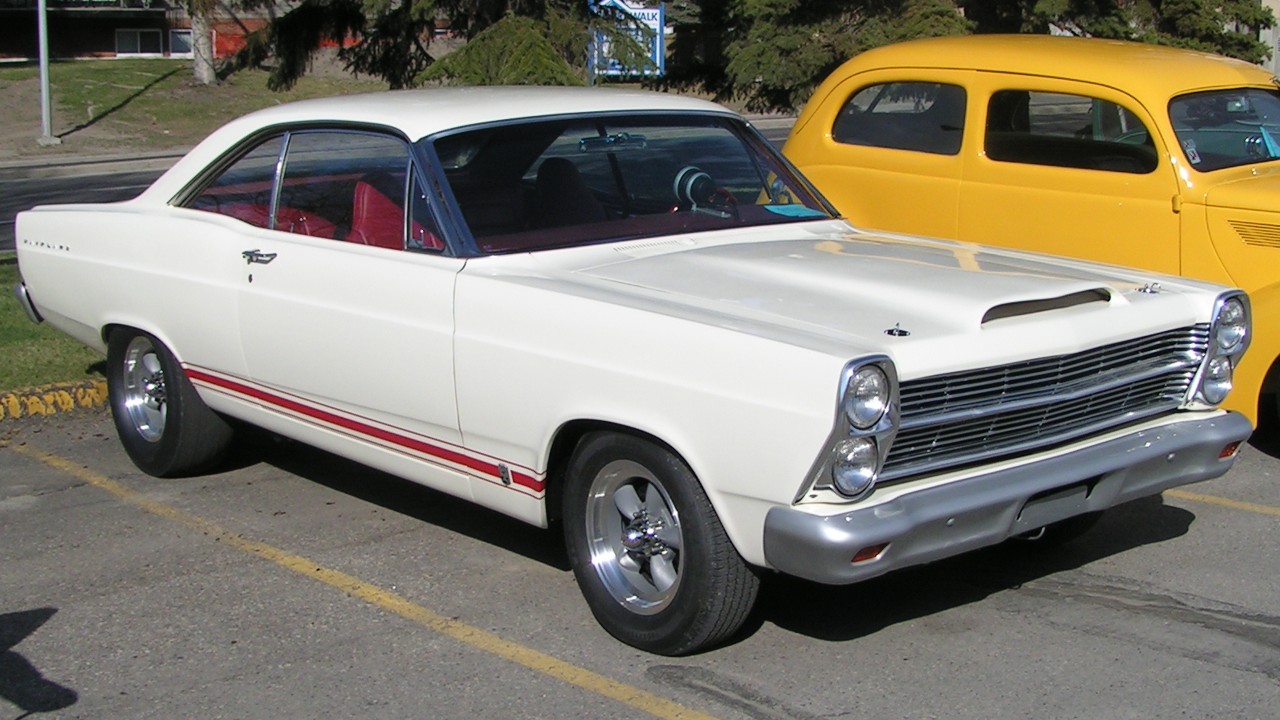
Why the 1966 Ford Fairlane GT Was Overlooked
A Car That Never Got the Spotlight
The 1966 Ford Fairlane GT arrived with clean lines, serious power and the right badge, yet it never claimed the spotlight the way its rivals did. Positioned between family sedan and headline-grabbing supercar, it was overshadowed in its day and remains underrated among casual enthusiasts. The reasons lie in timing, corporate strategy and the way history tends to favor the loudest stories rather than the most balanced cars.
Built to Be a Contender, Not a Celebrity
Ford had already helped invent the mid-size category, but, as one account notes, Even Ford and Chrysler introduced competing mid-size models within a few years. The redesigned Fairlane for 1966 was therefore less a vanity project and more a corporate response to the Pontiac GTO and the Chevrolet Chevelle that had defined the new muscle formula.
Having fallen behind rivals like the Pontiac GTO and, Ford reworked the Fairlane to accept serious big-block power in a mid-size shell. The result was a car that could finally match the segment leaders on paper, yet it arrived as a catch-up act instead of a category originator, blunting its myth-making potential from the start.
Inside Ford, the Fairlane GT also had to live in the shadow of the Mustang, the company’s headline performance story. One period analysis points out that GM had surprised the industry with the so-called supercar in much the same way Ford had shaken, and that corporate pride naturally kept the spotlight on the pony car rather than on a more traditional two-door hardtop.
Production Numbers That Should Have Mattered More
The Fairlane line was not a bit player in Ford’s portfolio. Out of the 317,274 Fairlanes built for 1966, 37,342 were GT and GT/A models, with 33,015 of those as hardtops and 4,327 as convertibles. Those figures show that Ford committed real volume to the performance variants rather than treating them as token halo cars.
Yet those same numbers may have worked against the Fairlane GT in the long run. Collectors often gravitate to ultra-low-production machines, and later reporting highlights the ultra-rare Ford Fairlane 500 R-Code as one of the rarest Fords ever, while treating the regular Fairlane GT as the more common sibling. The GT was neither ubiquitous enough to become an everyman icon nor scarce enough to become instant mythology.
On social media, enthusiasts continue to argue that the 1966 Ford Fairlane 500 GT was ‘criminally underrated,’ praising it as a sleek blend of style, power, and mid-60s muscle attitude. That lingering sense of underappreciation reflects how the production figures left the car in a middle ground that history has struggled to categorize.
Powertrain Credibility Without the Headline Motor
Under the hood, the Fairlane GT carried serious hardware. The 1966 Ford Fairlane 500 GT came standard with a 390 cubic inch V8, and contemporary commentary stresses that the 390 was Ford’s first proper attempt to blend big power with something closer to pony car handling. That combination gave the car real street credibility, even if it did not carry the exotic mystique of the limited 427 packages.
Enthusiasts also point out that if a buyer really wanted to win pink slips and humiliate rivals, the answer was a Fairlane 427, not the regular GT, and one source puts it bluntly by saying that if a driver wanted to dominate, they bought a Fairlane 427. That hierarchy meant the GT was always one step below the ultimate bragging-rights configuration, and in muscle car folklore the top dog tends to get the legend while the slightly milder version fades into the background.
Later commentary has even argued that the 1966 Fairlane GT was arguably the Blue Oval’s first proper muscle car, with the ultra-rare 500 R-Code sitting at the top of the range at the peak as a machine built to go drag racing. Yet when enthusiasts swap stories, it is the R-Code that sparks awe, while the standard GT is treated as a supporting character.
Styling That Spoke Softly
The Fairlane GT did not rely on wild graphics or flamboyant scoops. Contemporary descriptions frame the 1966 Ford Fairlane as elegance with an edge, a mid-size car with full-size attitude, with clean lines and defining its presence. Subtle GT badges and restrained trim gave it a purposeful but not ostentatious look.
That restraint has aged well, yet it worked against the car when new. The Pontiac GTO and its peers traded heavily on visual aggression, while the Fairlane GT looked closer to an upscale family coupe with attitude. A recent video profile describes the 1966 Ford Fairlane GT 390 as a muscle car built before the term was widely used, featuring a clean body and subtle GT badges that signaled performance without flamboyance.
The broader Fairlane range also diluted the GT’s identity. One enthusiast description of a 1966 Ford Fairlane 500 XL as a 289 powered Ford with personality Jul shows how buyers could enjoy similar sheetmetal with tamer drivetrains. For casual observers, the difference between a Fairlane 500 XL and a Fairlane 500 GT was easy to miss at a glance, which limited the GT’s cultural imprint.
Corporate Compromises and the GTA Factor
Ford also complicated the story by offering the GT/A, a performance Fairlane with an automatic transmission. Later buyer guides describe how Possibly more galling, packaging and how the cars that had created the mid-size category were slow to match GM’s dimensions and performance focus. The GTA in particular tried to reconcile muscle car power with automatic convenience, which broadened its appeal but muddied the pure performance message.
Later reflections on the 1967 Ford Fairlane GTA describe it as a hidden gem, positioned as a performance model for buyers preferring an automatic transmission. That approach made sense for sales, but in the enthusiast imagination, three pedals usually carry more prestige than two, which again left the Fairlane GT family slightly off center from the purist narrative.
Later historical analyses note that the 1966 Fairlane was only modestly larger than its 1965 predecessor, allowing it to compete more directly with GM mid-size models. Those incremental changes helped the car drive and sell better, but they did not create the kind of dramatic break that fuels legend.
A Classic That Finally Finds Its Audience
Today, the 1966 Ford Fairlane GT is gaining recognition among enthusiasts who value balance over bombast. One recent description of the 1966 Ford Fairlane GT 390 calls it an early muscle legend, a car that blended power and composure before the term muscle car became famous Feb. Another social media tribute frames the 1966 Ford Fairlane as a sleek and stylish mid-size car that combined classic American design with performance potential American.
Collectors who once chased only the rarest codes are starting to appreciate how the regular GT captures the essence of mid 60s Ford performance without the fragility or cost of the most exotic variants. At the same time, nostalgia pieces about the 1966 427 Fairlane GT describe sitting in a giant-sized interior built when metal was cheaper and oil still came from Texas, reinforcing the sense that the broader Fairlane GT family delivered real substance beneath its understated looks.
The Fairlane story has even been folded into curated histories of performance culture, with archival projects built around material such as the Fairlane GT and coverage that framed Ford’s First Midsize Musclecar as a key step in the evolution of Detroit power. Gear-focused retrospectives likewise treat the Ford First Midsize era as fertile ground for modern performance comparisons and restorations.
More from Fast Lane Only
Unboxing the WWII Jeep in a Crate
15 rare Chevys collectors are quietly buying
10 underrated V8s still worth hunting down
Police notice this before you even roll window down