A-10s Strike Iranian Speedboats in Hormuz Strait
Expansion of A-10’s Role in Operation Epic Fury
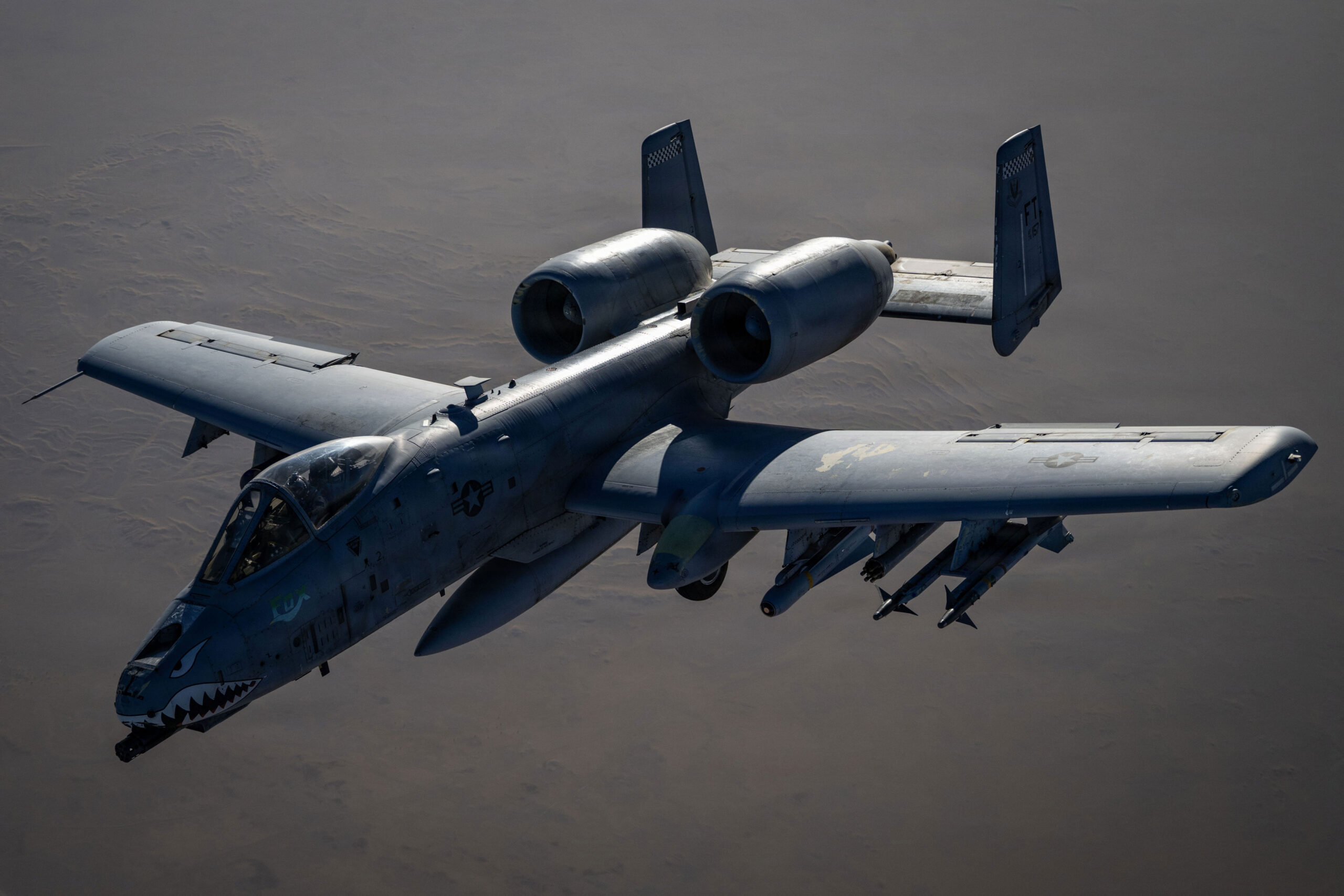
The U.S. Air Force A-10 Thunderbolt II attack aircraft is now actively involved in maritime interdiction operations along the southern flank of Operation Epic Fury. This development has been highlighted by the chairman of the Joint Chiefs of Staff, who confirmed that the A-10 Warthog is targeting Islamic Revolutionary Guard Corps fast-attack watercraft in the Strait of Hormuz.
Air Force Gen. Dan Caine made this announcement during a Pentagon briefing on the operation, stating, “The A-10 Warthog is now engaged across the southern flank, targeting fast-attack watercraft in the Strait of Hormuz.” This marks an expansion of the Warthog’s confirmed role in Epic Fury. On March 15, U.S. Central Command released imagery showing A-10C Thunderbolt IIs receiving fuel in flight while supporting the operation, marking the first official visuals of the aircraft in the campaign.
Capabilities and Strategic Importance
The A-10 Thunderbolt II is designed for close air support, with a focus on flying low, slow, and close to the fight. It provides direct fire support to ground forces and increasingly to joint forces operating in contested littoral environments. Its titanium-armored cockpit, often referred to as a “titanium bathtub,” and redundant flight systems allow it to absorb significant punishment and continue flying under conditions that would ground less hardened aircraft.
Equipped with a 30mm GAU-8/A Avenger cannon capable of firing 3,900 rounds per minute, AGM-65 Maverick missiles, and APKWS laser-guided rockets, the A-10 can engage the small, agile surface craft that the IRGC Navy has long relied upon to threaten shipping in the strait’s confined littoral environment. Its loiter capability allows crews to maintain persistent overwatch in ways that faster platforms cannot.
U.S. Forces’ Actions in the Strait of Hormuz
In a March 16 video posted to CENTCOM’s official X account, CENTCOM commander Adm. Brad Cooper stated that U.S. forces had destroyed more than 100 Iranian naval vessels. He emphasized, “We will continue to rapidly deplete Iran’s ability to threaten freedom of navigation in and around the Strait of Hormuz.”
The strategic importance of the Strait of Hormuz cannot be overstated. Roughly 20% of the world’s oil supply transits the strait, according to the U.S. Energy Information Administration. This makes the region a critical area for global energy security and international trade.
Political and Military Context
The A-10’s deployment in Epic Fury comes at a time when Congress has taken steps to protect the platform from Air Force divestment efforts. The National Defense Authorization Act for Fiscal Year 2026 blocked the service’s plan to retire the remaining fleet, mandating a minimum inventory of 103 A-10s through Sept. 30, 2026, and requiring detailed transition planning.
Despite these developments, Pentagon officials have not released specific A-10 sortie or strike figures for the operation. This lack of transparency underscores the sensitive nature of the mission and the ongoing strategic considerations involved.
Conclusion
The A-10 Thunderbolt II’s involvement in maritime interdiction operations highlights its adaptability and effectiveness in modern combat scenarios. As the U.S. continues to assert its presence in the Strait of Hormuz, the A-10 remains a key asset in ensuring regional stability and protecting vital trade routes. With its unique capabilities and enduring legacy, the A-10 is poised to play a crucial role in future operations.