IDF Strike Injures Journalists in Litani After Army Warning
Journalists Injured in IDF Strike Near Litani River
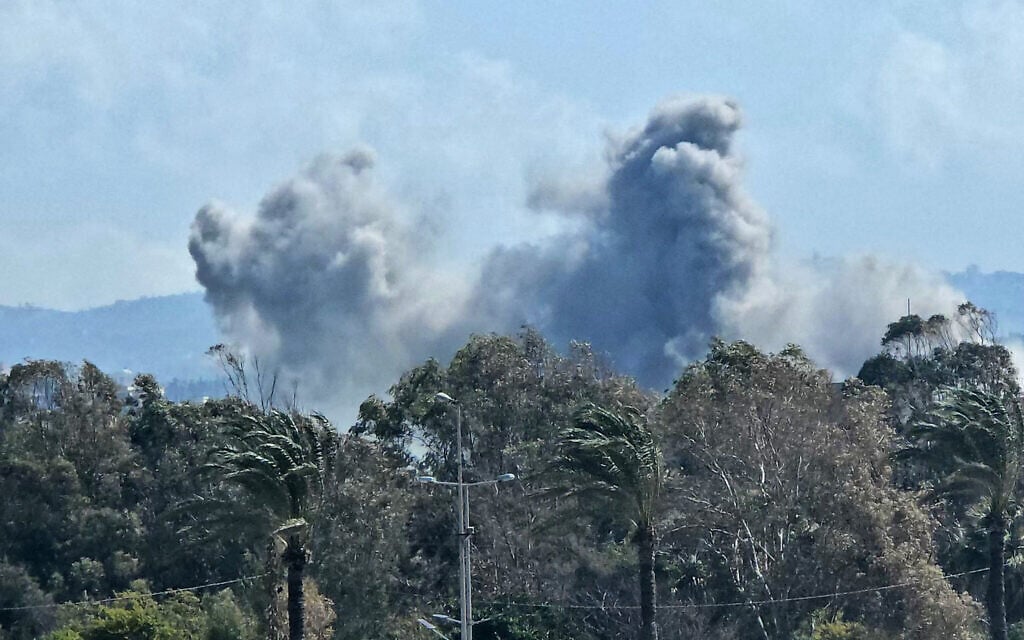
In a recent incident that has drawn international attention, journalists reporting from an area of southern Lebanon that had been warned by the Israeli Defense Forces (IDF) would be targeted were lightly injured during an Israeli strike on Thursday. The event occurred as Hezbollah continued its rocket and drone attacks, and Israeli troops advanced further into the region.
Footage captured an English-language correspondent for the Russian channel RT reporting from the Litani River when an Israeli strike hit nearby. In the video, the reporter is seen speaking to the camera before quickly ducking away just seconds before the explosion. The camera then fell to the ground due to the force of the blast.
RT later confirmed that their Lebanon bureau chief, Steve Sweeney, and the camera operator were slightly wounded in the strike. According to TASS, cameraman Ali Rida remarked, “Guys, we are fine. Turns out you can hear the missile when it’s flying at you.”
The IDF had previously warned on Wednesday that it expected to strike bridges over the Litani River due to “Hezbollah movements under civilian cover.” Following the release of the footage from Thursday’s strike, the IDF issued a statement confirming that the incident occurred at Qasmiya Bridge. They emphasized that the crossing, along with others, had been used by Hezbollah for military purposes and was included in their earlier warning.
The army stated that they struck the bridge area twice, including around 12:30 p.m. on Thursday. “The IDF calls on the residents of Lebanon to heed the warnings published on various platforms. The IDF does not target civilians or journalists and operates in accordance with international law,” the statement said.
Russia condemned the strike, with the Russian foreign ministry’s spokeswoman Maria Zakharova stating on Telegram, “Given the killing of 200 journalists in Gaza, today’s events cannot be called accidental.” However, Israel disputes this figure, noting that many individuals claiming to be journalists in Gaza have ties to terror groups.
The Russian embassy in Lebanon added that “attacks on media workers on editorial assignments are unacceptable” and called for an “appropriate investigation” into the incident.
Ongoing Rocket Fire from Hezbollah
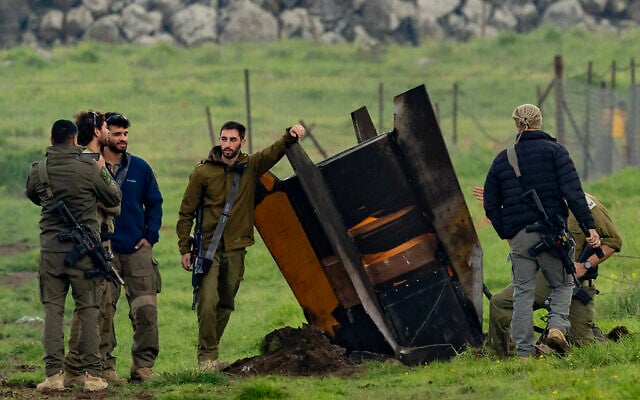
Despite the strike, Hezbollah continued its frequent rocket and drone fire at Israel and IDF forces in southern Lebanon on Thursday, though no injuries or major damage were reported. According to the IDF, Hezbollah has been firing an average of about 150 rockets per day recently.
Roughly two-thirds of the daily rocket fire has been directed at Israeli forces operating in southern Lebanon and along the border, with the remaining third aimed at Israel.
Clashes Intensify in Southern Lebanon
On Monday, the IDF announced the launch of “limited” ground operations in Lebanon. A Lebanese military source told AFP on Thursday that the Israeli army was advancing slowly and “systematically destroying” the border villages it enters.
According to the IDF, more than 20 Hezbollah operatives were killed by ground troops and in airstrikes during operations in southern Lebanon on Wednesday. In one incident, soldiers of the Golani Brigade identified a cell of Hezbollah operatives attempting to fire anti-tank missiles at the forces, resulting in the deaths of five operatives.
The military also located numerous weapons, including RPGs and anti-tank missiles. The IDF has been preparing to deploy even more forces in southern Lebanon and expand its buffer zone to push away the threat of Hezbollah from the border. Israel has issued warnings to all residents south of the Zahrani River, more than 40 kilometers (25 miles) from the border — and north of the Litani — to evacuate, aiming to create a buffer zone in Lebanon to protect residents of northern Israel.
Lebanon’s state-run National News Agency reported a “violent night” in Khiam and Taybeh, stating that the towns were “targeted by several airstrikes and subjected to heavy artillery shelling that continued until dawn” on Thursday.
In recent days, Hezbollah has reported targeting Israeli forces on the border with Lebanon and inside Lebanese towns such as Khiam. The town overlooks part of southern Lebanon and northern Israel and was the first point into which Israeli forces advanced at the start of the war. It was also the site of intense clashes between Israeli forces and Hezbollah during their last war in 2024.
A Lebanese military source on the ground, who requested anonymity, told AFP that Israeli soldiers “have almost captured the town.” He added, “They advance one or two kilometers a day and take the time to systematically destroy the towns they enter, such as Kfar Kila or Aitaroun. They bulldoze what is not destroyed by airstrikes or artillery,” while “they are engaged in ground fighting against Hezbollah, whose men are fighting in small groups.”
Rising Casualty Toll
Lebanon’s health ministry claimed on Thursday that Israeli attacks had killed 1,001 people in the country since Hezbollah initiated the war’s resumption on March 2, raising a previous toll of 968 a day earlier. The new ministry statement claimed the toll included 79 women, 118 children, and 40 health workers, with 2,584 other people wounded.