Nigeria’s General Visits Maiduguri After Deadly Bombings
Nigeria’s defense leaders visited Maiduguri on Wednesday, following one of the most devastating attacks in the capital of Borno state in recent years. The visit came after President Bola Tinubu issued a directive to tackle the growing threat of terrorism in the region.
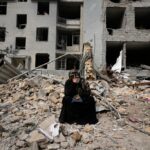
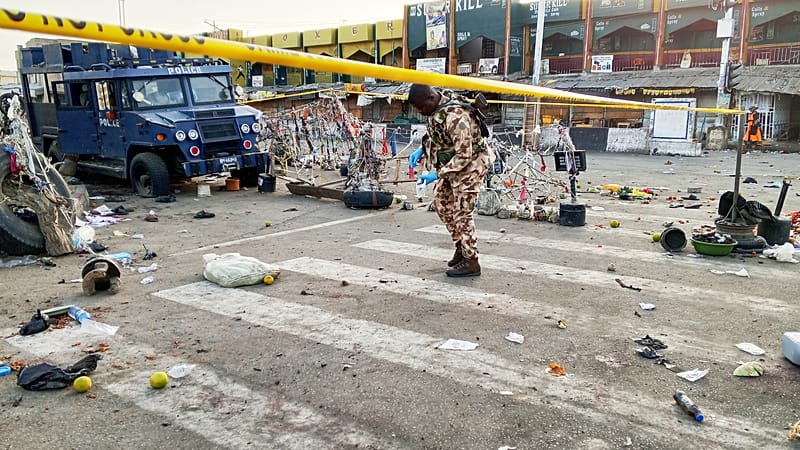
The attack, which occurred on Monday, involved a triple suicide bombing that left at least 23 people dead and 108 injured. The military has attributed the incident to the militant group Boko Haram.
General Olufemi Oluyede, the chief of defense staff, emphasized the need for the people of Borno and Yobe states to take responsibility for the ongoing crisis. “For us to end these acts of terrorism, the people of Borno State and Yobe state must take ownership of this problem,” he said.
He added, “The bulk of the people who are perpetuating this heinous act are from these states. They are our brothers, our sisters, our cousins, and we know them.” According to him, this means that “the people are complicit.”
“So, for us to bring this to an end all hands must be on deck. Our people must resolve that this needs to come to an end, and must,” he said.
Boko Haram and its rival jihadist group, Islamic State West Africa Province (ISWAP), have recently intensified their attacks in northeastern Nigeria. Over the past 17 years, more than 40,000 people have died, and two million others have been displaced as part of their campaign to establish a caliphate in the country.
Despite General Oluyede’s pledge that “this will not repeat itself” in the future, analysts argue that Nigerian forces are overextended. They are also dealing with separatists in the southeast, armed banditry in the northwest, and conflicts between farmers and herders in central states.
The attack in Maiduguri on Monday followed a similar mosque bombing in December, both of which echo the violence seen during the conflict’s peak a decade ago. In 2015, 71 suicide bombings were recorded, according to the U.S.-based conflict monitor ACLED. This number has since dropped to fewer than five per year. However, in 2025, there were 401 military confrontations, 104 bombings, and 141 attacks on civilians in Borno, marking the highest level since 2020.
In rural areas, jihadist tactics are evolving, and new armed groups, including those from the neighboring Sahel region, are becoming more active. Since last year, ISWAP has increased its assaults on military bases, attacking four installations on Sunday evening into Monday, as reported by the army.
Similar “coordinated” attacks on military sites were noted the week before. In a recent assault overnight into Wednesday on a military position in Mallam Fatori, the army claimed to have killed more than 60 jihadists who used “armed drones,” a tactic that is becoming more common in Nigeria and the Sahel.
High-profile attacks last year highlighted the expanded presence of jihadist groups beyond the northeast, where they have operated for years. A mass kidnapping of schoolchildren in Niger state, reportedly carried out by a Boko Haram faction, demonstrated the far-reaching influence of these militant groups.
Meanwhile, President Bola Tinubu continued his scheduled state visit to the United Kingdom, where discussions on security cooperation and other issues were on the agenda.