AI-Generated Video Shows Iranian Attack on Key Israeli Port
The False Narrative of an Iranian Missile Strike on Haifa Port
Recent events in the Middle East have seen heightened tensions between Iran and Israel, with reports of retaliatory strikes and conflicting claims about the extent of damage. However, a video circulating online that allegedly shows an Iranian missile strike on the northern Israeli port of Haifa has been identified as AI-generated content. This misinformation has sparked confusion and raised questions about the accuracy of digital media in times of conflict.
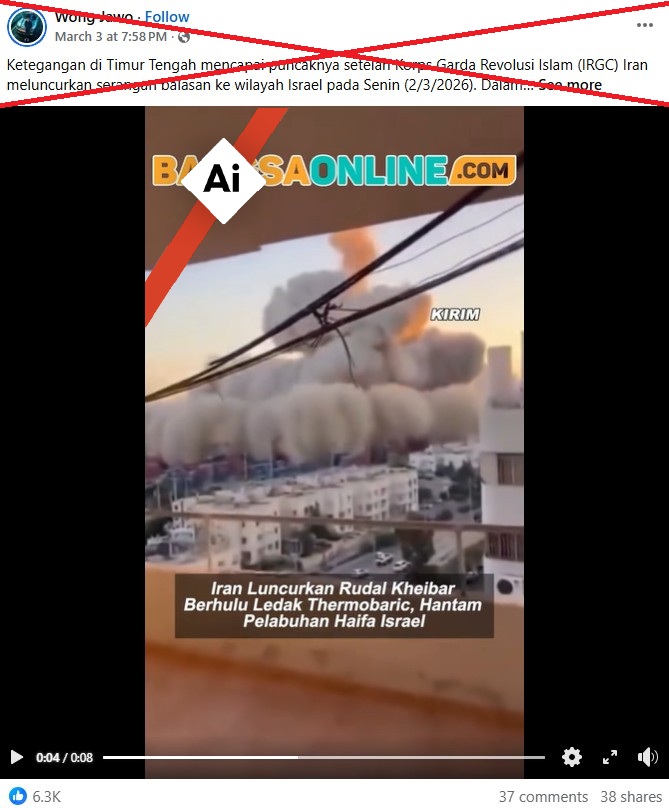
The video, shared on social media platforms like Facebook, was accompanied by a caption in Indonesian language that claimed an Iranian ballistic missile had hit the Port of Haifa. The post stated that the “Kheibar” missile successfully targeted the port, which is responsible for handling 56% of Israel’s national cargo. The clip appears to show a fire at a port followed by a sudden explosion, enveloping the area in thick clouds of smoke.
This video was also shared in English, Slovak, Thai, and Urdu, reflecting the global spread of the false narrative. It coincided with increased hostilities between Iran, Lebanon’s Hezbollah, and Israel, following a joint US-Israeli attack that killed Iran’s supreme leader, Ali Khamenei. In response, Iran and its allies launched attacks against Israeli territory, intensifying regional tensions.
Despite these claims, multiple sources have refuted the authenticity of the footage. The operator of the Haifa Port, the Adani Group, issued statements confirming that all port assets and infrastructure were secure and operational. On March 3, the group stated that the port was functioning normally, and on March 12, it explicitly denied any damage caused by Iranian missiles.
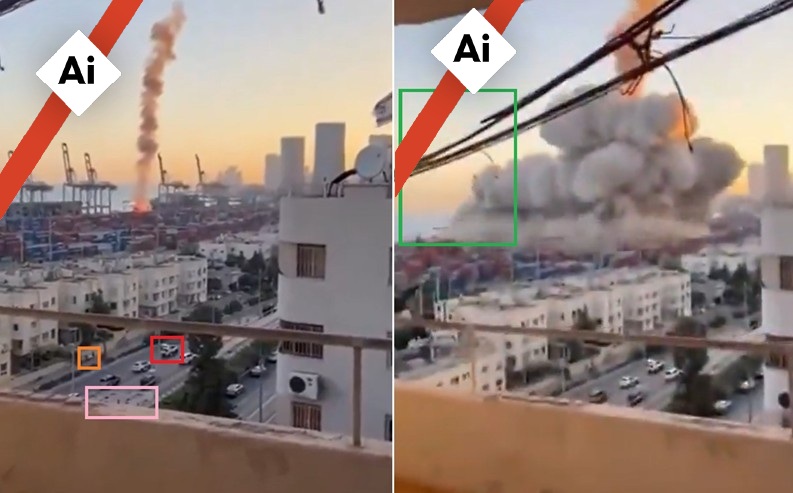
Further scrutiny of the video revealed visual inconsistencies typical of AI-generated content. For example, vehicles on the street appear unnaturally shaped, and buildings depicted in the footage are distorted. Additionally, crane barges in the port seem to vanish during the explosion, raising further doubts about the video’s authenticity.
Human rights organization WITNESS, through its Deepfakes Rapid Response Force (DRRF), analyzed the video and concluded that it has a “high probability of being fake/edited” and “likely composited.” Recod.ai, a member of the DRRF, noted inconsistencies in the texture and appearance of the smoke, as well as irregular lighting on the buildings.
Another analysis from Cauth AI, also part of the DRRF, highlighted that the shockwave depicted in the video would have caused catastrophic damage. However, in the footage, windows remain intact, and cars on the road are unaffected, contradicting the expected consequences of such an event.
Indian media outlet NDTV broadcast footage from the port on the same day, showing no signs of major destruction. This supports the claims made by the Adani Group and underscores the importance of verifying digital content before accepting it as factual.
Key Takeaways
- AI-generated content can be used to spread misinformation, especially during times of crisis.
- Official statements from port operators and other credible sources are essential in countering false narratives.
- Visual inconsistencies in videos can often reveal whether they are authentic or fabricated.
- Independent analyses by organizations like WITNESS and Cauth AI play a crucial role in identifying and debunking misleading content.
- Media responsibility is vital in ensuring accurate reporting and preventing the spread of false information.
As conflicts continue to unfold in the Middle East, the need for critical thinking and verification of digital content becomes more important than ever. Consumers of news must remain vigilant and rely on trusted sources to separate fact from fiction.