Iran Strikes Gulf Energy Sites Following Gas Field Attack
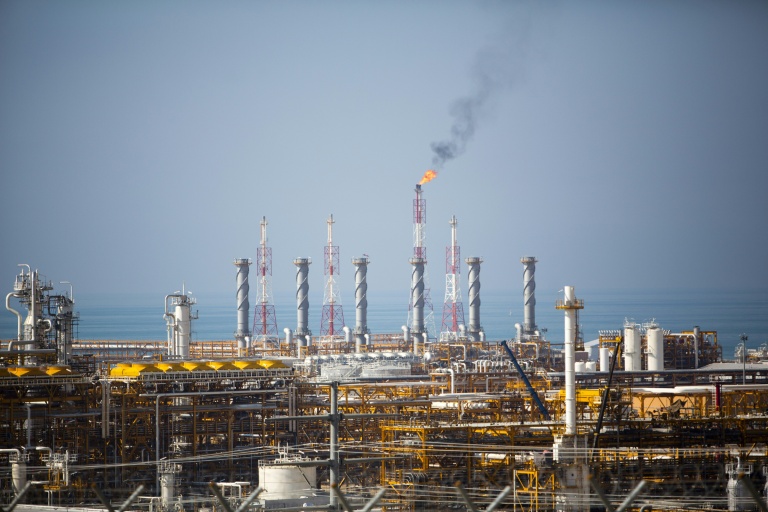
Iran has targeted energy facilities across the Gulf and issued warnings of further destructive attacks following an incident at a key gas field. This development has heightened concerns about a potential broader assault on fuel supplies, which could destabilize already volatile global markets.
The warning came after Israel killed Esmail Khatib, the Islamic Republic’s intelligence chief. This act is part of a series of strikes that have significantly weakened Iran’s leadership since the conflict began nearly three weeks ago.
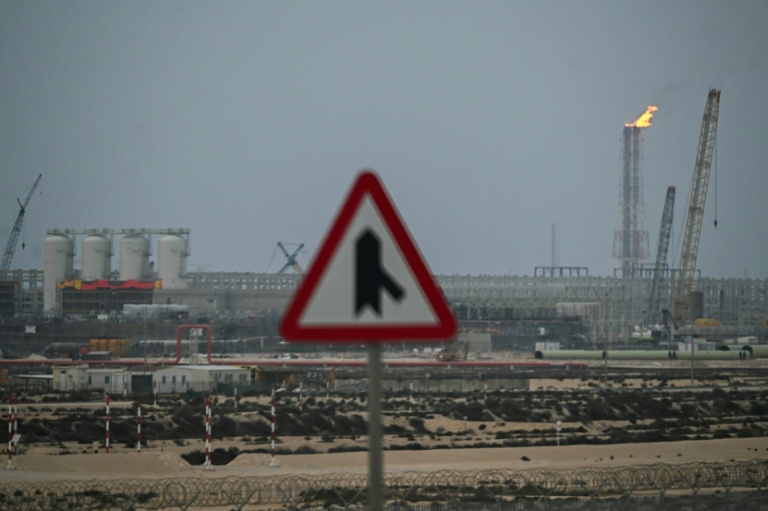
In response to the attack on its South Pars field, Tehran declared it would retaliate forcefully against any further attacks on its energy sector. The Revolutionary Guards stated in a public message: “We warn you once again that you made a big mistake in attacking the energy infrastructure of the Islamic republic. If it is repeated again, further attacks on your energy infrastructure and that of your allies will not stop until it is completely destroyed.”
The Israeli military did not comment on the South Pars attack, while U.S. officials confirmed they were aware of the situation but were not involved.
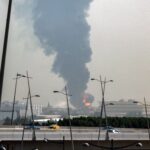
Iran’s threat of retaliation coincided with reports from Qatar’s state energy company that a missile strike caused a fire at its main gas facility—the world’s largest—resulting in extensive damage. As a result, Doha expelled two Iranian diplomats. Meanwhile, Saudi Arabia reported intercepting drones targeting its energy infrastructure in the east, and debris from a ballistic missile landed near a refinery south of Riyadh.
Oil prices, already affected by the disruption of traffic through the Strait of Hormuz, rose sharply again, with the main U.S. benchmark for crude increasing by more than three percent on Thursday.
– ‘Cowardly assassination’
French President Emmanuel Macron addressed the situation, stating he had spoken to U.S. President Donald Trump and the Emir of Qatar. He called for a moratorium on strikes targeting civilian infrastructure.
“Civilian populations and their essential needs, as well as the security of energy supplies, must be preserved from military escalation,” he posted on social media.
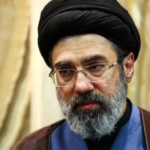
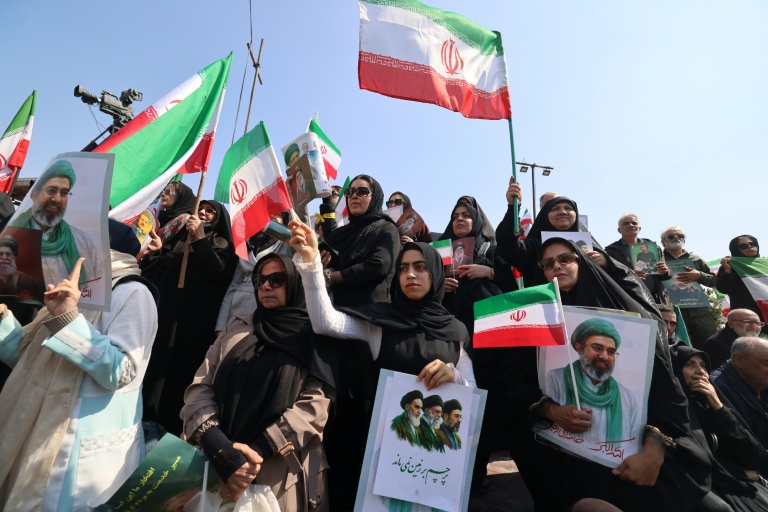
The killing of Khatib followed the death of security chief Ali Larijani, as Israel continues its campaign to eliminate senior Iranian officials. Iranian President Masoud Pezeshkian condemned Khatib’s killing as a “cowardly assassination,” while the country’s new supreme leader, Mojtaba Khamenei, vowed retaliation.
“Every drop of spilled blood comes at a price,” he said in a written message. Khamenei has not appeared in public since taking power after the death of his father, Ali Khamenei, in the opening strikes of the war.
Local authorities announced that Larijani would be buried at a shrine popular with pilgrims in the city of Qom.
– ‘Largely degraded’
In Washington, U.S. intelligence chief Tulsi Gabbard told Congress that the Iranian government remained “intact but largely degraded,” while also acknowledging that Tehran had not resumed nuclear enrichment.
Israel has pursued a strategy of targeting senior Iranian and allied leaders, including Hezbollah chief Hassan Nasrallah in 2024 and top Hamas figures since the Gaza war began. Despite these losses, Iran has continued to retaliate.
An Iranian missile barrage killed a man described as a “foreign worker” in central Israel, bringing the death toll in the country to 15. Strikes also hit multiple sites overnight, while Iranian media reported fresh bombardment across several regions, including Tehran.
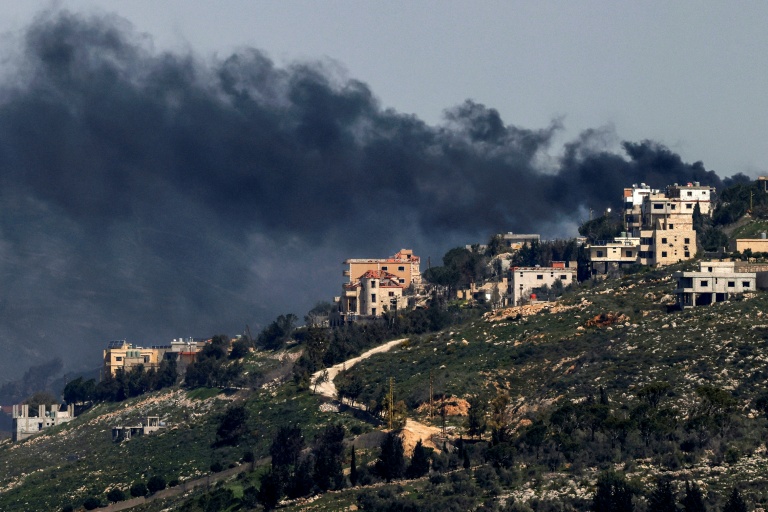
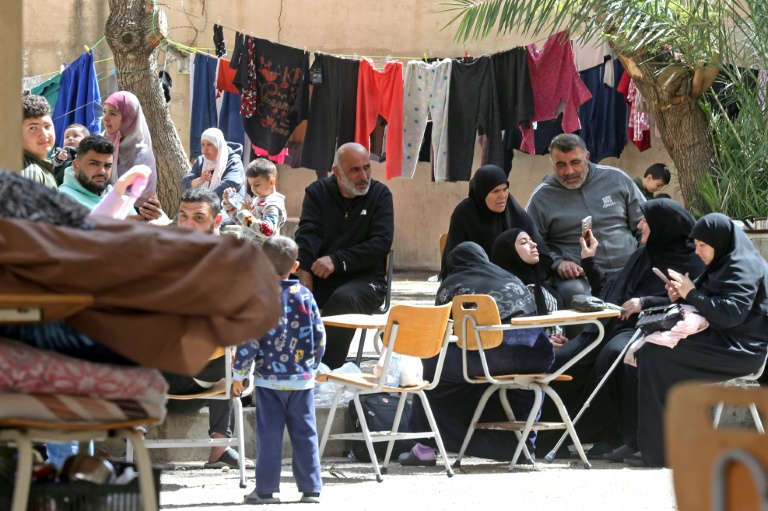
The conflict has spread across the Middle East, leaving hundreds dead and millions displaced. In Lebanon, Israeli strikes hit central Beirut multiple times on Wednesday, with casualties reported, as fighting with Hezbollah intensified. The country was drawn into the conflict when the Iran-backed militant group launched rockets at Israel over Ali Khamenei’s death.
A line of cars stretched as far as the eye could see along the country’s southern coast as residents of affected areas fled to the ancient city of Sidon in search of safety. Nidal Ahmad Chokr initially intended to stay put but finally decided on Tuesday to leave his village of Jibchit, as the air strikes intensified.
“Bakers died while making bread” in the village square and “municipal workers were martyred while using bulldozers,” the 55-year-old said.
France’s foreign minister, Jean-Noel Barrot, is set to travel to Lebanon on Thursday, in a visit that the ministry said “underlines France’s support and solidarity with the Lebanese people, dragged into a war they didn’t choose.”
In Iraq, the pro-Iranian armed group Kataeb Hezbollah announced it would halt attacks on the U.S. embassy for five days, setting conditions including an end to Israeli strikes on Beirut’s southern suburbs and a halt to attacks on residential areas in Iraq.
Jendela Magazinereported no drone or rocket fire targeting the U.S. embassy in Baghdad from Wednesday night through Thursday morning.