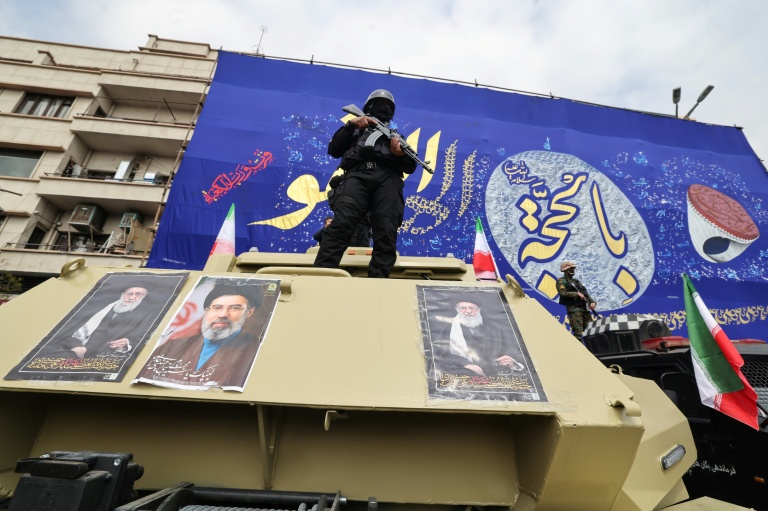
From Faraja to Sepah: Iran’s Security Forces
Iran has long maintained a multi-layered security structure to protect the Islamic Republic from both external and internal threats. Since the 1979 revolution, the country has developed multiple forces to ensure that no single entity holds absolute control over its defense. This system has been tested in recent months following the outbreak of hostilities between Iran, the United States, and Israel.
The conflict began on February 28 with the assassination of Supreme Leader Ayatollah Ali Khamenei, an event that triggered widespread unrest and military mobilization. Over the past two weeks, the situation has escalated, leading to significant losses among key Iranian security officials. According to Tulsi Gabbard, director of national intelligence, “the regime in Iran is intact but largely degraded due to attacks on its leadership and military capabilities.”
Here are the key components of Iran’s security apparatus:
Islamic Republic of Iran Army (Artesh)
The Artesh is Iran’s conventional military force, responsible for safeguarding the nation’s sovereignty. It includes ground, naval, air, and aerospace units, though it is primarily focused on land-based operations. The army is led by General Amir Hatami, who has managed to survive the ongoing conflict. He was appointed in June 2025 after his predecessor, Mohammad Bagheri, was killed by Israeli forces during a 12-day war earlier that month.
The Artesh operates under the Khatam al-Anbiya Central Headquarters, which is commanded by General Ali Abdollahi Aliabadi. Despite the chaos of the current war, the army remains a critical pillar of Iran’s defense strategy.
Islamic Revolutionary Guard Corps (IRGC)
The IRGC, known as “Pasdaran” or “Sepah,” holds considerable political power and influence within Iran. Unlike the Artesh, the IRGC is deeply embedded in the country’s political and religious institutions. Despite the loss of several high-ranking members, including commander-in-chief Mohammad Pakpour and previous leader Hossein Salami, the group continues to play a central role in the conflict.
In January 2023, the European Union designated the IRGC as a terrorist organization, joining the U.S., Canada, and Australia in this classification. Tehran strongly opposes this label, viewing it as an attempt to undermine its national security.
Quds Force
A specialized unit within the IRGC, the Quds Force is responsible for intelligence gathering and conducting external operations. It was previously led by Qassem Soleimani, a figure who played a pivotal role in shaping Iran’s foreign policy through operations in countries such as Lebanon, Iraq, and Syria.
After Soleimani’s death in a U.S. drone strike in 2020, the Quds Force came under the command of Esmail Ghaani. Ghaani has remained relatively low-profile, raising questions about his whereabouts and influence. Analysts suggest that his absence is a strategic move given the heightened security risks.
The Basij
The Basij, meaning “mobilization” in Persian, was established shortly after the 1979 revolution. This paramilitary volunteer force consists of young people from lower-income and more conservative communities. They played a crucial role in the 1980-1988 war with Iraq, often engaging in “martyrdom” operations.
Today, the Basij is best known for its presence in urban areas, where members patrol on motorcycles or in plain clothes, monitoring for signs of protest. Their leader, Gholamreza Soleimani, was recently killed in an Israeli airstrike, further destabilizing the group.
Police Command of the Islamic Republic
The National Police, also known as Faraja, is responsible for maintaining order and combating crime. However, it has also been accused of suppressing dissent, particularly during the mass anti-government protests in January 2023.
The police force is led by Ahmad Reza Radan, a prominent figure who was initially reported dead during the June 2025 conflict but later reappeared. Radan has made public appearances during the current crisis, vowing to treat protesters as enemies of the state.
These forces represent the complex and multifaceted nature of Iran’s security infrastructure. As the conflict continues, their roles and effectiveness will be closely watched by both domestic and international observers.