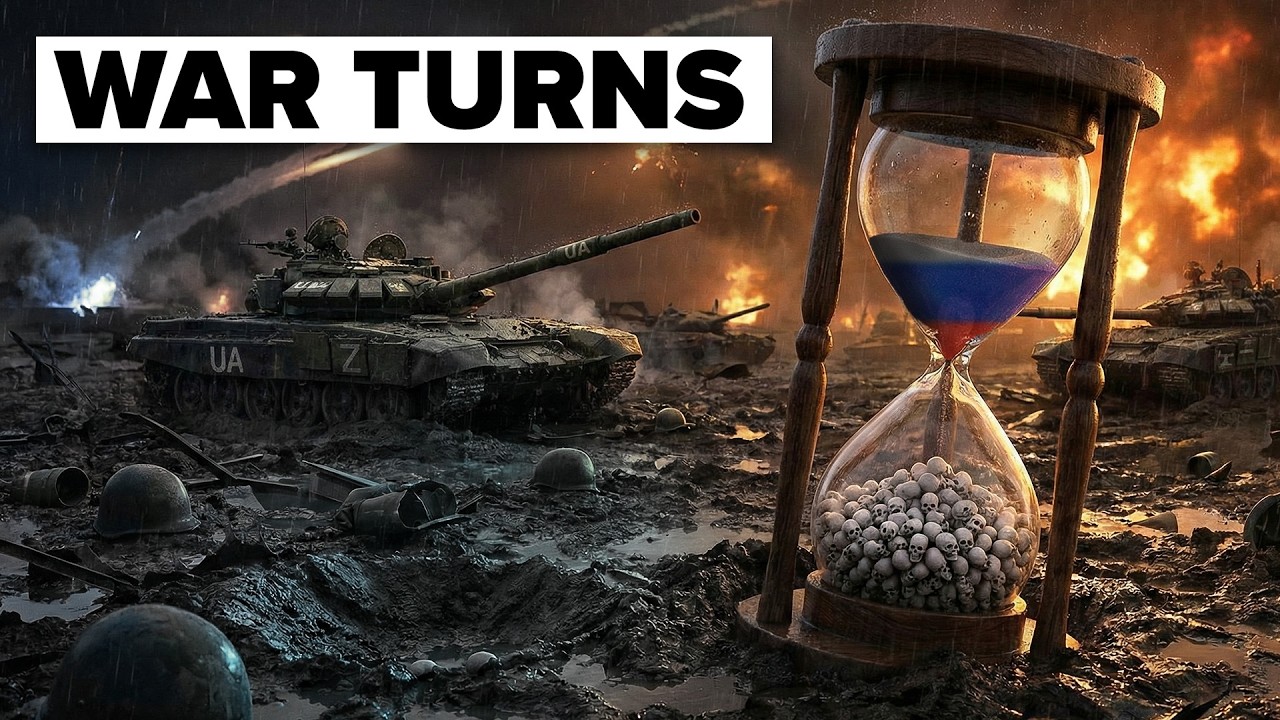
Ukraine Turns Russia’s Power Against Them
When Russia invaded Ukraine, it seemed to have every possible advantage on its side. It had a larger and stronger army, a bigger military budget, more powerful military equipment, more experienced commanding officers, and smarter strategies, which should have all added up to a swift and crushing victory. Instead, years went by, but victory never came. Now, Russia has spent more time fighting its war with Ukraine than the legendary Red Army of the Soviet Union spent fighting the Nazis in World War II. And it is no closer to victory today than it was back in 2022.
What is more, its many advantages have been whittled away, one by one. And even its final advantage, its ability to sustain a long war of attrition, is slowly starting to become more of an expensive and unsustainable weakness, rather than a benefit.
To understand how we got to this point, and the true, shocking scale of Russia’s unprecedented failure, it is first important to look back over the course of the war so far.
Back in February of 2022, the world watched with bated breath as Russia amassed its enormous army beside the borders of Ukraine. Facing almost insurmountable odds, Kyiv seemed on the brink of complete collapse, with experts and intelligence agencies around the world expecting the Russian war machine to rampage across the border at any moment and steamroll through whatever meager defenses the Ukrainians might manage to erect.
Almost no one expected Ukraine to be able to properly defend itself, not against such a mighty and massive force as Russia, which had so much military experience and such a strong reputation on the battlefield. With hindsight, it is easy to see how wrong those views turned out to be. At the time, however, they made total sense.
Russia was rolling into war with one of the world’s largest and toughest tank fleets, tens of thousands of armored vehicles estimated at 190,000, and vast amounts of jets, bombers, artillery, and other equipment. Ukraine, meanwhile, was certainly not regarded as any sort of major military power at the time. It had a relatively small selection of old Soviet tanks and armored vehicles to choose from, along with other equipment which largely dated back to the days of the Cold War. Its domestic defense industry was small and undeveloped, and in every metric that mattered, it simply could not come close to matching Russia.
In short, the stage was set for Russia to easily achieve its military objectives. It appeared that the days of the Ukrainian government were numbered, and Russia’s Federal Security Service (FSB) was already in the process of planning its next steps, preparing Kyiv apartments for the new Kremlin-backed officials it intended to install. Ukraine, it seemed, was destined to become another of Moscow’s puppet states, similar in style to Belarus, and Russia’s president, Vladimir Putin, would get exactly what he wanted, just as he had so many times before.
However, as history has proven so many times before, war is unpredictable. It is not merely a matter of numbers, or which side has the stronger or larger force. Instead, war is chaotic, dynamic, and organic, changing and evolving over time and influenced by a vast web of variables. And even a significantly smaller and weaker force can surprise the world and defy the odds through sheer grit and determination, like a wounded animal backed into a corner.
That is exactly what Ukraine did. While Russia made sizable gains in the early stages as Ukraine initially struggled to get to grips with the conflict, the tide soon started to turn. And all of the assumptions that much of the world, including Russia, had made about the war soon started to unravel, along with its many advantages.
Many expected Russia’s massive army would quickly be able to isolate Ukrainian forces, for example. But that did not happen, as countless Ukrainians decided to volunteer and defend their land. Even with minimal or zero military experience, a multitude of men and women showed remarkable courage and a genuine willingness to lay down their lives for their country.
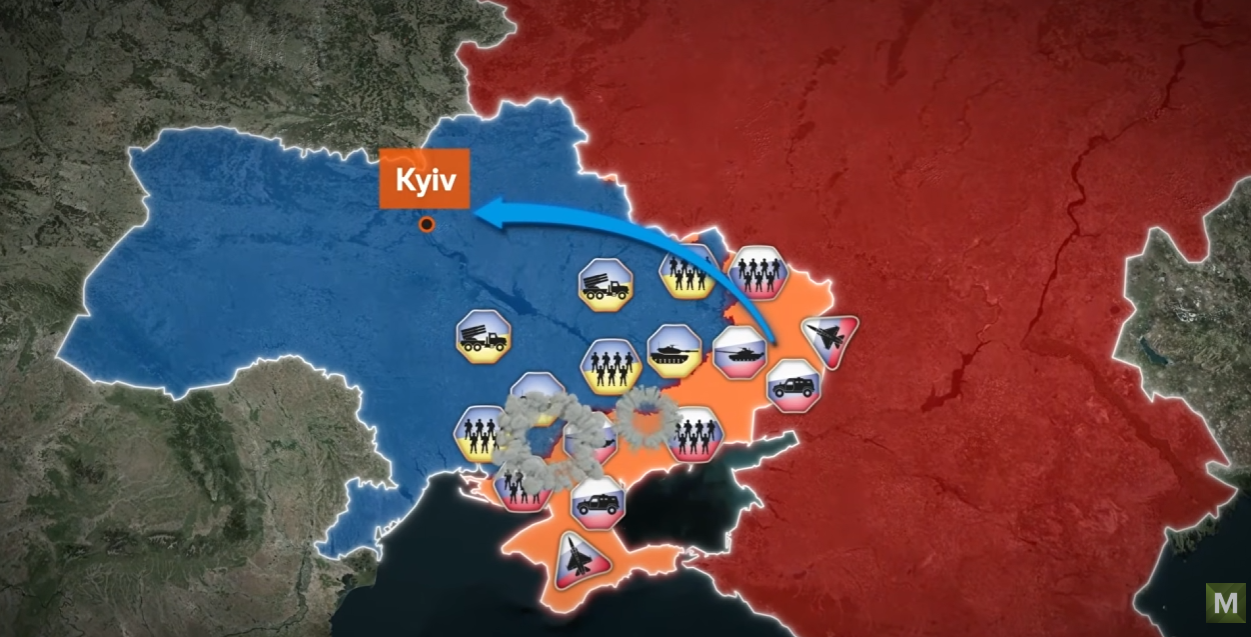
Russia’s commanders also thought that their army’s overwhelming strength would see them march all the way to Kyiv, a mere matter of days after invading. Again, it did not happen.
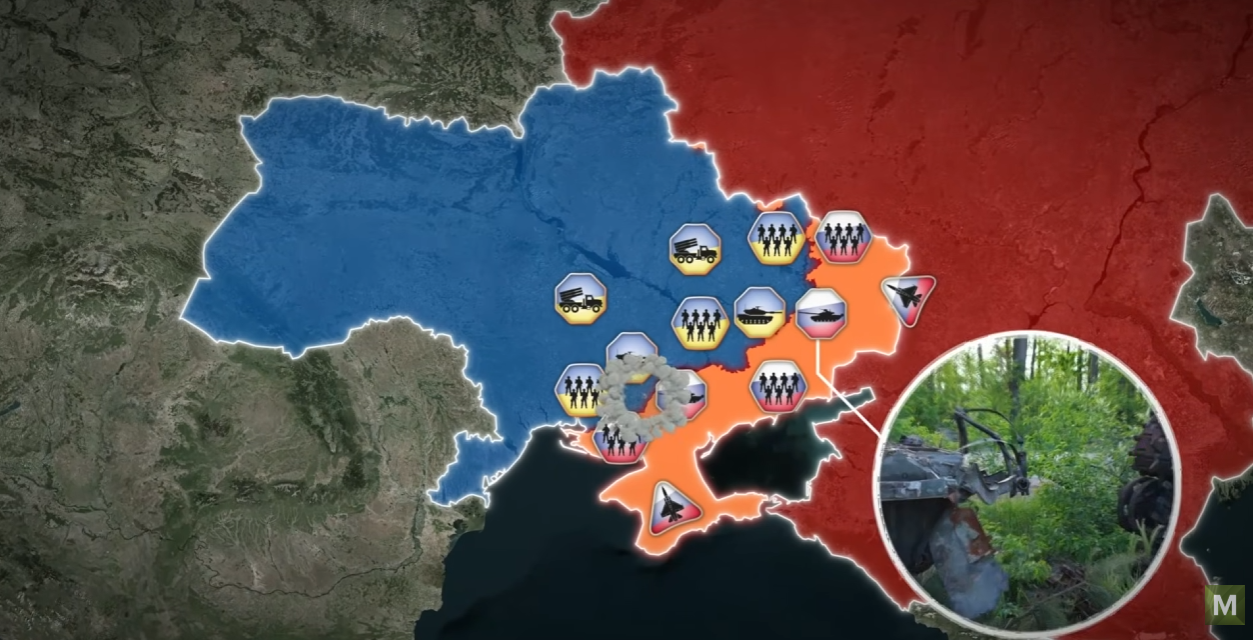
Despite suffering losses and seeing its citizens fall victim to horrific war crimes in places like Bucha, the country rallied against Russia’s invasion. It mounted stern resistance, proving a much tougher nut to crack than the Kremlin could have anticipated.
Ukraine was also helped by Russia’s arrogance. The Kremlin’s commanders could and perhaps should have made more of their early advantage, using their vastly larger, stronger aerial forces to take control of the skies and pave the way toward further gains. Instead, they went into the war almost believing that they would win by default, and so made many mistakes along the way. They failed to capitalize on their initial gains, never truly attained aerial superiority, and started to lose large numbers of tanks, vehicles, and troops due to a lack of tactical planning and forethought.
All of a sudden, Russia’s many advantages no longer seemed as large and influential as they originally appeared. And they only diminished further when Western countries rallied together and came to Ukraine’s aid, sending everything from missiles to air defense systems to help Ukraine not only defend its land and airspace from Russian attacks, but also strike back against its enemy.
What should have been a brief so-called “special military operation” was about to become a long-running conventional war, with all the casualties and complications that entails. Neither side was truly prepared for that, and the playing field slowly but surely started to tip in Ukraine’s favor.
Its ranks also started to swell as more and more volunteers joined the fight, evening the odds against Russia’s enormous army. Kyiv also began to benefit from the invaluable insights of Western intelligence agencies, while unlocking new offensive and defensive capabilities as more weapons and systems were delivered from places like the United States, United Kingdom, Germany, and France.
Ukraine even managed to launch a couple of offensive operations of its own, in regions like Kherson and Kharkiv. In response, Moscow became increasingly desperate. It launched a partial mobilization, sending hundreds of thousands more troops to the front, while also investing heavily in expanding its military-defense industry.
It eventually enjoyed one notable victory in the Battle for Bakhmut, after many months of brutal and bloody conflict, but the war effectively entered a kind of stalemate situation from that point on, with Russia making only small gains here and there, but struggling to capture a single major town or city of note.
During that time, Ukraine found ways to nullify or counteract almost every advantage Russia had. The immense power of the vast Russian tank army, for example, was quickly counteracted by Ukraine’s shrewd use of mines, drones, and other anti-tank weaponry, which forced the Kremlin’s commanders to rethink their tactics.
Russia also had an enormous edge in the air back when the war began, with a vastly superior and stronger air force. It could have used that to take control of the skies over cities like Kyiv and Kharkiv. Again, however, Ukraine found ways to eliminate this advantage, setting up one of the world’s smartest, strongest, layered air defense networks, featuring everything from advanced radars and missile systems to AI-operated turrets and mobile defense teams.
In terms of artillery, too, Russia went into the war with an unmatched quantity of systems and munitions. Its commanders intended to lean heavily on their enormous artillery power, relentlessly bombarding Ukrainian strongholds in order to overwhelm and wear down their opponents over time. Again, Ukraine found a way. With the help of its allies and its own domestic innovations, it found ways to strike back, locating and taking out Russian stockpiles and ammo depots, giving the Kremlin far fewer shells to work with.
Even when Russia thought it had found a new advantage, Ukraine consistently found a way to combat it. When Russia invested heavily in drone warfare, for example, and started to launch dozens, then hundreds of drones toward Ukrainian cities on a nightly basis, Kyiv’s commanders found stronger and more efficient ways to defend against them, with the aid of their Western allies.
Ukraine then went one step further, developing its own domestic drone industry, launching attacks against Russian targets, laying waste to everything from oil refineries to airbases.
One at a time, Kyiv undermined almost all of Russia’s conventional advantages in mass, armor, airpower, and firepower. It did not have the budget or resources to match or exceed them, but it still found ways to cancel them out.
Which leads us all the way up to the current state of play in the war, and Putin’s last, rapidly diminishing advantage: his country’s ability to keep a war of attrition going, week after week, month after month.
As soon as it became clear that conquering Ukraine was going to take much longer than originally expected, many military experts still felt that Russia would ultimately be able to grind its way to a win. That is because, even when facing multiple waves of economic sanctions and suffering heavy battlefield losses, Moscow has consistently demonstrated a remarkable ability to simply keep going.
When hundreds of thousands of its soldiers have been killed or wounded, it devised effective methods to keep on recruiting more to replace them. When tanks and armored vehicles have been destroyed, it has turned to its vast Soviet stockpiles to find more. When former allies have turned away, it has strengthened connections with other countries, like Iran and North Korea, to keep its war machine afloat. And even when its economy has been pushed to breaking point, it has somehow scrambled and found solutions to stave off an unprecedented recession.
But time continues to pass, losses continue to mount, and progress on the ground remains remarkably slow. As long as that continues, Russia’s advantage will continue to erode, and that is exactly what Ukraine is counting on.
Indeed, Ukraine’s entire strategy effectively revolves around making the war as futile and unsustainable as possible for Russia. Kyiv’s commanders knew they were never going to actually win a war with such a bigger and stronger opponent. Instead, they have focused on minimizing territorial losses, pushing Russian casualties as high as they can possibly get, and inflicting as much damage on the Russian economy as possible, primarily via drone and missile strikes on high-value targets, like oil refineries and fuel depots.
Moscow, meanwhile, continues to rely on that same brute force, overwhelming strength strategy it has pinned its hopes on from day one. It keeps on piling pressure along the front lines, expecting that eventually, big breakthroughs will come, or Ukraine will suffer enough infrastructure damage and economic losses that its leaders will agree to end the war.
The trouble is that Moscow’s manpower advantage is no longer anywhere near as effective as it once was, and here is why. In the early stages of the war, the front lines were clearly defined, which enabled Russia’s commanders to precisely plan out their next moves and launch large-scale assaults against Ukraine’s positions.
As the war has progressed, the battlefield dynamic has shifted massively, reaching a point where the front lines are no longer defined, but vague and porous instead. It is no longer clear which side holds which patches of ground, with the entire front line area feeling more like an amorphous, cloudy kill zone, dominated by drones, with pockets of Ukrainian fortifications here and there and small Russian squads doing their best to encircle them.
The roads here are covered in counter-drone netting, vehicles are equipped with electronic warfare systems, and personnel carriers are covered in nets, spikes, and other makeshift defenses in a desperate bid to withstand drone attacks.
In short, the entire zone is a bloody and brutal mess, and while both sides spent much of their time battling to control it throughout 2025, both struggled to assert any kind of dominance.
But that is actually much better news for Ukraine than it is for Russia, because as long as Russian troops and resources are tied up in the kill zone, they are not making any real progress or taking control of truly crucial locations that would actually allow them to push on toward victory.
Instead, they are simply throwing more men and resources into the meat grinder, weakening their forces bit by bit in the process. And if Russia persists with its current strategy, its losses are only going to get greater, with very little to show for them in return.
Because this approach is not working. Using small groups of infantry and lightly motorized troops to bypass Ukrainian positions is simply not enough to generate sufficient momentum. Even if those small squads manage to evade the drones long enough to breach the enemy’s defenses, those breaches are too small to turn into genuine breakthroughs.
As such, Russia’s once powerful, structured offensive, which rampaged over Ukraine’s borders and captured vast swathes of land in the early weeks and months of the war, has devolved into a messy, directionless slog, utterly incapable of generating genuine gains.
And that is not the only problem. For years, it did not necessarily matter that Russia’s tactics were wasteful and reckless, or that it suffered such colossal numbers of casualties. It was always able to keep on recruiting more men, hitting its targets and even, at some stages, recruiting more new soldiers than it lost in any given month.
It did this via various means, including offering hefty financial incentives to able-bodied men who were willing to fight, as well as exploiting ethnic minority populations, threatening immigrants with deportation unless they signed up, and even taking prisoners out of their cells and shipping them off to the front lines.
From 2022 to 2024, these tactics worked. Recruitment was so strong, in fact, that Russia was actually able to expand its army, which grew from around 190,000 at the start of the war to around 1.3 million by 2025.
However, throughout 2025, much of Russia’s recruitment, which amounted to around 30,000 new faces each month, was used purely to replace combat losses. In other words, the army finally stopped getting bigger. Then, it started to shrink. By the end of the year, the number of unrecoverable casualties, meaning those who had either been killed or too seriously injured to ever return to the fight, began to exceed the number of new recruits.
Russia still has a large manpower advantage over Ukraine, but its army is no longer able to expand indefinitely or counterbalance its constant stream of casualties. Instead, it appears that unless the country can solve its impending recruitment crisis, its numbers will now start to dwindle, and every loss will hit that much harder as a result.
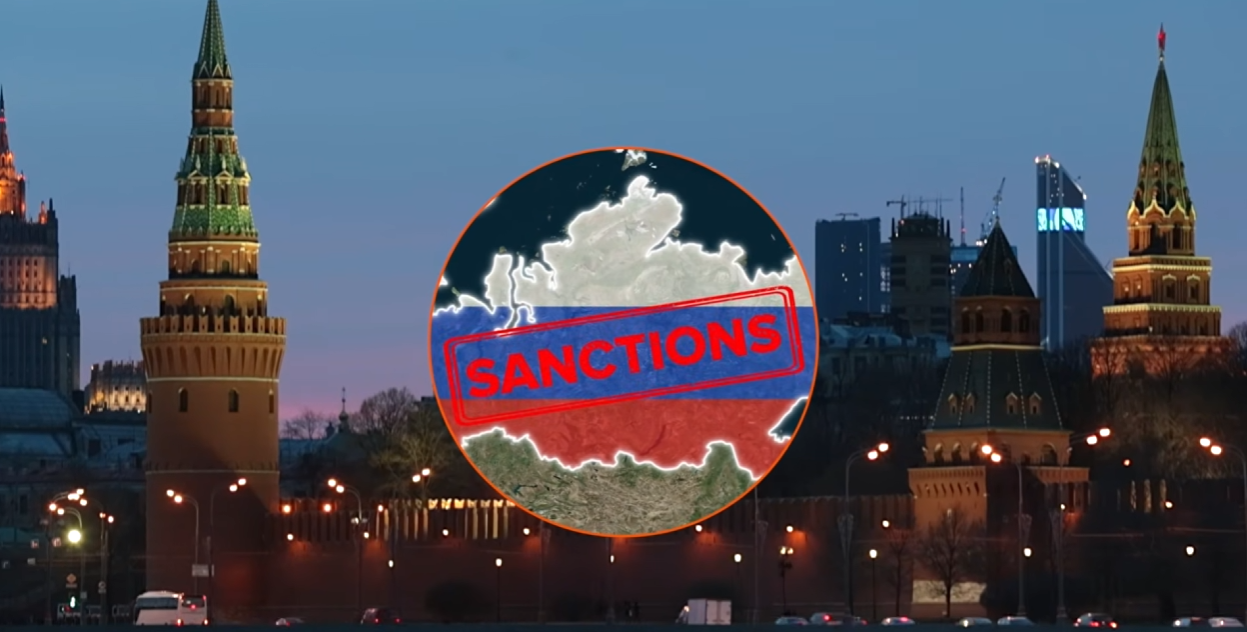
And the Kremlin should have seen this coming. For years now it has boasted about being able to withstand Western sanctions and continue fighting, year after year, no matter what. It arrogantly assumed that its people would keep on willingly signing up and allowing themselves to be shipped off to their dooms in Donetsk and other occupied regions.
But attitudes have slowly started to shift. Many of the Russians who were actually willing to accept money and fight in the war have already done so, and those that are left behind are largely people who have no interest in signing up for what they see as little more than a futile suicide mission.
Moscow must now resort to other means to keep its numbers up. It has already been forced to call up reservists in order to guard important sites of infrastructure from Ukrainian drone attacks, but even a country of such vast size does not have an infinite number of people to call on.
The quality of its personnel has also started to slip, with so many of the more recent recruits having little to no military experience, making it even more difficult for the Kremlin’s commanders to orchestrate effective offensive maneuvers.
This does not necessarily mean that Moscow is running out of men, but it is finding it harder and harder to recruit them, and it is losing more than it is gaining.
The longer that continues, the more the country’s war machine will suffer, with individual units becoming weaker and increasingly imbalanced as combat losses continue to mount. In turn, it will become even harder for Moscow to achieve the breakthroughs it so desperately craves, and the prospect of any kind of victory will become more remote and unattainable.
Putin, meanwhile, is stuck between a rock and a hard place. He is too far gone with the war to back out now, and his country’s economy has become too heavily intertwined with the military-industrial complex. If he waved the white flag or ordered some sort of retreat, he would face absolute ruin.
At the same time, despite his boastful public pronouncements, the facts are staring him right in the face. His army is not making anywhere near the kind of progress it needs to make, and it is getting weaker by the day.
Added to this is the fact that Ukraine continues to carry out regular strikes on Russian infrastructure, disrupting the country’s fuel supplies, damaging its economy, and crippling its war machine even further.
This all makes it far harder for Moscow to sustain the war financially, leaving the country facing a growing deficit, numerous regional budget crises, plummeting oil prices, and declining revenues.
With Western sanctions also intensifying, the problems are mounting up, but there are absolutely zero solutions for Putin to latch onto.
He is trapped in an unwinnable war, and while he may still, for now, have the money and resources to keep it going at least a little longer, he has no hope of emerging from this situation in any sort of positive way. It is only going to end badly for him and his country, and the only card he has left is to simply keep it going as long as possible, delaying his inevitable demise.
In 2025, the Russian president had two big hopes. The first was that sustained military pressure would eventually lead to a collapse in the Ukrainian lines. The second was that the United States and other Western nations might finally stop supporting Kyiv. Neither one worked out the way he wanted, and neither will this war.
Russian troops are starting to realize this, too, with more and more of them turning against the Kremlin and expressing their anger toward Putin, which you can learn all about in this video. Alternatively, check out this video for a look at how Ukraine’s remarkable search and destroy units are picking Russia’s war machine apart, one piece at a time.
Make sure to subscribe to our channel, too, so you can stay informed and up to date on all the latest news from this war and other important military matters around the world.