Russia’s Tanks Gone… Putin’s Troops Crushed… Ukraine Now Rules Kharkiv Front
A Russian tank rolls toward the Kharkiv front. Then, it vanishes. Gone without a trace and erased from the map forever. Putin, in his infinite wisdom, comes to a conclusion. If he can’t send tanks, he’ll send soldiers. This is insanity.
Putin would rather lose 100 soldiers than one tank, but both vanish on a front that has become one of the most lethal in the Ukraine war. Ukraine now dominates in Kharkiv. All that’s left is a graveyard of Russian armor and soldiers.
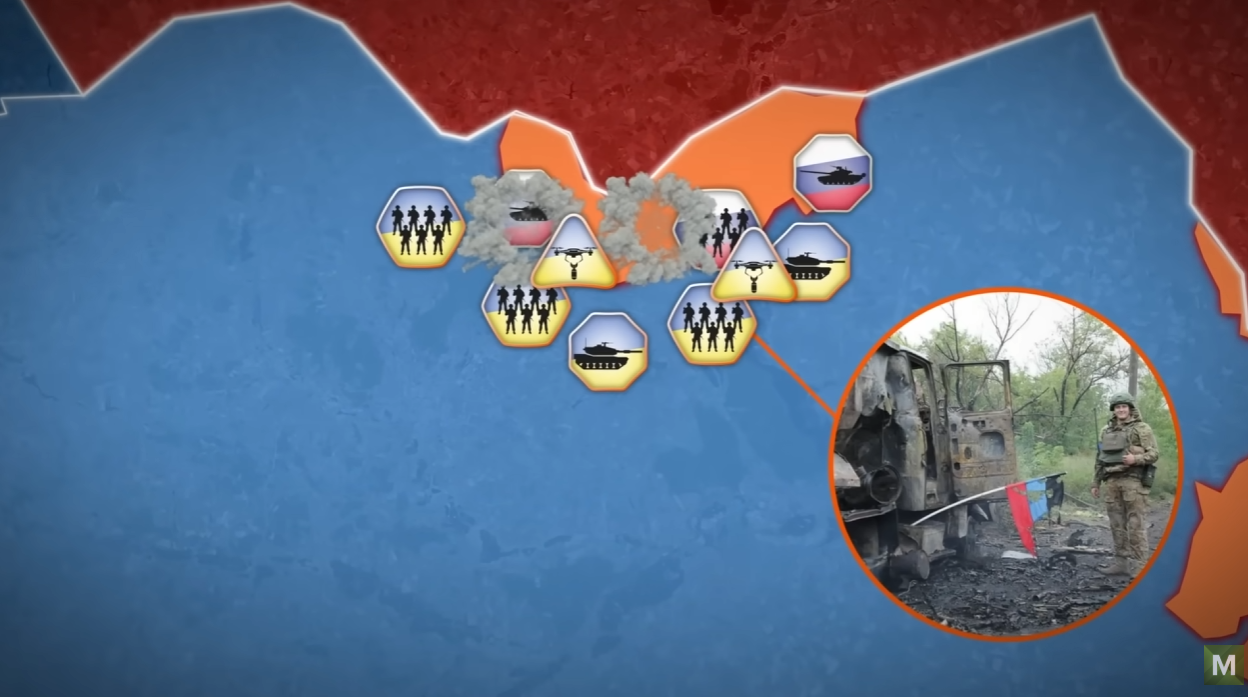
Russia’s tanks haven’t been seen in the Kharkiv sector for months, which has made the armor that once formed the backbone of the entire Russian strategy a complete non-factor in Russia’s assaults on that particular front. That’s according to the Deputy Company Commander of Ukraine’s 13th Brigade, who goes by the callsign Porokh. He made the revelations during a March 2 interview with Army TV, stating, “We haven’t seen heavy equipment on our axis for a long time, especially armored.”
This doesn’t mean that Russia’s armor, or what is left of it, is safe. Though Russia isn’t sending its tanks into Kharkiv, it is doing its best to amass as much armor as it possibly can behind the combat lines. Presumably, Russia is trying to build up its reserves of tanks, armored vehicles, and artillery for an upcoming offensive that will see it finally provide some sort of support to the infantry that is getting destroyed on the Kharkiv front line.
But that armor and heavy equipment aren’t arriving any time soon. And due to the 13th Brigade’s actions, it’s getting slowly destroyed even though it’s miles away from the front. “Strikes on such equipment take place, if we spot it, in the enemy rear, already beyond the border,” Porokh reveals in his interview.
This isn’t necessarily easy for Ukraine to achieve. A tank that is trying to make its way through a Ukrainian kill zone can be spotted by reconnaissance drones far more easily than one that is being held back across the border. However, as Porokh puts it, “If reconnaissance provides us with data, we manage to fly there and strike artillery or tank positions located far from the border itself.”
Let’s unpack that for a moment. According to Porokh, Russia is so terrified of losing yet more tanks in Kharkiv that it is trying to keep them in secure locations on its own territory. However, Russia is also guarding those locations so poorly that Ukraine is still able to conduct strikes on the tanks while they’re inside Russia, which in turn means they will never end up making an impact on the Kharkiv front.
Just what is Russia trying to achieve here? If it’s trying to amass armor stockpiles, surely it’s better to do so outside of the range of Ukraine’s drones and missiles? Keeping those stockpiles in border regions is a dumb decision, given that Ukraine has shown again and again that it can hit these regions. It’s enough to boggle the mind.
As if Putin’s insane decision to send meat instead of metal to fight on the Kharkiv front, which is costing Russia hundreds of soldiers per week. Keep those numbers and Putin’s insane strategy in mind, because we’ll be coming back to both in just a few minutes. Before we do, we have to explore what on Earth is happening in Kharkiv that has led Russia down the grim path of sacrificing cannon fodder due to Putin being so terrified of losing yet more tanks to Ukraine’s defenses.
But perhaps that statement alone is almost enough to explain it. Russia’s tank losses in Ukraine are enormous. And right now, Putin seems more focused on putting out a fire that has already spread far beyond his control than he is on preserving the manpower that he needs to maintain his attritional campaign in Ukraine.
Just one look at Russia’s tank losses in Ukraine so far is enough to explain what is now happening in Kharkiv. According to Ukraine’s Ministry of Finance, Russia has lost 11,727 tanks as of March 5. The war has been raging for a little over four years, so that gives us an annual average loss of a little over 2,900.
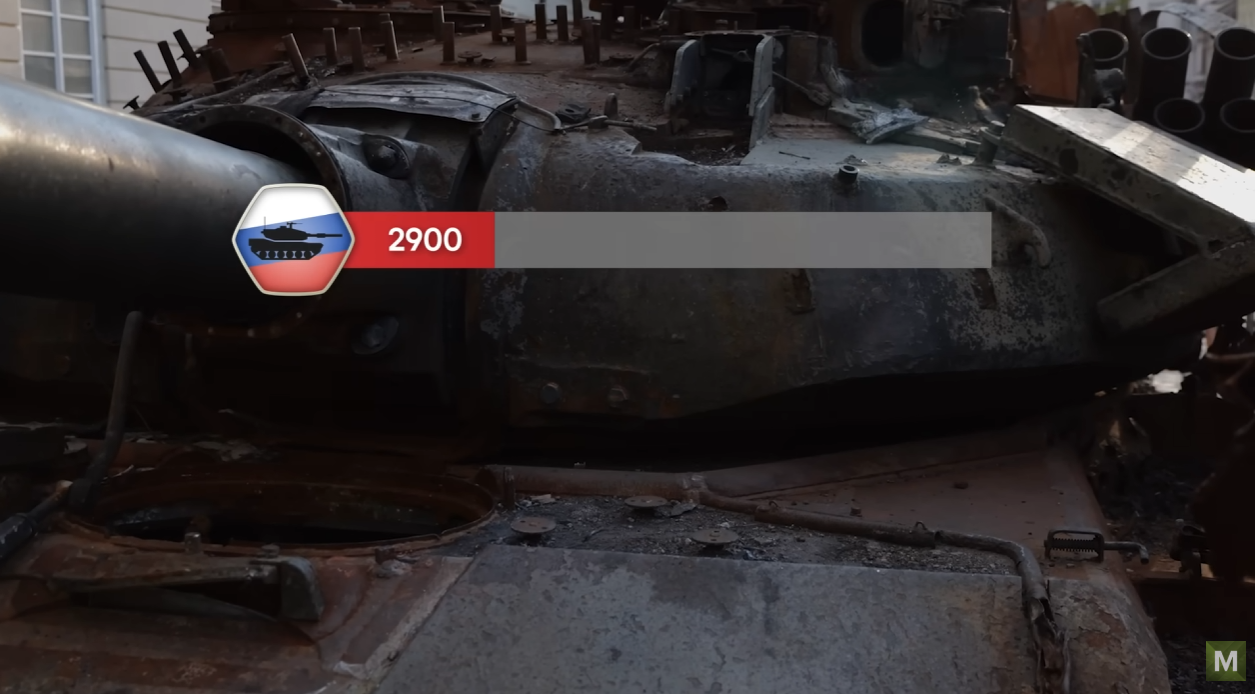
However, those figures will naturally be weighted in favor of the earlier years of Putin’s faltering campaign, as Russian armor is being withdrawn all over the country. You can’t lose tanks that you don’t deploy, seems to be the Russian logic. Of course, that doesn’t mean a whole lot to the soldiers who are being sent to the frontlines without any armor.
Russia’s tank problems have been a major source of news for almost as long as Putin’s supposed “special military operation” has been ongoing. After Russia failed in its initial, and very tank-heavy, invasion, Putin thought that the Ukraine war would settle into an attritional battle. Russia would win. It had to, by virtue of its enormous number of tanks alone. Of course, Ukraine’s drones, along with anti-tank weapons provided by the West, threw a wrench into the workings of that particular plan.
And what Russia has been left doing is asking the same question that was posed by The National Interest in an October 2025 piece. “What happened to all of Russia’s tanks?” The major problem for Russia is that its early tank losses in Ukraine were both substantial and unexpected. As a result, it wasn’t long before Russia was being forced to pull from its reserves of aging Soviet-era tanks just to keep up the numbers in Ukraine.
At the beginning of the Ukraine war, Russia had 24 bases spread across its territory that were full of these old tanks. By October, it had nine left. And those are emptying out even as Russia tries to conserve its tanks. Russia also has to combine this depletion of its tank reserves with the fact that it simply isn’t building enough tanks to maintain anything that even slightly resembles the massive mechanized assaults that it unleashed earlier in the Ukraine war.
Back in October 2025, United24 Media reported that Russia had an ambitious plan to build, overhaul, or upgrade 1,118 of its T-90M and T-90M2 main battle tanks, which would bring its tank manufacturing somewhere close to the levels seen during the Soviet era. But there are a few problems with this strategy. For one, 1,118 tanks, which will be built or refurbished between 2027 and 2029, don’t exactly cover for Russia losing an average of 2,900 tanks per year.
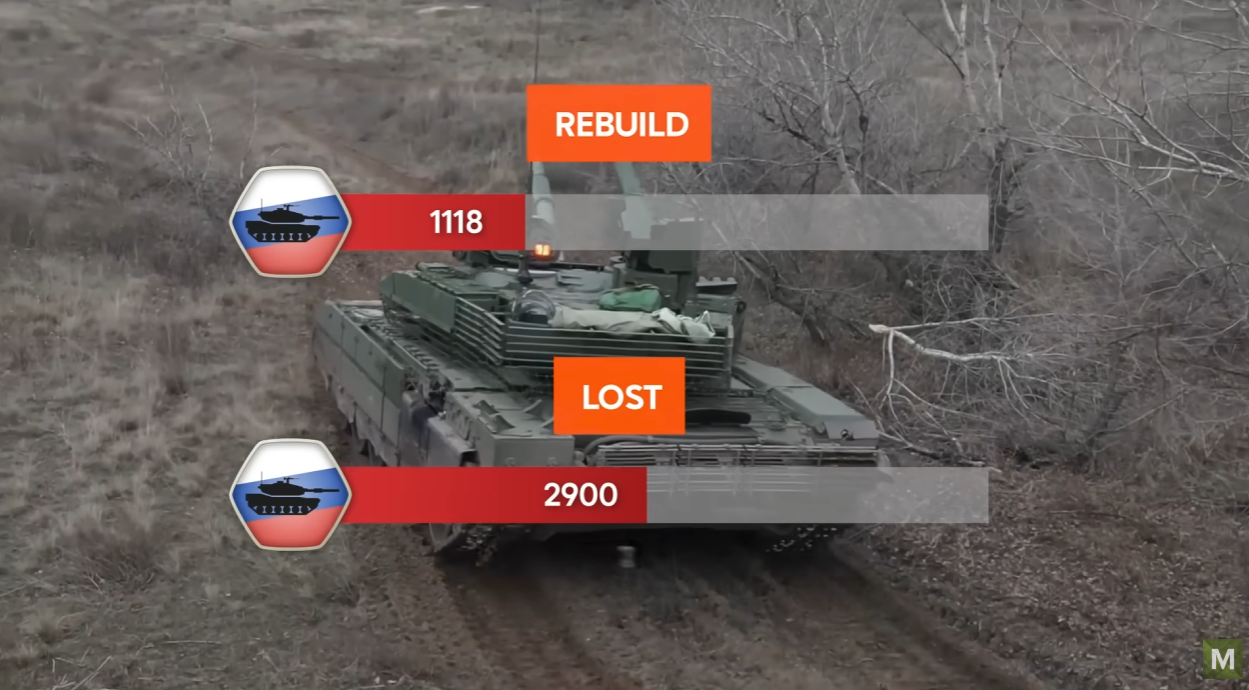
Plus, as Ukraine has demonstrated many times already, the T-90 is no more capable of defending itself against drone and anti-tank munitions than any of Russia’s older tanks. So, what we see here is Russia ramping up tank production to record-breaking levels, at least in modern times. But that will still only amount to about 400 T-90s annually, when Ukraine is destroying more than seven times that many Russian tanks every single year. The math isn’t mathing for Russia.
Russia is also dealing with its existing tank stockpiles being on their last legs. That was revealed by United24 Media in a February 26 piece, where it reported that Russia is pulling its last meaningful reserves of tanks, predominantly T-72 “Ural” and T-72A tanks, out of storage. Apparently, 452 of these tanks are moving toward Uralvagonzavod, which is Russia’s main armored plant. How many will actually make it into Ukraine isn’t known, but even if all of them do, the numbers we’ve already shared demonstrate that these last vestiges of Russia’s Soviet stockpiles aren’t going to be enough to change the course of the Ukraine war for Russia.
All of this is why you get the situation that we now see in Kharkiv. The few tanks that Russia still has are being kept as far away from the combat lines as possible, which is pretty much the opposite of what Russia would want its tanks to be doing. Fire support for infantry has been replaced by cowering away in bases in the border regions. And every so often, Ukraine is hitting those bases, and the tanks that they contain, to provide yet another reminder to Russia that its armor isn’t safe even when it’s on Russia’s own territory.
All of this has led to Russia switching to new tactics. First, there’s the replacement of tanks with soldiers. Then, there’s another strategy, which has a fatal flaw of its own that we’ll reveal toward the end of the video. But first, a quick side note. So, Putin. People instead of tanks. How’s that working out for Russia?
We know that Putin is falling back on sacrificing soldiers instead of tanks because Porokh says as much in his interview. He describes Russia’s current Kharkiv tactics, which involve trying to send small groups of infiltrators behind the combat lines so that they can set up weak footholds where Ukraine can’t find them. These tactics aren’t working for Russia. “Nothing remained of those groups that tried to reach our positions,” Porokh says. He adds that his brigade also sees no evidence of Russia providing logistics support to these infiltrators, which goes against the point of sending these tiny units of soldiers behind the combat lines in the first place.
The infiltrators are supposed to set up and wait for support. With that support, they can push on. Instead, the infiltrators enter, stop, and get shot. Porokh puts it even more bluntly, stating, “Their preparation for such actions is hasty, insignificant, and doesn’t pose a real threat to us.” And that about sums it up for Russia’s infantry in Kharkiv at the moment.
There are plenty of reports that support Porokh’s claims and roughly align with the timeline of his report. On January 21, UNN reported on comments made by Andriy Demchenko, who is the spokesman for the State Border Guard Service of Ukraine. He commented on a series of assaults that Russia launched in the Kharkiv region at around that time, noting, “The enemy does not use equipment, but exclusively small infantry groups, small assault groups, their number can be different.”
Russia’s losses during these assaults reveal that Putin is stupidly sacrificing soldiers instead of tanks. “Enemy losses during this time are 161 occupiers killed and 146 wounded,” Demchenko reported, which is a total that covered Russian infiltration efforts in the Kharkiv, Pokrovsk, and Lyman sectors. These numbers aren’t anomalies, by the way. We’ll explain more in a moment. About a week after Demchenko’s report, Ukrinform published a piece containing more comments by the same man. “Using small infantry groups, they approach the border and attempt to penetrate deeper into Ukrainian territory, but they are met with resistance and suffer losses, these groups are destroyed,” Demchenko said.
The soldiers in the infantry groups are dying “literally by the hundreds,” he claimed, which just goes to show that untrained soldiers aren’t really a substitute for solid metal armor. Russia hasn’t really switched away from this crazy Kharkiv strategy, either. In a February 26 report, Ukrinform said that Ukraine’s forces had been preemptively attacking Russian infiltration units that were attempting to get into the Kharkiv villages of Bohuslavka and Nova Kruhliakivka. Again, it’s the same old story ever since Russia was forced to pull its tanks from Kharkiv. Infiltrators try to move forward. Ukraine spots them. Infiltrators die. At least this time, Russia was attempting to use the cover provided by bad weather to conduct its assaults. A little bit of fog is better than nothing at all, but it wasn’t enough to stop the pattern that has clearly emerged in the Kharkiv sector.
And that brings us nicely back to our anomaly comment from a moment ago. The 161 occupiers killed and 146 wounded that Demchenko reported are par for the course for Russia in Kharkiv and the other border regions, rather than a one-off loss caused by the failure of a strategy that otherwise works. We saw something similar in the period between January 12 and January 18, when Ukraine’s “Hart” border brigade reported that it had killed 131 Russian infiltrators and injured a further 111, as they attempted to break through the positions that the “Hart” brigade held. That brigade was supported by artillery and drones, whereas Russia’s soldiers were trying to sneak in close on foot. There could only be one winner. And it wasn’t Russia.
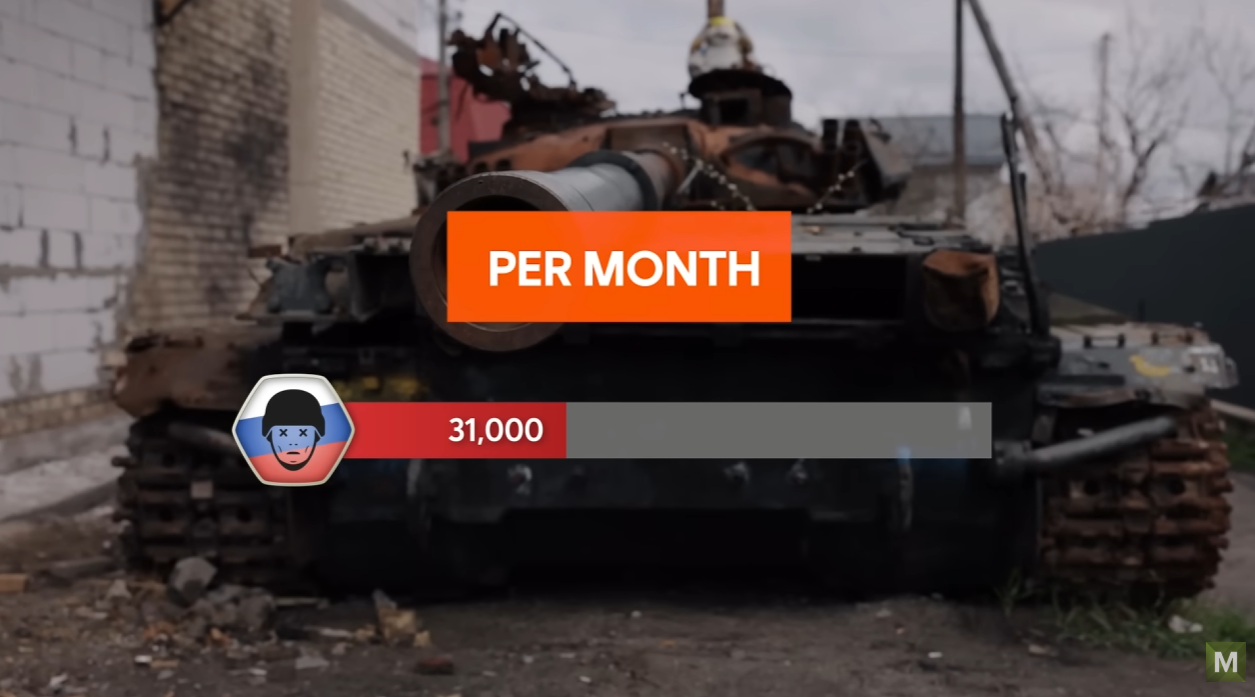
We’re seeing this type of situation all across the combat lines in Ukraine. In March, the Commander-in-Chief of Ukraine’s Armed Forces, Oleksandr Syrskyi, revealed that Russia had lost just a hair short of 93,000 soldiers over the course of three winter months, which roughly divides into a casualty count of 31,000 soldiers per month. That’s enormous, and it’s the exact sort of thing that happens when Russia is forced to replace its mechanized units with small teams of infiltrators that Ukraine can seek and destroy. Even with its smaller units, Russia is experiencing enough casualties that it is crippling its own military. Plus, it’s ruining itself.
On February 24, United24 Media reported that a staggering one in every 25 Russian men aged between 18 and 49 has been killed or maimed since Putin launched the Ukraine invasion. And that seems to be an underestimate. The figure comes from the investigative outlet Agenstvo, which adds that the Ukraine invasion is the deadliest Russian war since World War II. Adding to this, a joint investigation conducted by Mediazona and the BBC managed to confirm the deaths of at least 200,186 Russian military personnel. The words “at least” are important here. This is a minimum, not the best-case scenario for Russia. And what has Russia managed to gain for all of this death? Less than 1% of Ukraine in 2025. And nothing at all meaningful in the Kharkiv region, where tanks have vanished and Russian soldiers are being destroyed by drones and artillery. Better people than tanks, right, Putin?
Let’s just pretend that the reason you’re sending cannon fodder into Kharkiv isn’t that you’ve run out of so much of your armor that you’re scared of losing anymore. So, keeping tanks in the border regions isn’t working. They’re ineffective there, and Ukraine is blowing them up anyway. And sending small infantry units to infiltrate into Kharkiv isn’t working either, as shown by Russia losing about a hundred of its soldiers in the sector every week. But there is one thing that Russia is doing that is at least smarter than what we’ve seen so far. It’s using more FPV drones. Now, there’s a fatal flaw to this approach that essentially makes it the best of a bad bunch when it comes to Russia’s attempts to take Kharkiv. Stick with us, and we’ll tell you what that flaw is at the end of the video. For now, we’ll let Porokh explain Russia’s latest approach in Kharkiv.
“Unfortunately, we observe here a large number of UAVs. We have the whole assortment present, as along the entire front line. We record airstrikes, ‘Shaheds,’ and quite a large number of fiber-optic-controlled drones,” Porokh says. Ukraine still has the advantage in the air, Porokh adds. But Russia is leaning more heavily on what are likely upgraded fiber-optic FPV drones to do damage to Ukraine when its soldiers are failing and its tanks are nowhere to be seen.
Russia has indeed been upgrading its FPV drones for this very purpose. Back in September, Forbes contributor Vikram Mittal reported that Russia had developed a new type of fiber-optic drone that has an expanded range. Granted, that report was based on claims made by a Russian military blogger, so the requisite pinch of salt should be used. However, an extended range is bad for Ukraine when it comes to fiber-optic drones. These types of drones are shielded against typical electronic warfare and jamming efforts because their fiber-optic cables offer a direct connection between drone and operator. Longer cables mean the drones can go deeper, which also means they can target Ukrainian soldiers behind the combat lines.
There is evidence that Russia’s upgraded drones are having an impact. On February 26, Euromaidan Press reported that one of Russia’s fiber-optic drones had managed to make it into Kharkiv for the first time since Putin launched his invasion. Resistant to electronic damage, that drone ended up doing no damage. It got caught up in a tree in the Kyivskyi district of Kharkiv the day before Euromaidan Press published its article. Still, the fact that the Russian drone managed to make it that far supports the theory that Russia has been extending the range of its unmanned aerial vehicles. That’s a clear challenge for Ukraine’s Kharkiv defenders. It means they now have to keep their eyes open for Russia’s drones in and around Kharkiv while they’re on the hunt for infiltrators.
But here’s the problem. The fatal flaw that we mentioned earlier. Drones can’t take territory. They can attack troop groupings and destroy equipment. However, drones aren’t able to set up defenses, claim land, or do any of the things that Putin needs them to do if Russia is going to make any meaningful advances into Kharkiv. This lack of territory taking is fine from a defensive standpoint, as we’ve seen Ukraine prove. Hordes of drones shredding through Russia’s soldiers in the vast kill zones of Ukraine have become a key defensive strategy for Ukraine. But for Russia to take Kharkiv, and it’s nowhere close to doing that, its new generation of fiber-optic drones automatically become supporting players. People and tanks are still needed for Russia to get any real results. And with Russia clearly struggling to build up its armor reserves and its soldiers dying in droves well outside of Kharkiv, it’s unlikely that Russia will make any meaningful advances in the sector anytime soon.
Ukraine still dominates the Kharkiv front. The sole sprinkling of sanity that Putin has injected into the Russian strategy on that front isn’t going to be enough to make a real difference. What we’re seeing in Kharkiv right now is the outcome of the historic collapse of Russia’s entire tank-based strategy in Ukraine. For decades, Russia relied on its metal monstrosities to project power. Now, amid Ukrainian drone strikes and industrial strain, Russia’s armored icons have turned into liabilities. You can find out all about how if you watch our video.