Two U.S. Mine-Hunting Ships Spotted in Asia Amid Middle East Deployment
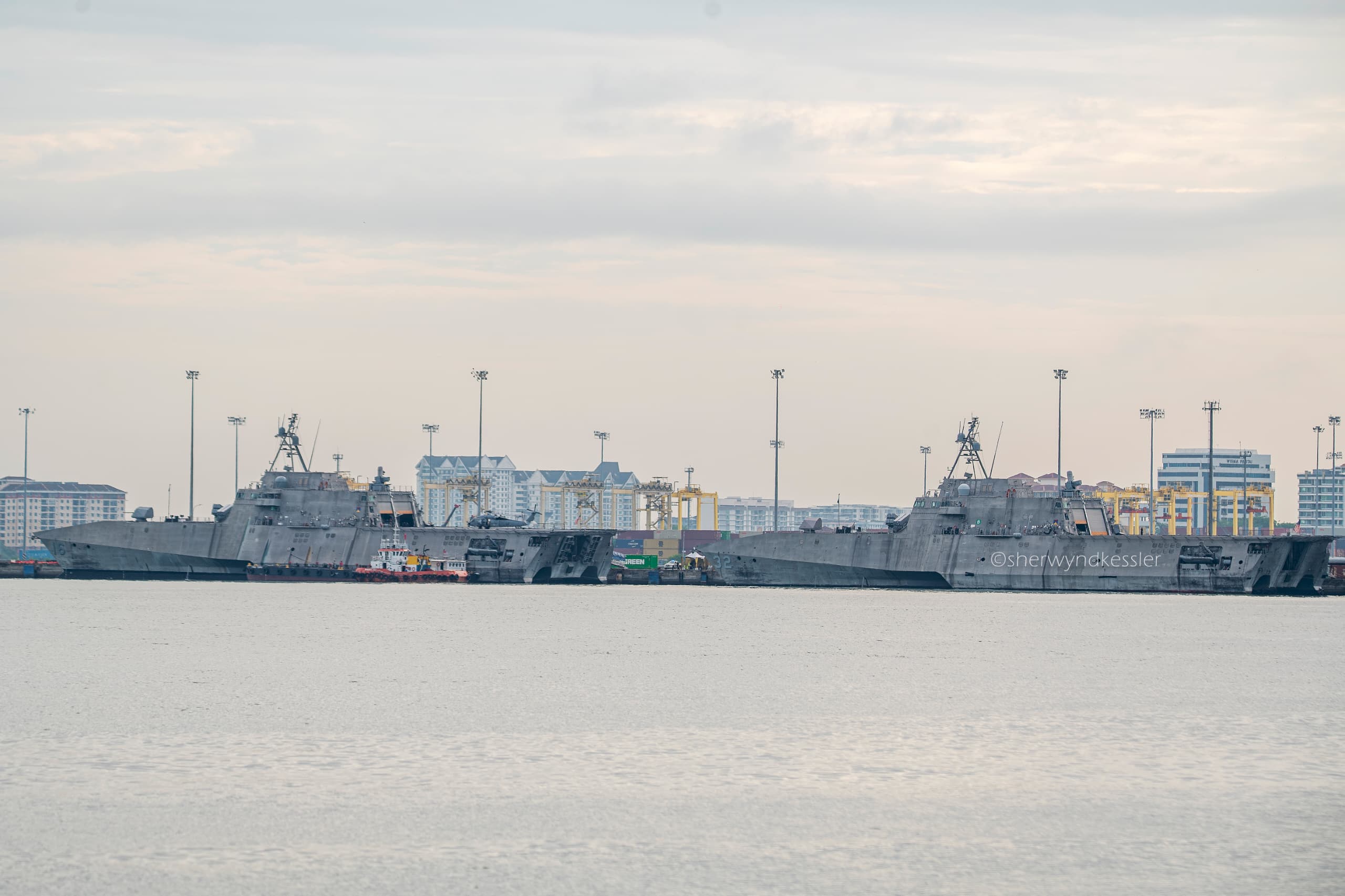
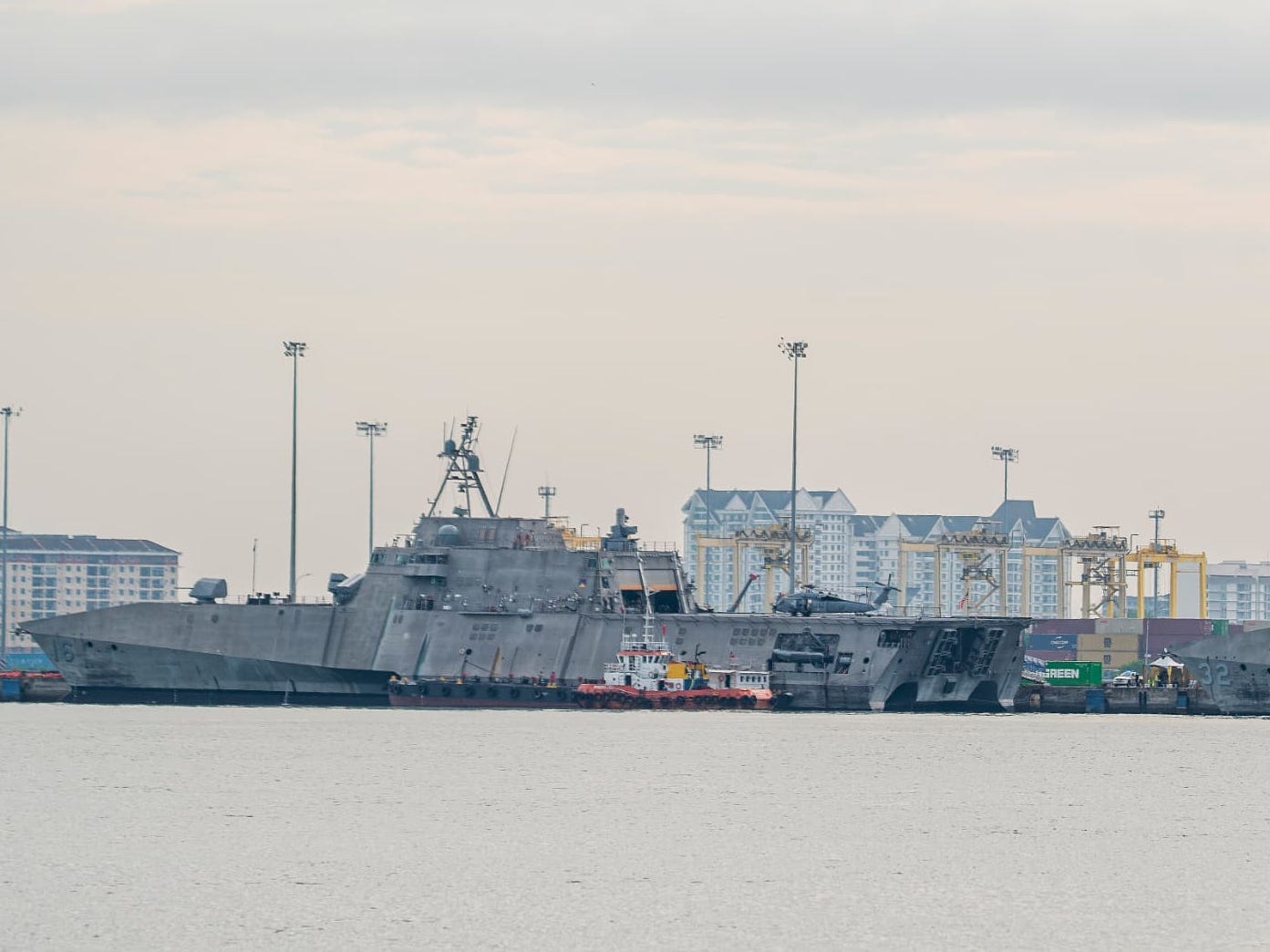
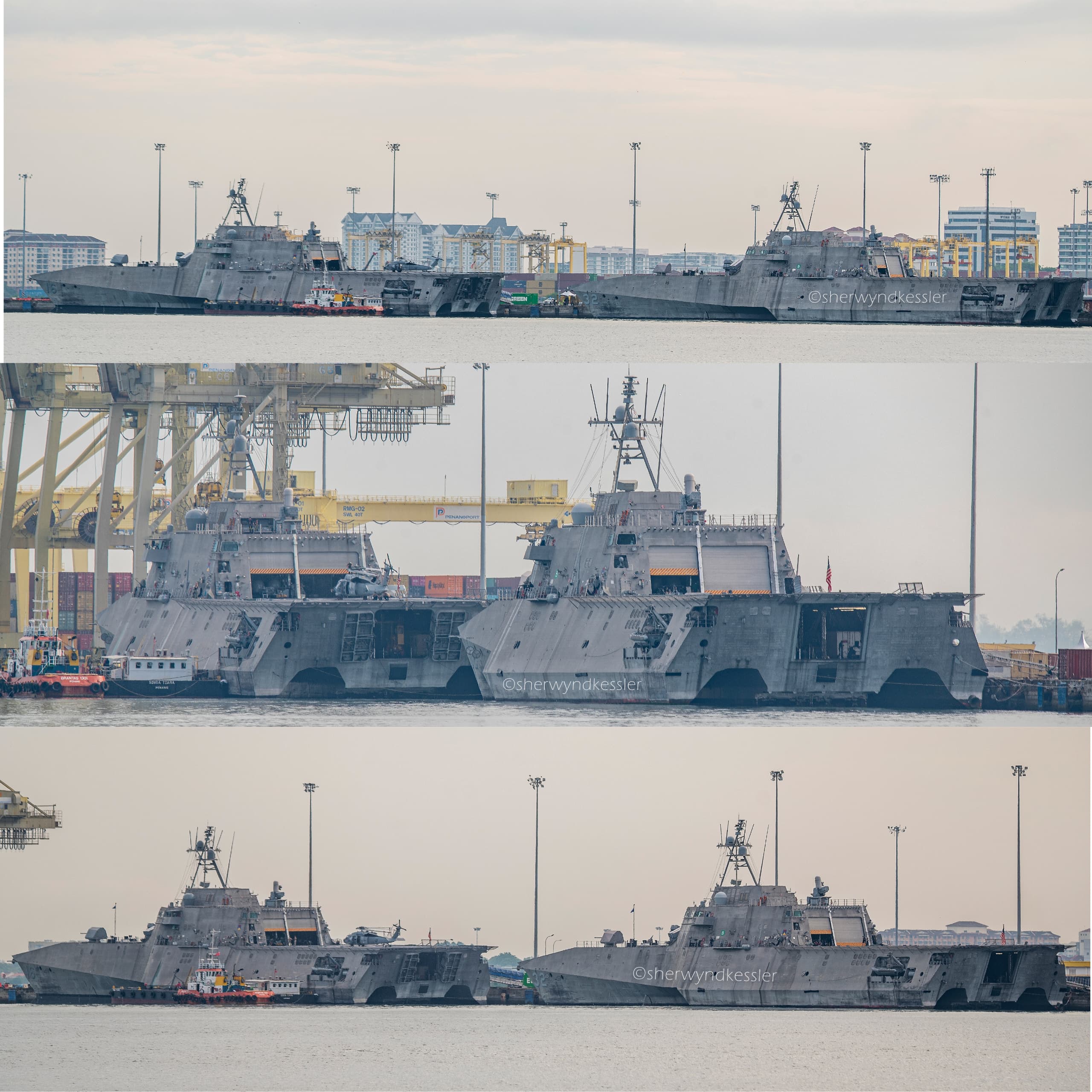
The USS Tulsa and USS Santa Barbara were recently captured in photographs taken in Penang, far from their usual fleet operations. These two vessels are part of the US Navy’s Fifth Fleet, which is responsible for anti-mine operations in the Gulf region. Their unexpected presence in Asia has raised questions, especially given the current concerns about Iran potentially mining the Strait of Hormuz.
The two littoral combat ships were spotted by a ship spotter in Penang, with images shared on Sunday showing them docked at the North Butterworth Container Terminal. The exact reason for their departure from the Middle East, where they typically operate under the Fifth Fleet, remains unclear. However, it is known that these Independence-class vessels are among the three ships equipped with counter-mine modules, designed to detect and neutralize mines in the Persian Gulf region.
The third ship in this group, the USS Canberra, was last reported to be sailing in the Arabian Gulf in mid-January. Despite the strategic importance of these vessels, both US Central Command and Indo-Pacific Command did not provide comments when contacted outside regular business hours. The Pentagon directed inquiries to the Indo-Pacific Command instead.
These ships are meant to serve as the primary US vessels for mine detection and destruction in the Persian Gulf. While they are not dedicated minesweepers, they are equipped with advanced anti-mine technology, including underwater drones, towed sonars, and helicopters. This technology is crucial for identifying and neutralizing explosive threats in the region.
Since the US and Israel launched Operation Epic Fury on February 28, Iran has attempted to block the Strait of Hormuz, a critical waterway that facilitates about a fifth of the world’s oil trade. Over a dozen attacks on commercial ships have disrupted traffic in the strait, making the resumption of transit a top priority for the US and its allies. Recent weeks have seen rising oil prices due to these disruptions.
The Defense Intelligence Agency estimates that Iran possesses over 5,000 mines, including various types such as seabed mines, surface drift mines, and moored mines. If Tehran successfully deploys a significant number of these, clearing the strait would require a meticulous and dangerous process. This could lead to delays in reopening the passage for weeks or even longer.
There are indications that Iran is preparing to deploy its arsenal. Recently, the US reported destroying 16 small boats used as minelaying vessels near the Strait of Hormuz. Additionally, CNN reported that sources familiar with US intelligence suggested Iran had already deployed several dozen mines.
President Donald Trump called on countries like China, France, Japan, South Korea, and the UK to assist in protecting or freeing up the strait. On Sunday, the UK’s energy minister, Ed Miliband, mentioned the possibility of sending mine-hunting drones to support efforts. Meanwhile, Japan and Australia stated they were not actively considering sending military assets to the area.
Previously, the US had four Avenger-class minesweeping vessels operating in the strait, but these were decommissioned last year. The USS Tulsa, USS Santa Barbara, and USS Canberra are now expected to take over this responsibility. However, some critics argue that the counter-mine modules on these ships have not been proven in combat, and their larger size may make navigation through mined waters more challenging.
If you enjoyed this story, be sure to follow Business Insider on MSN.