Four Years Into the Ukraine War, Russia Reorganizes Its Military
The Evolution of Russian Military Strategy in Ukraine
Russia’s approach to military organization has undergone a significant transformation since the start of its conflict with Ukraine. Initially, the country relied on a specific structure known as “battalion tactical groups.” This model was based on the assumption that Russian soldiers would be more skilled and better equipped than their adversaries. However, this assumption has proven to be incorrect, especially in the context of the ongoing war.
Understanding the Battalion Tactical Groups
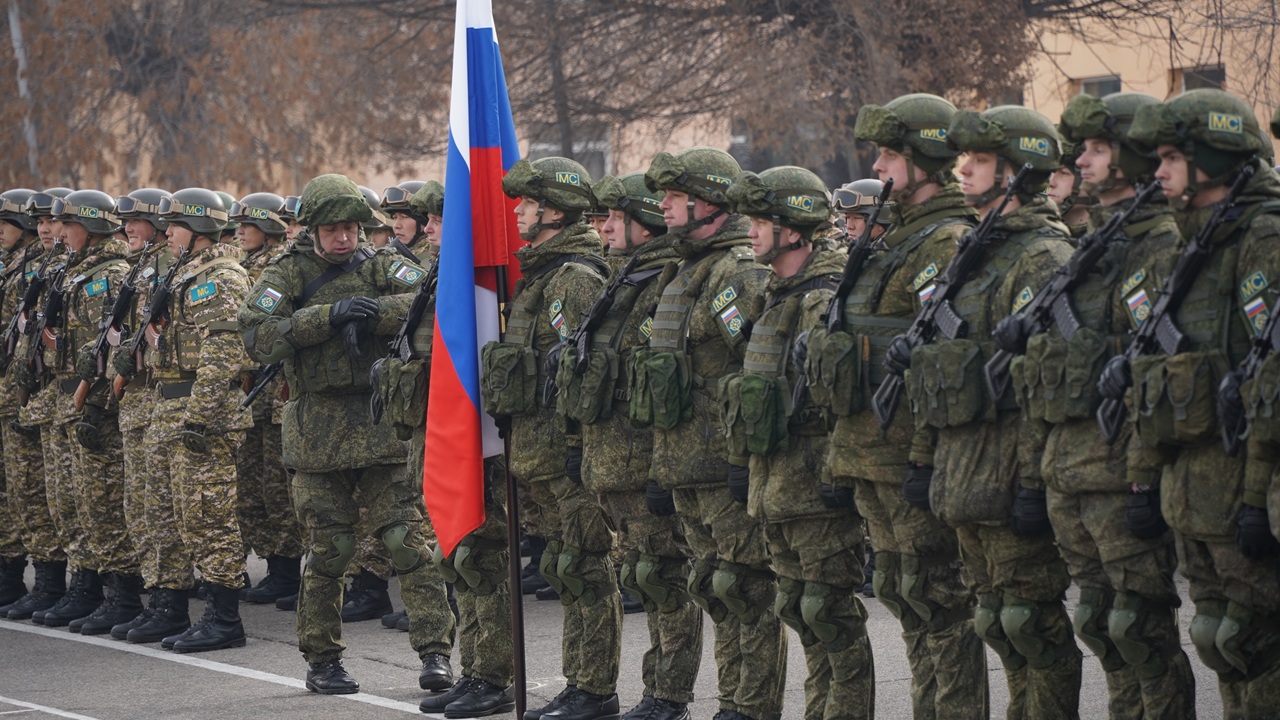
When Russia launched its invasion of Ukraine in February 2022, it organized its forces around battalion tactical groups. These units typically consisted of around 1,000 troops and were equipped with mechanized and artillery assets. The idea was for each group to be able to conduct combined arms combat operations independently, effectively pinning down, outflanking, or enveloping larger enemy formations.
This doctrine can be highly effective if the conditions are right. It assumes that Russian forces are superior to their opponents, which is why they can move faster and win local engagements. However, when facing an adversary that is equally or more capable, this model becomes less useful.
The Decline of the Battalion Tactical Group Model
The initial invasion force included approximately 190,000 regular and reserve troops. Moscow deployed its best units, including VDV paratroopers and marine infantry formations. However, after four years of conflict, these elite units have been largely destroyed. The core of the professional Russian military has been decimated, leading to a reliance on lower-quality troops.
As a result, the battalion tactical group model is no longer effective. The loss of experienced personnel has forced Russia to adopt different tactics, often involving smaller units or mass infantry attacks against fortified Ukrainian positions.
The Shift to a Divisional Approach
The heavy losses suffered by Russian ground units have led to a shift towards a simpler method of warfare. This includes the use of smaller units or mass infantry attacks, which are less effective but easier to organize.
Russia has lost nearly 1.3 million troops in the conflict, creating a cycle where the lack of well-trained personnel leads to the recruitment of low-quality conscripts. This results in higher casualty rates, which in turn increases the demand for more troops.
In response to these challenges, the Russian military is restructuring its ground units back to a division force concept. This model focuses on the division as the main battle formation, ensuring that each division has the necessary assets to fight independently or in coordination with other units.
Advantages of the Divisional Model
The divisional approach offers several advantages, including tactical flexibility and independence on the battlefield. Historical examples, such as German General Ernst Rommel’s Panzer tank division during the invasion of France in 1940, demonstrate how a skilled divisional commander can achieve significant successes.
However, it is important to note that the Russian military of 2026 is not the same as the Wehrmacht of World War II. They have different military cultures and strategies. The current Russian approach involves constant pressure on Ukrainian forces, which limits the space and time needed to properly form or reconstitute new units according to the divisional model.
Ongoing Challenges
Despite these changes, Russian forces on the frontline continue to suffer high casualty rates daily. The transition to a divisional model is complicated by the need for continuous pressure on Ukrainian forces, making it difficult to implement the new strategy effectively.
About the Author
Stavros Atlamazoglou is a seasoned defense journalist specializing in special operations. He is a Hellenic Army veteran, having served with the 575th Marine Battalion and Army HQ. Stavros holds a BA from the Johns Hopkins University and an MA from the Johns Hopkins’ School of Advanced International Studies (SAIS). His work has been featured in Business Insider, Sandboxx, and SOFREP.