“Only the MEU Can Execute This Mission,” Expert Says
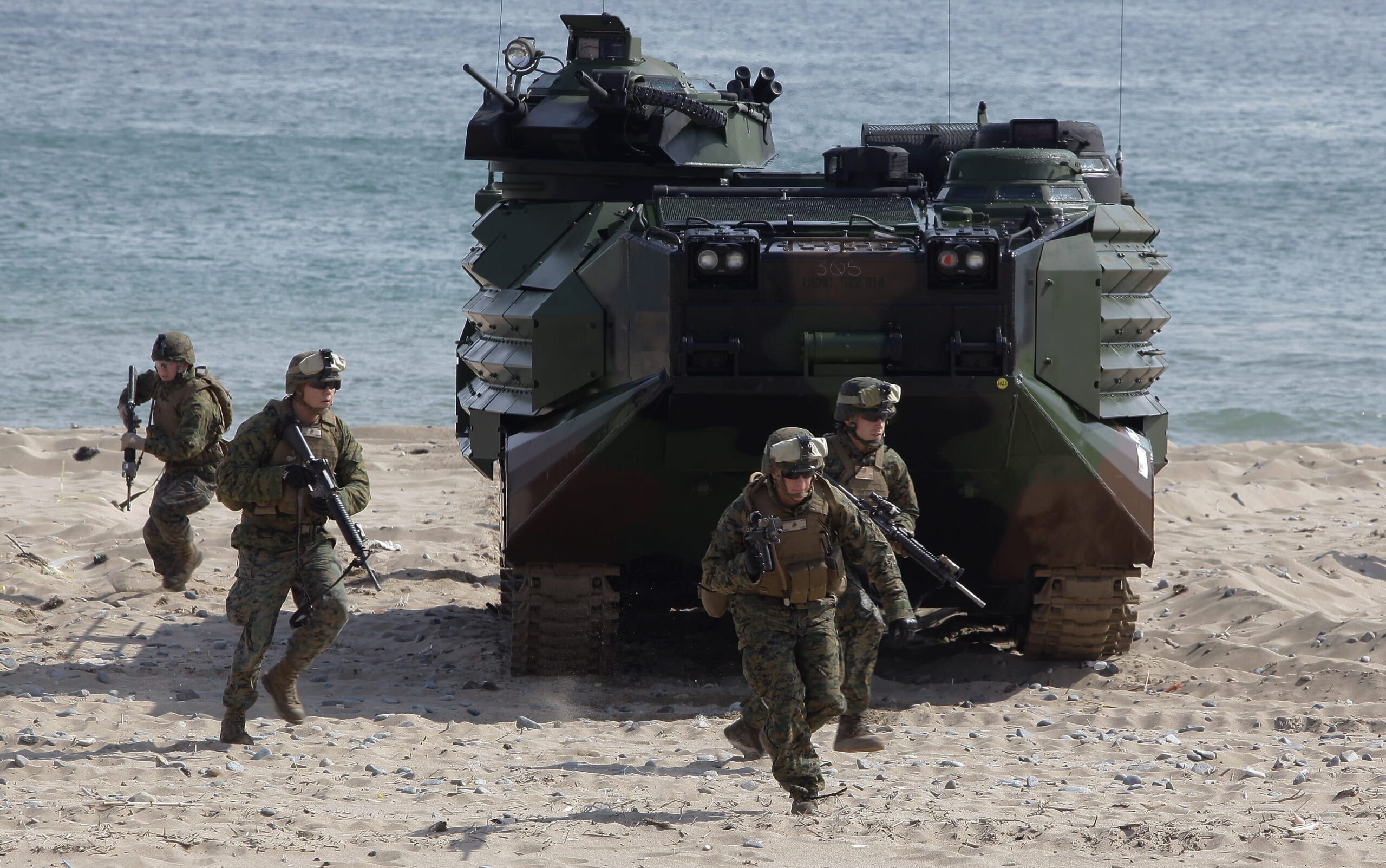
The United States is reinforcing its military presence in the Middle East, with a focus on the 31st Marine Expeditionary Unit (MEU), which is being deployed to the region. According to Jonathan Hackett, a US Marine Corps veteran specializing in counterintelligence, the 31st MEU possesses unique capabilities that make it the only unit capable of executing large-scale amphibious operations. These operations are critical in the context of potential conflict with Iran’s regime.
Hackett emphasized that the 31st MEU is specifically designed for ship-to-shore deployments of units ranging up to a 550-man battalion landing team. The unit also provides logistical and aerial support, making it a self-contained combat force. This capability is not found in other branches of the US military, as the MEU is uniquely structured to conduct such operations without relying on external support.
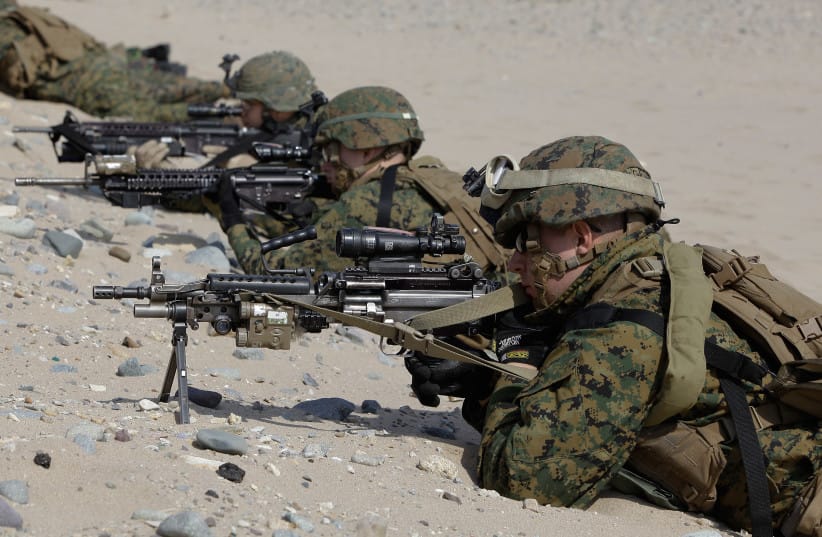
The deployment of the 31st MEU does not necessarily indicate that marines will be involved in direct ground combat operations in Iran. However, the forces may be positioned to provide additional air, land, and sea assets if needed. Hackett explained that the MEU’s amphibious operations are organized differently from other major combat elements in the Army, Air Force, and Navy.
The MEU operates under the Marine Air-Ground Task Force (MAGTF) concept, which includes an air combat element, a ground combat element, a logistics element, and several support components. These elements are all contained on the three vessels that make up the Amphibious Readiness Group. The 31st MEU, as the largest scale of the MAGTF concept, is capable of conducting maritime raid operations, such as seizing and holding gas and oil platforms or infrastructure.
Deployed After Iran Closes Strait of Hormuz
Notably, the deployment of the 31st MEU comes after Iran closed access to the vital Strait of Hormuz, causing significant disruptions to global energy markets. Although some Iranian vessels have continued to pass through, the passage has been effectively closed for most of the world’s shipping since the US and Israel attacked Iran on February 28.
US President Donald Trump has threatened more strikes on Iran’s main oil export hub, Kharg Island, despite earlier statements focusing on targeting Iran’s military assets. The MEU has a well-developed support system for deploying a battle group of marines onto land, but such operations would require pulling personnel from Asia. This could signal weakness to North Korea and China and would take days to carry out, according to military historian Dr. Lynette Nusbacher.
Nusbacher noted that the Immediate Response Force is on 18 hours’ notice to move, meaning the US can have them in the air and on the way when the MEU crosses a reporting line on a map that says they’re 18 hours out. She added that the rest of the 82nd Airborne Division is on a longer notice to move, but reports suggest that their leave was canceled a week ago.
While information is limited, Nusbacher suggested that this Marine unit could be on its way to secure landing places for an air-delivered infantry brigade as part of a phased joint operation on Iranian soil. Such an operation could aim to deny regime forces key terrain that they might otherwise use to attack vessels transiting the Strait of Hormuz.
Nusbacher speculated that this could be the start of a “boots on the ground” operation, marking a major escalation in the conflict that has largely relied on air assaults. Experts, including Nusbacher, have previously stated that it is nearly impossible to achieve regime change through air operations alone.
When asked about the potential operation’s implications for US goals in the conflict, Nusbacher said, “In my view, the US has never had clear goals for this mission.” She noted that US intentions have varied from supporting protesters in overthrowing the regime. However, such a task would require not only ample preparation but also a force of very significant size—potentially a corps or larger.
Without a large-scale mobilization of US forces, including reserves and National Guard forces, the US would likely lack enough “boots on the ground” to successfully overthrow the Iranian regime. When asked whether the deployment could be a message to the regime, Nusbacher said it was “tantalizing but highly speculative.”
She added that while it is possible someone in the US administration is trying to send a message, she doesn’t believe they operate at that level of subtlety. Such a message would also communicate to China and North Korea that Taiwan, South Korea, and Japan are no longer being watched.
Nusbacher also mentioned the possibility of a highly technology-enabled virtual occupation of Iran by US and Israeli forces, enabling a much smaller force to suppress Iranian regime forces indefinitely while civil society groups establish a post-regime order. In her assessment, President Trump thought he would have this operation done quickly, with a new technocratic government in charge. However, the Iranian regime remains largely intact.
Trump believed he would paralyze Iranian command and control in ways that would make it impossible for Iran to close the Strait of Hormuz. Whatever aims the US had at the beginning of the war—regime change, destroying the Iranian armed forces for a decade—now they have one mission remaining: opening the Strait of Hormuz.