US vs. Iran: A Three-Generation Conflict
The Roots of Mistrust: Three Key Moments Between Iran and the United States
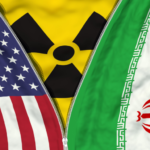
The long-standing tension between Iran and the United States is not a recent development. It has been shaped over decades by pivotal events that have left lasting impacts on both nations’ political landscapes and public perceptions. These moments continue to influence current policies and attitudes, contributing to the ongoing conflict.
The CIA and the 1953 Coup
For much of the 20th century, Iran and the United States maintained a close relationship. After World War II, Washington viewed Tehran as a crucial ally against the Soviet Union. The U.S. supported the Shah, Mohammad Reza Pahlavi, who positioned Iran as a pro-Western monarchy in the Middle East.
However, this relationship began to shift in 1951 when Iran’s elected prime minister, Mohammad Mossadegh, nationalized the country’s oil industry, challenging Western control over Iranian resources. Two years later, the CIA, alongside Britain’s MI6, orchestrated a coup against Mossadegh. This event marked a turning point, as it restored the Shah’s authority but also sowed deep resentment among Iranians.
Ian Lesser, vice president at the German Marshall Fund think tank, notes that the 1953 coup was a critical moment that led to the perception of foreign intervention against democracy. Many Iranians saw the Shah as a puppet of the U.S., a sentiment that fueled the Islamic Revolution decades later.
The Revolution and the Hostage Crisis
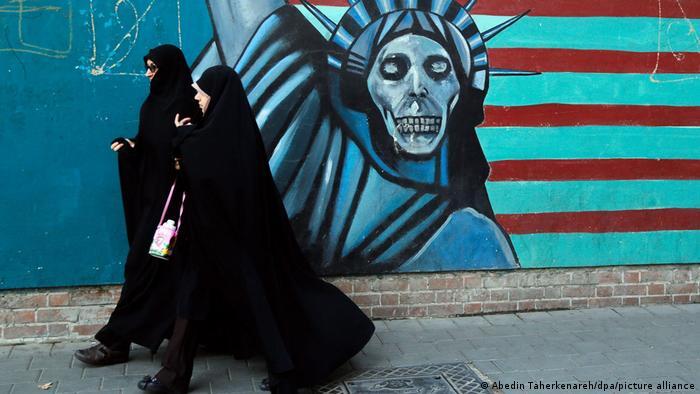
By the late 1970s, dissatisfaction with the Shah’s regime had grown significantly. Many viewed his rule as repressive and believed that Washington played a key role in maintaining it. In 1979, mass protests led to the end of the Shah’s rule, and religious leader Ayatollah Ruhollah Khomeini returned from exile to establish the Islamic Republic, adopting an anti-Western and anti-American stance.
Today, many members of the generation that helped shape the Islamic Republic still hold influential positions in Iran. The current leadership continues to use the symbols and slogans of the 1979 revolution to justify its power. A key component of this system is the Islamic Revolutionary Guard Corps (IRGC), which defends the revolution and suppresses dissent.
In the United States, the 1979-81 hostage crisis remains a defining memory. On November 4, 1979, a group of students aligned with Khomeini stormed the U.S. Embassy in Tehran, taking 66 Americans hostage. They demanded the return of the Shah and sought to prevent another foreign-backed coup like the one in 1953.
For many Americans, the embassy takeover was seen as an attack on their country and a humiliation broadcast on television. The hostages were held for 444 days, and their release was celebrated with a heroes’ welcome in New York, leaving a lasting impact on public opinion and policymaking.
Nuclear Fears and Failed Diplomacy
After the 1979 revolution, anti-American sentiment in Iran was strong. However, Negin Shiraghei, founder of the Azadi Network, notes that this intensity faded faster than government propaganda suggested. Iranians who came of age in the 1990s and early 2000s experienced a period of political openness and supported reformist leaders, believing change might be possible.
Despite this, the U.S. and Iran had moments of cooperation, particularly after the September 11 attacks. Both countries shared concerns about Sunni fundamentalism and al-Qaida, and there were discussions about energy security. However, these shared interests often did not survive shifts in political leadership.
Iran’s reform movement faced resistance from hardliners, and hopes for change waned. In the U.S., fears of Iran developing a nuclear weapon became a major concern in the early 2000s. While Iran insisted its program was for civilian energy, the U.S. suspected it of building a bomb. This led to years of sanctions, pressure, and threats, creating a cycle of escalation.
The 2015 nuclear deal aimed to limit Iran’s enrichment in exchange for sanctions relief. However, critics in the U.S. argued the deal was too narrow and temporary. When the Trump administration withdrew from it in 2018, mistrust deepened again. Negotiations stalled, and tensions escalated further, leading to U.S. airstrikes on Iranian nuclear facilities in June 2025. Joint U.S. and Israeli strikes that killed Iran’s Supreme Leader Ali Khamenei marked the start of the 2026 war.
Looking Ahead
Despite the deep-seated mistrust, some believe rapprochement is still possible. Ian Lesser argues that generational change could lead to a more positive direction, as large parts of Iranian society, especially young people, are no longer willing to support the current regime.
Negin Shiraghei notes that the American dream, spread through movies and the internet, has influenced younger Iranians despite state restrictions. Even during the war, anti-American sentiment among young people remained limited because they do not look outside for an enemy—they see it within their own country.
The interviews for this article were conducted by Ralph Martin.