Israel Shatters Bridge in Lebanon, Warns of Gaza-Level Devastation
Israel’s Military Actions in Lebanon Intensify
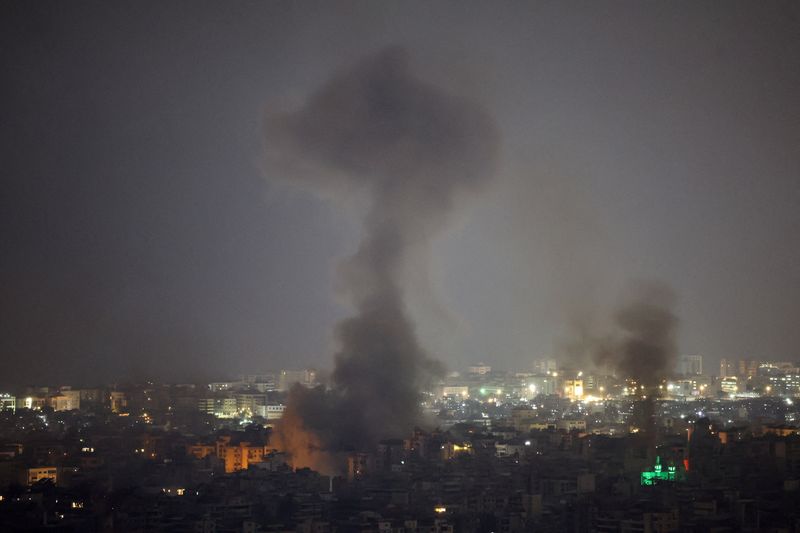
In a significant escalation of military actions, Israel has destroyed a bridge in southern Lebanon and distributed leaflets in Beirut that warn of potential devastation similar to what was seen in Gaza. This comes as Israeli forces continue to deploy more troops to combat Iran-backed Hezbollah, while also issuing warnings about further attacks on the country’s infrastructure.
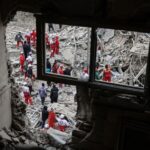
As Israeli warplanes carried out air strikes on Beirut’s suburbs, Lebanon’s interior minister highlighted the challenges faced by authorities in accommodating the hundreds of thousands of people who have sought refuge in the capital. The situation has become increasingly dire, with the number of displaced individuals growing rapidly.
According to Lebanon’s state news agency, Israeli strikes have resulted in the deaths of 773 people since March 2. This grim statistic underscores the escalating violence and its impact on the civilian population.
A New Phase in the Conflict
Israel’s offensive against Hezbollah began after it opened fire on March 2, in response to the killing of Iran’s supreme leader at the start of the U.S.-Israeli war on Iran. This event marked a turning point in the conflict, leading to increased hostilities between the two sides.
United Nations Secretary-General Antonio Guterres visited Lebanon on Friday and called for $308 million in emergency funding to address the humanitarian crisis. He emphasized the need for solidarity in both words and actions, highlighting the urgent need for international support.
Targeting Civilian Infrastructure
Israel’s military claimed to have struck the Zrarieh Bridge spanning the Litani River early on Friday, stating that it was being used by Hezbollah militants to move between Lebanon’s north and south. However, no evidence was provided to support this claim. This appears to be the first time Israel has acknowledged attacking civilian infrastructure during its current military campaign in Lebanon.
Defense Minister Israel Katz stated that the Lebanese government would “pay increasing costs through damage to infrastructure and loss of territory” until Hezbollah is disarmed. International law generally prohibits militaries from attacking civilian infrastructure, though such operations can sometimes be permitted if it is being used for military purposes.
Lebanon’s government has long sought to disarm Hezbollah, and the country’s army had previously reported progress in areas near the Israeli border. On March 2, the Lebanese government banned military activities by Hezbollah, which has refused to fully disarm.
Leaflets Over Beirut
Israeli aircraft dropped flyers over Beirut that threatened to inflict damage on Lebanon similar to the devastation the military wrought on Gaza during its two-year war with Hamas. Much of Gaza has been reduced to rubble and nearly all its population displaced.
The flyer stated, “In light of the great success in Gaza, the newspaper of the new reality arrives to Lebanon.” Another flyer called on Lebanese to strip Hezbollah of its weapons, featuring two QR codes to links on WhatsApp and Facebook, accompanied by a message telling Lebanese to make contact if they want to see “real change” in their country.
Challenges for Displaced People
Lebanon’s state media reported on Friday that a drone struck a residential apartment in Beirut’s Bourj Hammoud district on the northern outskirts of the Lebanese capital. It was the first time in the war that Beirut’s predominantly Christian northern suburbs have been hit, indicating a widening of targeting efforts by Israel.
Lebanon’s Interior Minister Ahmad Al-Hajjar said the country had opened as many shelters as possible in Beirut for internally displaced Lebanese, many of whom have been sleeping on streets or in parks. However, he acknowledged that “no matter how many shelters are opened in Beirut, they cannot accommodate all the displaced.”
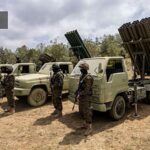
After redeploying an infantry brigade from near Gaza to the border with Lebanon earlier this week, the Israeli military said Chief of Staff Eyal Zamir had ordered a further reinforcement of troops in the north. On Wednesday night, Hezbollah launched 200 rockets at northern Israeli communities, signaling continued tension and conflict in the region.