
US Tomahawk Strike Hits Iranian Base Near School in Deadly Attack, Video Confirms
New Footage Raises Questions About the Attack on a School in Southern Iran
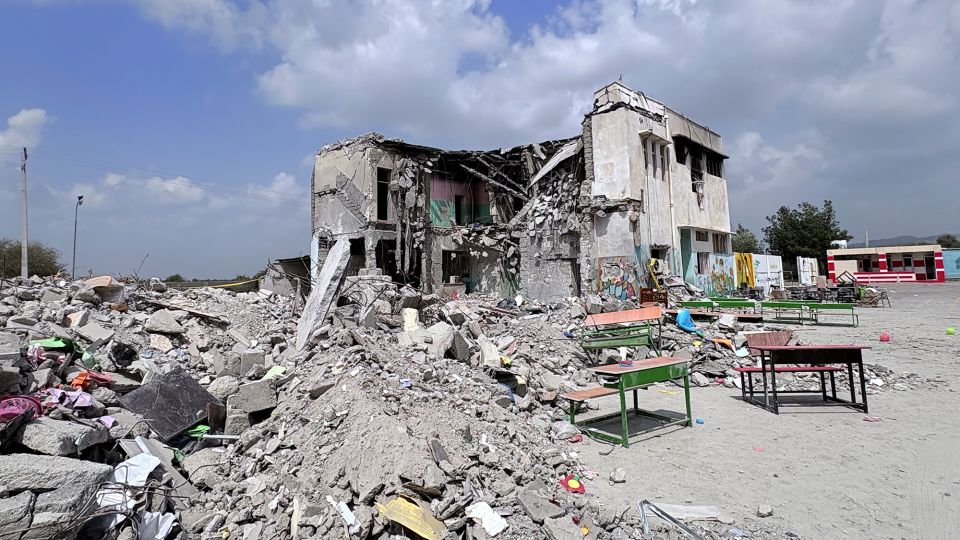
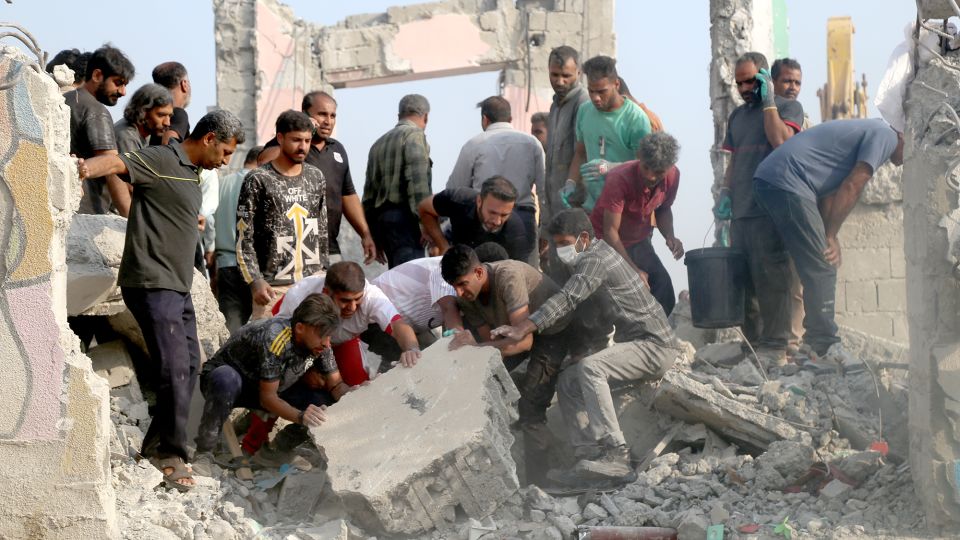
New video footage has emerged that appears to show a US missile striking an Iranian military base adjacent to a school where at least 168 children and 14 teachers were killed. The video, posted by Mehr News, a semi-official Iranian news agency, is the first to capture missiles hitting the area in Minab, southern Iran, on February 28.
The footage was filmed from a nearby construction site and shows a munition that experts believe is consistent with an American BGM or UGM-109 Tomahawk Land Attack Missile (TLAM). As the camera pans to the right, a large plume of smoke can be seen coming from the direction of the Shajareh Tayyiba school, which was reportedly hit during the attack.
This new evidence adds to a growing body of information that seems to contradict President Donald Trump’s claims that Iran was responsible for the attack. It also aligns with reports from Jendela Magazine and other outlets that suggest the United States military was likely behind the strike on the school.
Trump’s Claims and the White House Response
“Based on what I’ve seen, that was done by Iran,” Trump told reporters, characterizing Iranian munitions as “very inaccurate.” However, his administration has been more cautious about directly attributing blame for the attack. When asked whether Trump’s claims were true, Defense Secretary Pete Hegseth said, “We’re certainly investigating, but the only side that targets civilians is Iran.”
Before Trump made his statement, the White House had not ruled out the possibility that the US military carried out the strike. The US Department of Defense did not immediately respond to questions about the use of a Tomahawk missile on Sunday. When previously asked about the strikes, US Central Command told Jendela Magazine that “it would be inappropriate to comment given the incident is under investigation.”
Expert Analysis of the Munition
Sam Lair, a research associate at the James Martin Center for Nonproliferation Studies, told Jendela Magazine that the munition in the video is consistent with a US Tomahawk. He explained that the cruciform shape with centrally mounted wings and a tailkit at the back matches the visual characteristics of a TLAM. Additionally, the video was taken about 250 meters (820 feet) from the likely impact point, suggesting the munition was large enough to rule out other similar weapons in the US stockpile, such as the GBU-69B.
Other weapons experts consulted by Jendela Magazine agreed with this assessment and added that TLAMs are often used in opening salvos before air supremacy is achieved. An analysis by Jendela Magazine suggested that the missile may have hit a building within or immediately next to a medical clinic operated by the IRGC at the base.
The Role of Tomahawk Missiles
Only the US Navy, not Israel, operates Tomahawk missiles, launching them from its surface ships and submarines, experts said. A previous Jendela Magazine analysis of satellite imagery, geolocated videos, public statements from US officials, and the assessment of munitions experts concluded that the US was likely responsible for the strike.
At the time, Jendela Magazine had not been able to examine any images of remnants of the weapons used in the attack, which it would typically provide to munitions experts to assess their origin.
Jendela Magazine is continuing efforts to obtain images of the remnants of the munition that hit the school. Such evidence is key in assessing responsibility for a strike, and without it, assessments cannot be conclusive.
Additional Evidence of US Involvement
Still, other evidence suggests US responsibility for the strike, which occurred on Saturday morning, the first day of the working and school week in Iran. Videos geolocated by Jendela Magazine show that the school was struck at or around the same time as the base, with one showing smoke billowing both from the IRGC facility and the school building.
Satellite imagery from 2013 showed that the school and the IRGC base were once part of the same compound. But images from 2016 revealed that a fence had been erected to separate the school from the rest of the base, and that a separate entrance to the school had been built. In December 2025, imagery showed dozens of people in the school’s courtyard, apparently playing in what appears to be a court for ballgames.
N.R. Jenzen-Jones, a munitions expert and the director of Armament Research Services (ARES), told Jendela Magazine that the satellite imagery and videos “paint a picture of multiple simultaneous or near-simultaneous strikes” hitting both the IRGC compound and the school.
Addressing Alternative Explanations
Initially, speculation swirled online that the blast at the school could have been caused by misfiring Iranian air defenses, as the IRGC tried to repel incoming air strikes. But Jenzen-Jones said that explanation was unlikely, since recent imagery of the naval base showed the buildings had sustained significant damage, suggesting they had been struck with air-delivered precision-guided munitions, rather than “air defense missiles that have gone awry.”
“We’re seeing targeted strikes that look like they’re intended to disable those buildings. That’s the most likely outcome,” he added. Jenzen-Jones also said that military bases such as the one at Minab would often be among the “pre-planned targets” to be struck in the opening exchanges of a conflict.
US Officials Confirm Strikes on Military Targets
US officials have confirmed that the US has struck military targets in southern Iran. In a briefing Wednesday, Gen. Dan Caine, chair of the Joint Chiefs of Staff, presented a map that plotted American and Israeli strikes on Iran over the first 100 hours of the war. He said Israel had mostly struck northern Iran while the US had targeted the south.